
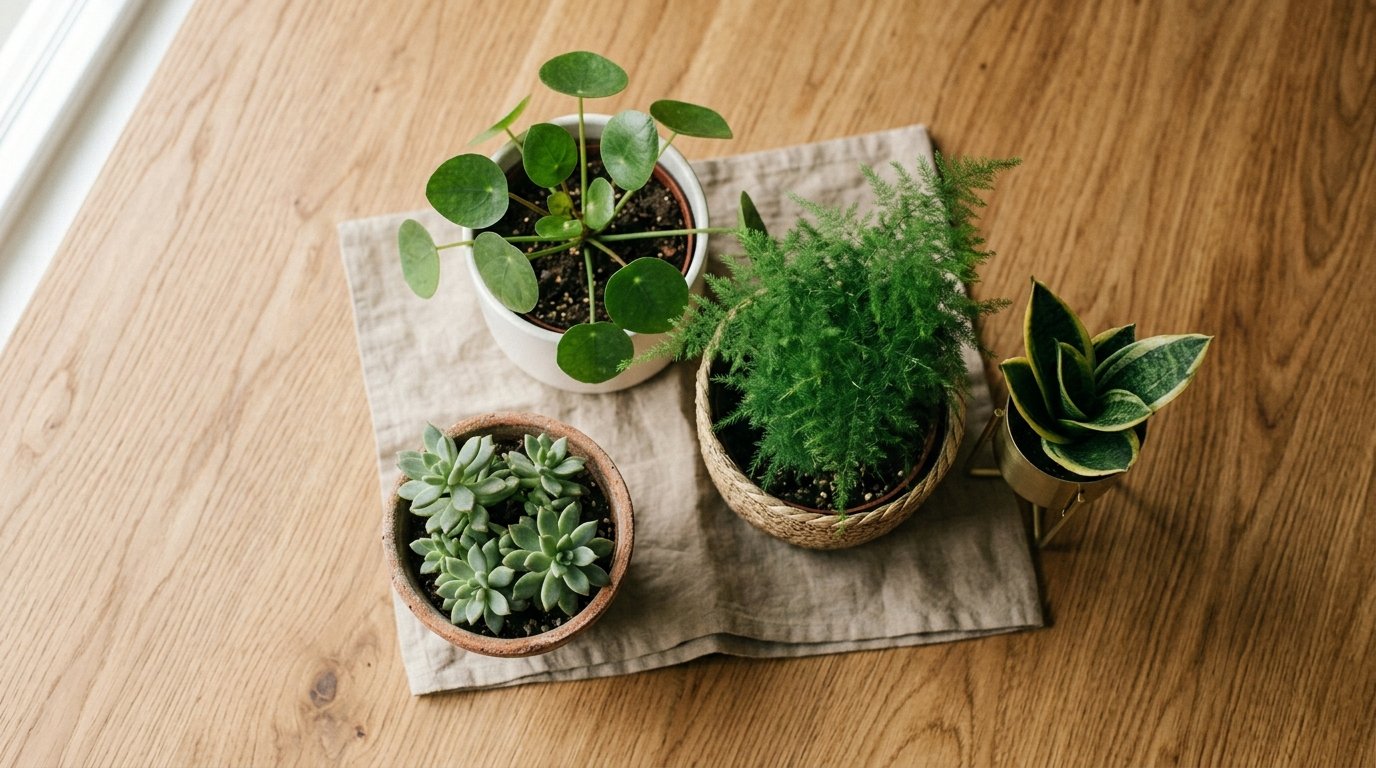
You spent time picking the right plant. You found the perfect corner. You nailed the odd-number grouping.
And then you dropped it into whatever pot was on sale at the garden center — and the whole thing fell flat.
Here’s what most people miss: the container is half the design decision. Maybe more. Get it wrong, and even a beautiful plant looks like an afterthought. Get it right, and the pot stops being a vessel and starts being exactly what it is — a design accessory that ties the entire room together.
Pots Are Accessories. Treat Them Like It.
Think about how much thought goes into choosing a lamp or a throw blanket. The finish, the texture, whether it reinforces the room’s mood or fights it. Pots deserve the same level of consideration.
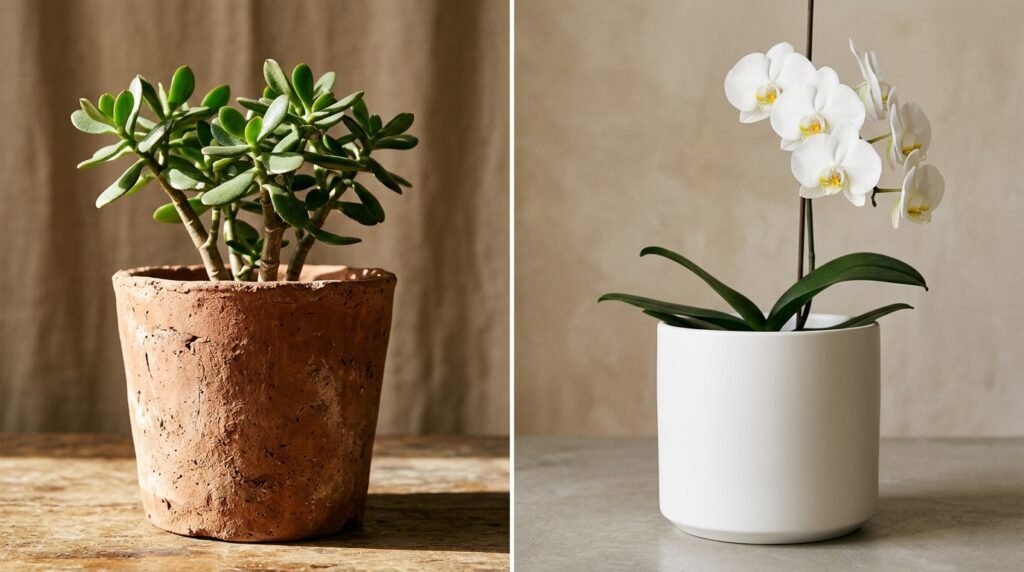
A terracotta pot isn’t just a clay container — it’s a design statement. It brings warmth, earthiness, a slightly imperfect quality that softens a room. Paired with an aloe vera or jade plant, it reads as grounded and organic. It fits naturally into bohemian spaces, industrial lofts, Scandinavian interiors — anywhere that benefits from a raw, natural texture doing quiet work in the background.
White ceramic goes the opposite direction. Clean lines, smooth finish, nothing competing for attention. It’s the right call for orchids and peace lilies, and it slots effortlessly into minimalist, coastal, or Scandinavian spaces. The pot recedes so the plant can speak.
Woven baskets bring something different again — a cozy, farmhouse warmth that works especially well with palms and ferns. And the variation within this category alone is remarkable: different weave textures, printed patterns, typography, embellishments. A woven basket can be understated or it can be a statement piece in its own right. The options are genuinely endless.
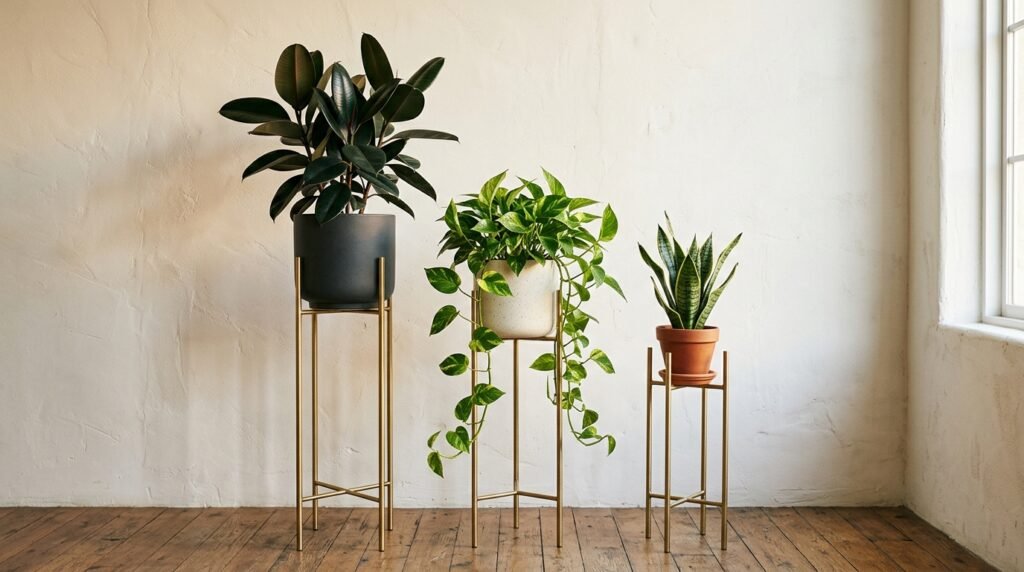
Then there are metallic stands — a personal favorite for good reason. Sleek, modern, and almost universally compatible. A single metallic stand with a rubber plant reads as intentional and contemporary. Three of them, each holding something different, creates a layered display that looks like it was styled by someone who actually knows what they’re doing. Because it was.
The Pot as a Tying Element
Here’s the design principle underneath all of this: accessories confirm a theme. They’re the detail that signals to anyone who walks into a room that everything was considered — not just the big furniture pieces, but the small decisions too.
A pot can be the thing that connects your sofa’s color to your curtain’s texture to the warmth of your timber floors. It can reinforce a coastal vibe or sharpen an industrial edge. Used well, it doesn’t just hold a plant — it completes a sentence the rest of the room has been building.
Used poorly, it contradicts everything around it. And here’s the uncomfortable truth: people feel that mismatch even when they can’t name it. They walk into a room and something feels off, and they can’t say why. Often it’s the accessories — the small choices that got made quickly or not made at all.
One Rule to Simplify Everything
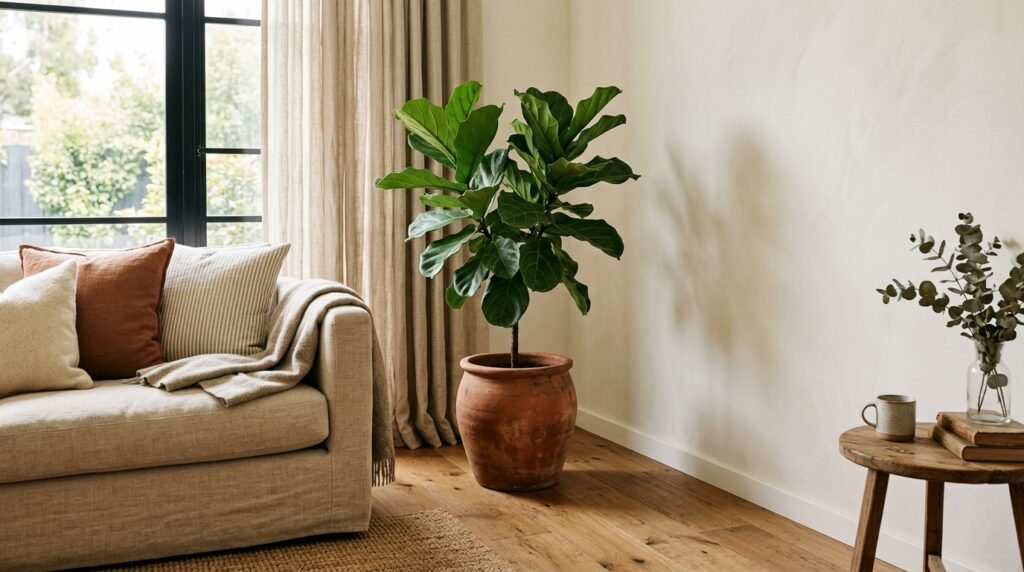
When you’re standing in the nursery or scrolling through options online, overwhelmed by choices, come back to this: choose a pot that complements both the plant and the room’s existing theme.
That’s it. Not the most dramatic statement, but it’s the one that works every time. Does the pot suit the plant’s character — its texture, its scale, its vibe? And does it reinforce what the room is already doing, rather than pulling against it?
If you can say yes to both, you’ve made the right call.
The difference between a room that looks professionally designed and one that just looks like someone has nice taste often comes down to the small decisions. The lamp. The cushion. The pot.
Plants give you an underrated opportunity to get those small decisions very right — because you’re not just choosing a plant, you’re choosing a whole object: vessel, stand, texture, finish, form. Every single one of those elements is a design choice.
Make them on purpose.
Creative note: I structured this around the shift from “pot as container” to “pot as design accessory” because that reframe is the real insight here. The piece builds toward the tying-element idea, which is the most sophisticated point in the transcript and the one most worth landing on.