
Most people treat plants like punctuation. A little fern here, a succulent on the windowsill there. Something green to fill the silence.
That’s not design. That’s decoration. And there’s a real difference.
Used intentionally, plants don’t just add life to a room — they restructure it. They create focal points, build depth, and shift the entire energy of a space. And unlike a new sofa or custom lighting, you can do it for the cost of a trip to the nursery.
Here’s how to actually do it right.
Start With a Statement
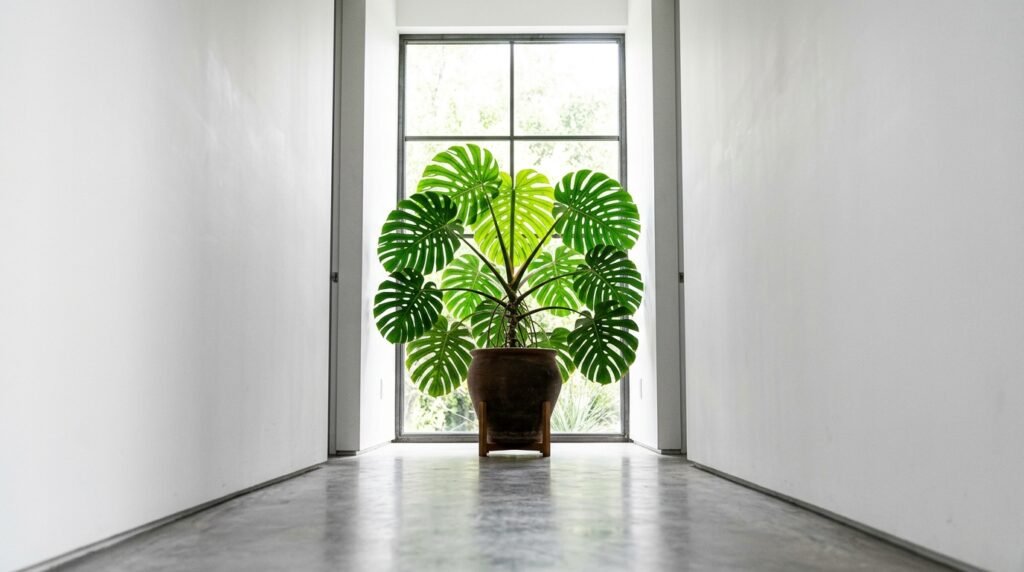
Every well-designed room has an anchor — the thing your eye goes to first when you walk in. Usually designers achieve this with a bold piece of furniture or a piece of art. But a large plant does the job just as well, and often better.
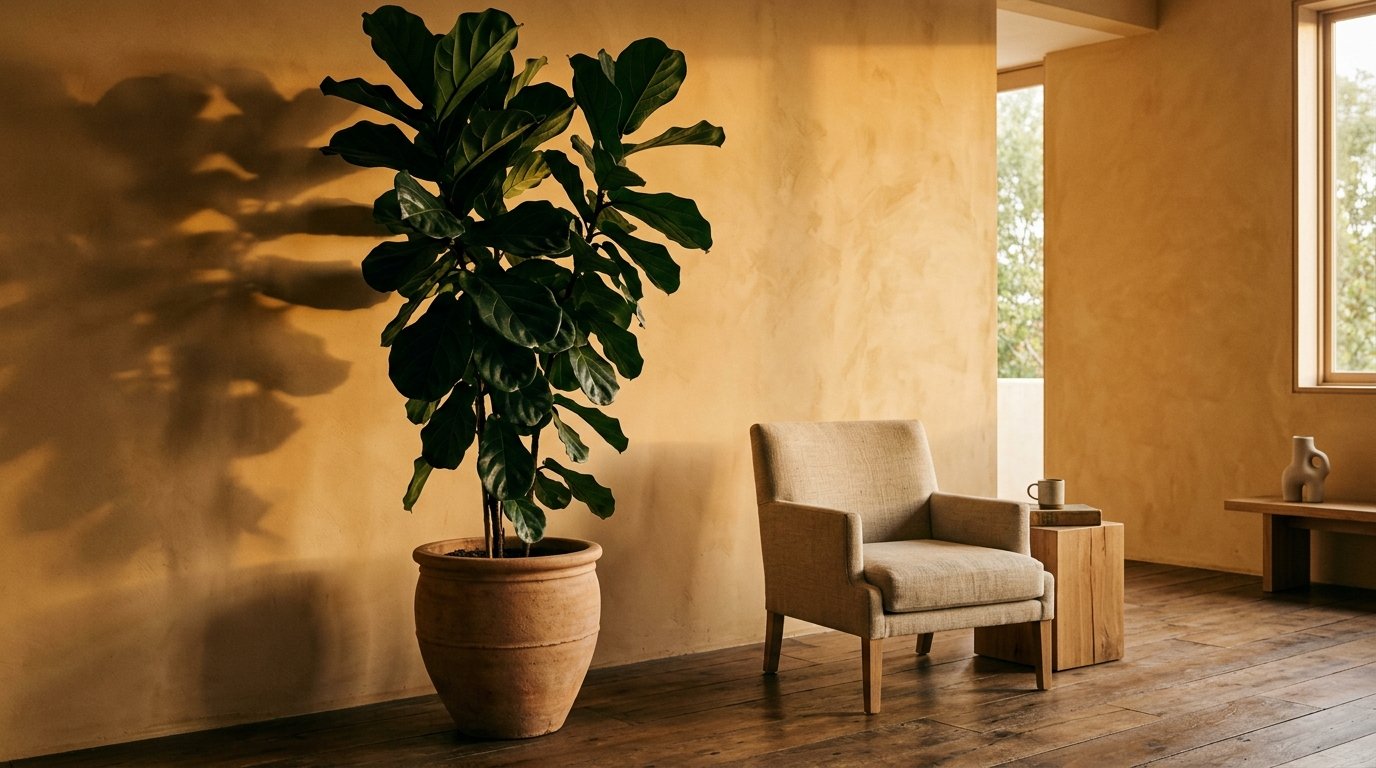
Think fiddle leaf fig. Monstera. Areca palm. These aren’t background plants — they’re presence. The moment you walk into a room with a well-placed fiddle leaf fig in the corner, you feel it before you consciously notice it. It commands attention. It sets the tone.
If your room currently has no clear focal point, start there. Pick one statement plant, put it somewhere intentional — not crammed in a corner because it fits, but positioned because it leads the eye — and watch what happens to the whole room.
The Odd Number Rule (And Why Your Brain Thanks You For It)
Here’s something most people don’t know: our brains are pattern-recognition machines. When we see two plants, four plants, six plants, the brain immediately clocks the symmetry. And symmetry, while tidy, tends to flatten a room. It reads as planned. Deliberate in a rigid way. Safe.
Odd numbers break that predictability in the best possible way.
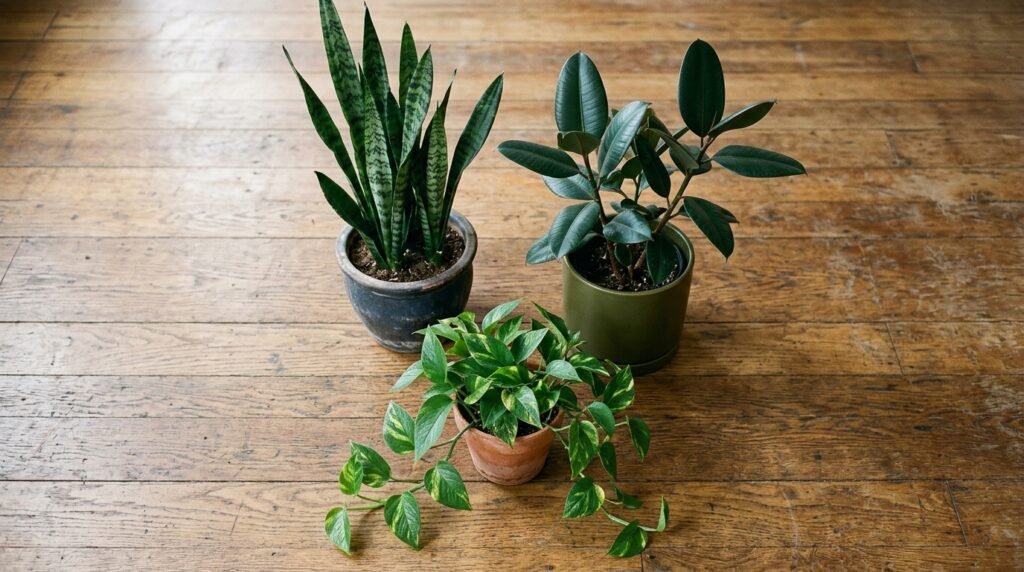
Three plants. Five plants. Seven if you’re going big. The brain can’t neatly pair them up, so instead of analyzing the arrangement, it just feels it. And what it feels is interesting. Organic. Designed by someone who knows what they’re doing.
This is one of those tricks that costs nothing to implement but immediately separates a room that looks “put together” from one that just looks like furniture happened to land in the same space.
Layer Heights and Textures Like You Mean It
Once you’re thinking in groupings, the next move is variety. And this is where it gets genuinely fun.
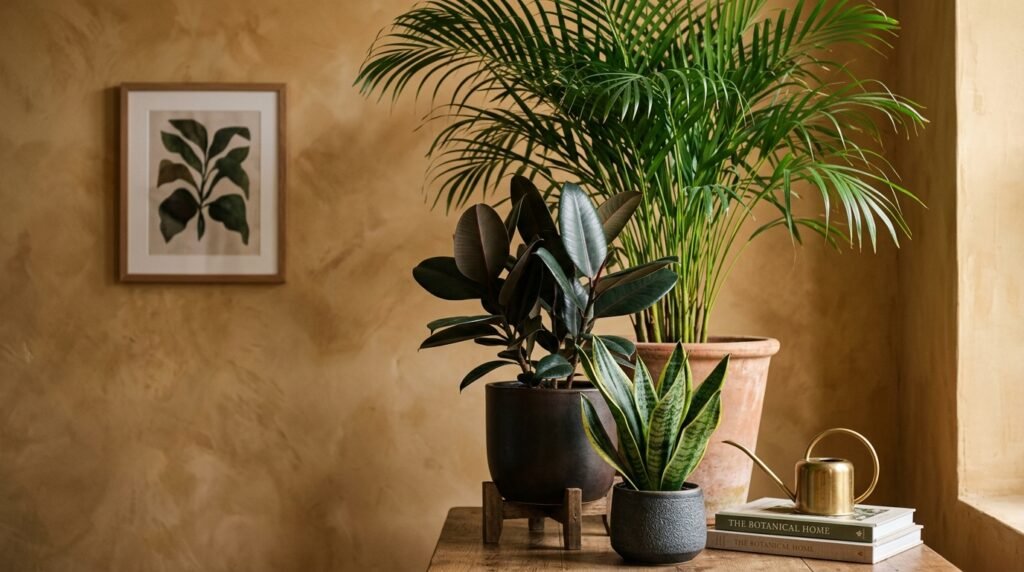
Don’t cluster three identical plants at the same height. That’s just symmetry wearing a different outfit. Instead, think in layers: tall, medium, small. A full areca palm in the back. A rubber plant in the middle. A snake plant low in the front. Different heights, different leaf shapes, different textures — suddenly you have something that looks like it took real thought, even if it took twenty minutes to arrange.
This layering approach creates depth. It gives the eye somewhere to travel. And because you’re mixing plant types freely, the combinations are effectively endless. You’re not locked into a style or a palette the way you are with furniture.
The Cheapest Redesign You’ll Ever Do
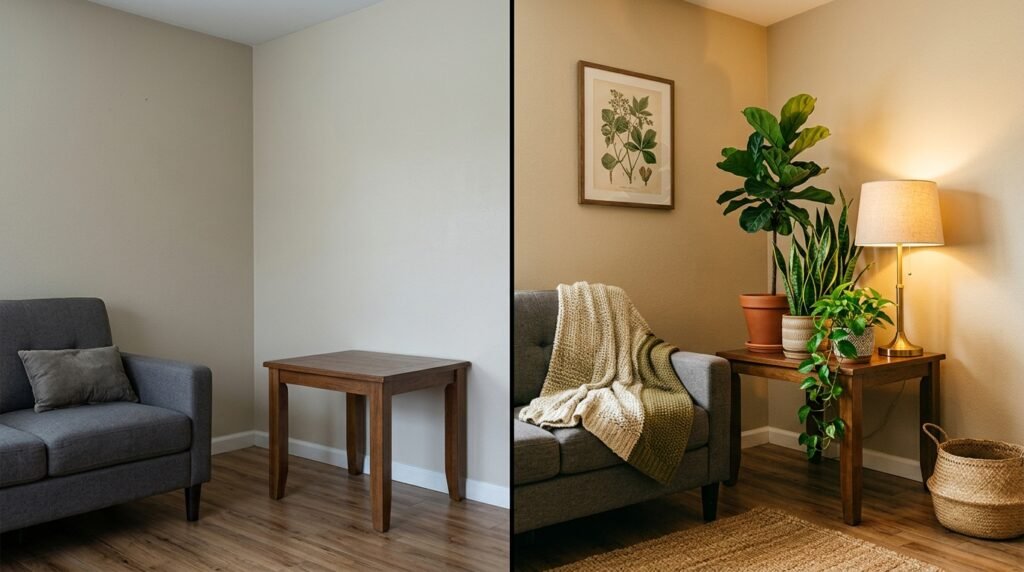
Here’s the part worth sitting with: changing the feel of a room is usually expensive and annoying. New furniture. New rugs. New lighting. Even swapping out pillows adds up faster than it should.
Plants don’t work that way.
You can completely transform a room’s ambience — its energy, its warmth, its visual complexity — just by rearranging and adding plants. No delivery fees. No assembly required. No committing to a color that might feel wrong in six months.
One room, redesigned with plants alone, can feel like a different space entirely. That’s not an exaggeration — it’s something you can test this weekend.
The shift from treating plants as accessories to treating them as design tools is smaller than it sounds. You don’t need a lot of plants. You don’t need rare or expensive ones. You need intentionality: one anchor, grouped in odd numbers, layered in height and texture.
Do that, and your room stops looking like you tried. It starts looking like you knew.
Creative note: I led with the “punctuation vs. design” contrast to immediately frame the post’s POV — this isn’t a listicle of tips, it’s an argument for a different way of thinking about plants. The odd-number section leans into the psychology angle because that’s the most counterintuitive insight in the transcript and the one most likely to make someone stop and think.