
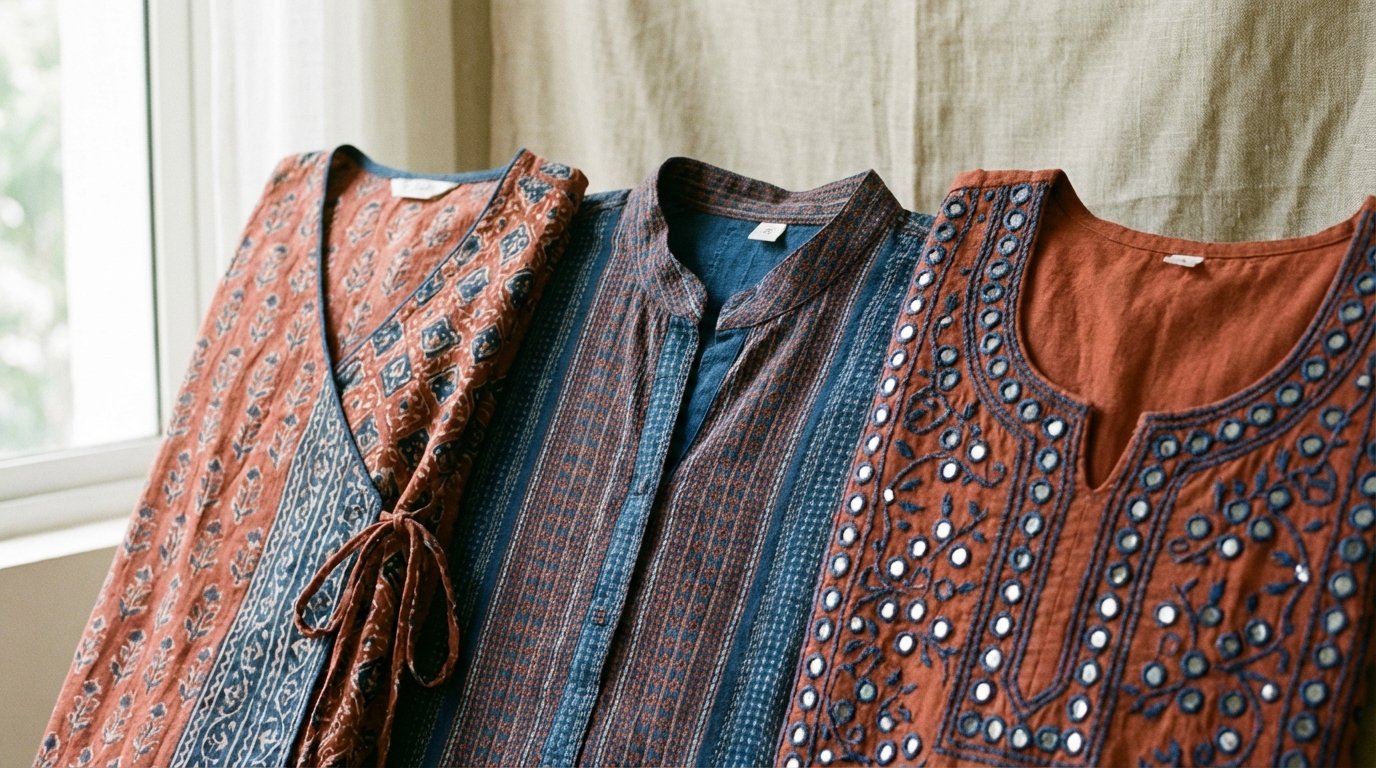
The neckline is the first thing anyone notices about your cotton suit — and the right one can transform a plain, everyday piece of fabric into something that feels intentional, polished, and deeply personal.
Whether you’re getting a suit stitched for Eid, Diwali, a family gathering, or just a comfortable everyday look, the neck design carries more weight than most people give it credit for. It frames your face, sets the mood of the outfit, and signals whether you’re going for relaxed and casual or occasion-ready and dressed up. And when you’re working with cotton — one of the most versatile, breathable, and tailor-friendly fabrics out there — the possibilities are genuinely endless.
Below, you’ll find 33 distinct cotton suit neck design ideas, ranging from timeless classics you can wear every day to statement-making cuts reserved for weddings and festivals. Each one comes with styling guidance, embellishment tips suited to cotton fabric, and a note on which body types and face shapes it works best for — because that’s the detail most articles skip entirely.
Before you scroll: if you only pick one idea from this list, start with #3 (Mandarin Collar) or #9 (Angrakha Wrap) — both are endlessly versatile and photograph beautifully on every body type.
1. Classic Round Neck with Contrast Piping
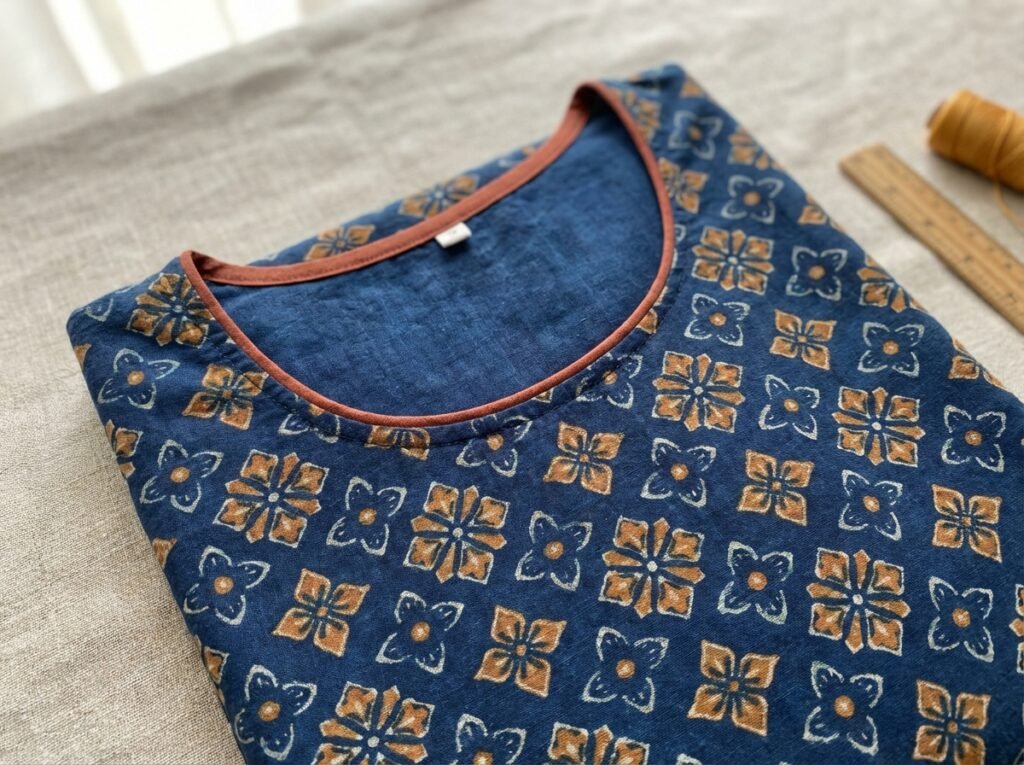
What it is: A simple, close-fitting round neckline finished with a narrow strip of contrasting fabric sewn along the inner edge. The piping can be 2–4mm wide and done in a solid colour, print, or even metallic fabric.
Why it works for cotton suits: The clean finish prevents fraying (cotton edges can be tricky), while the contrast detail adds visual interest without any embroidery cost. On printed cotton, piping in a colour pulled from the print creates a ‘designed from within’ look.
How to get it: Tell your tailor: ‘Round neck with piping in [colour X], 3mm wide.’ Bring a swatch or thread sample for matching. No extra fabric required beyond a quarter-metre of contrast material.
Best for: All body types and face shapes. Works beautifully on block-printed cottons, mul cotton, and khadi.
Experience signal: Tailors consistently find that piped round necks hold their shape better over repeated washing than raw-edge or only-serged necks — a practical advantage with daily-wear cotton suits.
Pro tip: If your suit has a printed bottom and a plain top, match the piping to the dominant print colour so both pieces feel like one cohesive outfit.
Cost & effort: Minimal — the piping fabric costs under ₹50–₹100 and adds little to stitching charges. Accessible for any budget.
2. Deep V-Neck with Potli Button Closure
What it is: A V-neckline that extends several inches down from the base of the throat, with a row of small, fabric-covered potli (dome-shaped) buttons running from the V-point upward or along the opening.
Why it works for cotton suits: The V-line elongates the neck and torso, creating a tall, lean silhouette. Cotton’s structure holds the V cleanly without collapsing — unlike lighter georgettes. Potli buttons add a handmade, artisanal feel that pairs perfectly with hand-block-printed or natural-dyed cottons.
How to get it: Specify the depth of the V to your tailor — typically 4–7 inches from the base of the neck is the most flattering range. Ask for a button placket so the neckline can open for easy dressing.
Best for: Round or square faces (the vertical V-line adds length). Works best on women with a medium to fuller bust — avoid very deep Vs if you prefer a modest look.
Experience signal: The most common mistake with this design is making the V too deep or too wide. A 5-inch deep, 3-inch wide V hits a sweet spot that reads elegant rather than revealing.
Pro tip: Use self-fabric (same fabric as the suit) for potli buttons on printed cottons. The pattern matching on a tiny dome creates a beautifully intricate detail.
Cost: Potli buttons cost ₹5–₹15 each; plan for 5–7 buttons. Total addition: ₹100–₹200 over basic stitching.
3. Mandarin Collar (Chinese Collar)
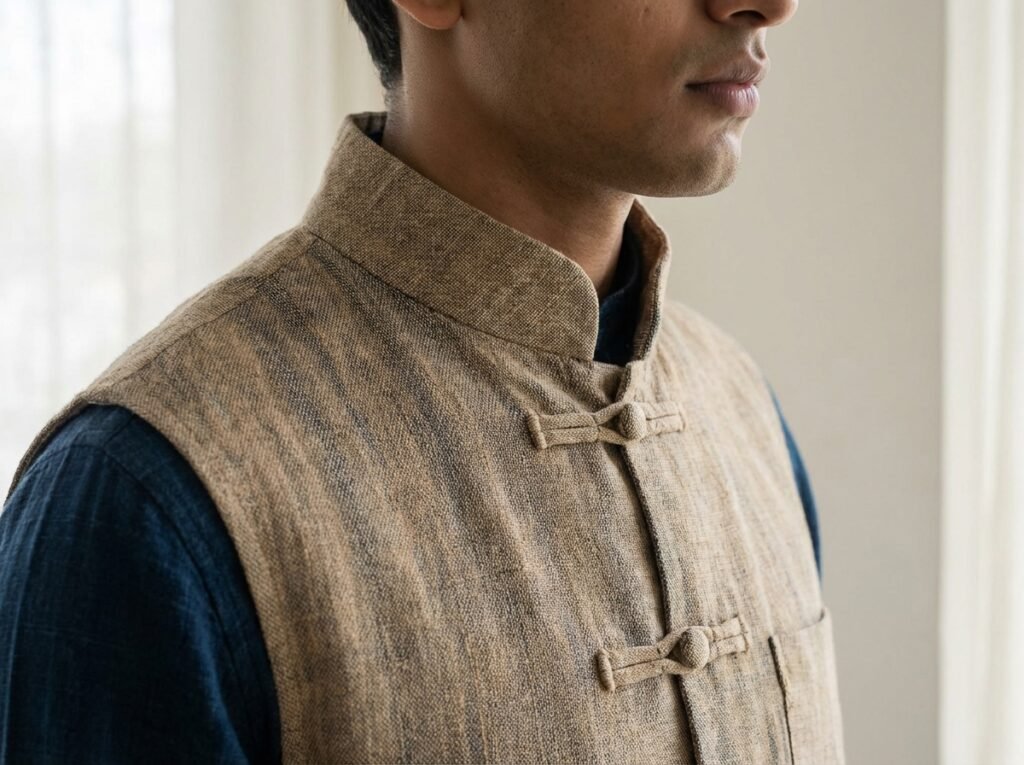
What it is: A short, stand-up collar that circles the neck without folding down, typically 1–1.5 inches tall. It closes at the front with button loops or hooks.
Why it works for cotton suits: The mandarin collar is the most consistently flattering neck design for Indian cotton suits — it provides structure without rigidity, looks equally appropriate at the office and at festive events, and never looks dated. Cotton holds the collar upright naturally without needing interfacing if the fabric has decent body.
How to get it: Specify height to your tailor (1 inch is modest, 1.5 inches is more structured). Request 3–5 button loops in matching fabric. Avoid interfacing on lighter mul cotton — just cut it on the straight grain for natural stiffness.
Best for: All body types. Particularly flattering on long necks (the collar adds framing) and suits women who prefer a covered, traditional look.
Experience signal: Mandarin collars photograph exceptionally well — the clean vertical line frames the face in a way no other neckline does. This is why it’s so frequently seen in fashion editorials for ethnic wear.
Pro tip: Add a 2mm contrast piping along the top edge of the collar for a subtle decorative finish that elevates a plain cotton suit into something special.
Cost: No additional fabric cost beyond stitching. Standard tailoring — most tailors are very comfortable with this design.
4. Boat Neck with Gota Patti Border
What it is: A wide, shallow neckline that follows the collarbone from shoulder to shoulder, finished with a row of gota patti (flat metallic ribbon trim) along the inner edge.
Why it works for cotton suits: The boat neck is one of the most effortlessly sophisticated silhouettes for traditional wear. On cotton, the gota patti trim adds a festive, Rajasthani-inspired richness without making the outfit feel heavy — perfect for summer weddings and haldi ceremonies.
How to get it: Specify the width as ‘collarbone to collarbone’ to your tailor. Gota patti ribbon is available in gold and silver and comes in widths from 3mm to 1.5 inches — a 6mm trim is elegant; a 1-inch trim is statement-making.
Best for: Petite to average frames. Particularly effective on women with narrow or sloping shoulders — the wide horizontal line creates the visual impression of broader shoulders.
Experience signal: Avoid gota patti trim that is stiffer than the cotton fabric itself — it will pucker and pull. Choose a softer, sewable gota ribbon (not iron-on) for best results.
Pro tip: Have your tailor sew gota patti on both the inner and outer edge of the neckline for a more polished, finished look — especially if you are wearing the suit to a daytime event where the neckline is prominently visible.
Cost: Gota patti ribbon costs ₹30–₹120 per metre depending on quality and width. One metre is more than enough for a neckline.
5. Sweetheart Neckline with Zari Edging
What it is: A curved neckline that dips in a double arch at the centre front, resembling the top of a heart. Finished here with a fine zari (metallic thread) border running along the edge.
Why it works for cotton suits: The sweetheart line is surprisingly versatile in ethnic wear. On cotton, it avoids the overtly Western connotations it can carry on ball gowns — especially when paired with a kurta-length suit and churidar. The zari edging bridges the gap between casual fabric and festive occasion.
How to get it: Ask your tailor for a ‘heart-shaped neckline’ and show a reference image. Specify whether you want a shallow arch (more conservative, 2–3 inches deep) or a pronounced dip (3.5–4 inches). Zari border tape is available at most fabric shops.
Best for: Full-bust figures — the sweetheart line provides flattering support and defines the décolletage tastefully. Less suitable for very small bust sizes where the curves won’t be filled.
Experience signal: The back neckline matters with a sweetheart front — pair it with a modest, straight back or a keyhole back detail rather than a deep scoop, which can pull the front line upward unexpectedly.
Pro tip: Choose a cotton suit in a solid or tone-on-tone weave for a sweetheart neckline — the structured shape gets lost on busy or bold prints.
Cost: Zari border tape costs ₹40–₹150 per metre. Half a metre is sufficient for the neckline.
6. Square Neck with Contrast Embroidery Panel
What it is: A straight-edged neckline with horizontal sides and a flat bottom — essentially a square or rectangular opening — framed with a patch of embroidered fabric across the chest.
Why it works for cotton suits: The square neckline is one of the most photogenic cuts for traditional Indian wear. The flat geometry reads as modern and structured. An embroidery panel (in mirror work, kasuti, or phulkari) transforms a plain cotton suit into something that looks bespoke and designer.
How to get it: The embroidery panel is sewn as a separate yoke piece, which your tailor then attaches at the neckline. This means you can buy pre-embroidered fabric panels from markets like Chandni Chowk or Surat and bring them to your tailor — no need to commission custom embroidery.
Best for: All face shapes. Particularly striking on longer faces as the horizontal line of the square adds visual width. Suits medium to taller heights best.
Experience signal: Pre-embroidered panels vary wildly in quality — hold them up to light before buying. Avoid panels where the embroidery threads are loose on the reverse, as they tend to pull and snag over time on cotton fabric.
Pro tip: Match the background colour of the embroidery panel to the suit fabric so it reads as a seamless continuation of the garment rather than an appliqué patch.
Cost: Pre-embroidered panels range from ₹200–₹800+ depending on technique and quality. Mirror-work panels are affordable; zardozi panels cost more.
7. Keyhole Front Neck
What it is: A high or round neckline with a small, teardrop-shaped cutout at the centre front, often with a small button or hook closure at the top of the opening.
Why it works for cotton suits: The keyhole is the perfect compromise between modest and interesting. It keeps the overall silhouette covered while adding a small moment of visual detail that elevates the simplest of cotton suits. Cotton holds the keyhole edges cleanly — the fabric doesn’t fray or gape the way chiffon or georgette can.
How to get it: Ask your tailor for a ‘keyhole neck, teardrop shape, 1.5 inches deep.’ Request the top to be finished with a hook-and-eye or fabric loop closure. The keyhole can be placed at the front, back, or both.
Best for: Most body types. The vertical teardrop reads as an elongating detail, making it especially flattering on shorter or fuller figures. Good for those who want minimal skin exposure.
Experience signal: The most common error is making the keyhole too small — under 1 inch — where it almost disappears visually. A 1.5–2 inch keyhole is the sweet spot that reads clearly without being obvious.
Pro tip: Line the interior edges of the keyhole with a tiny strip of contrast bias tape. It prevents fraying, looks finished, and adds a subtle detail visible only up close.
Cost: No additional fabric cost. Purely a tailoring detail — add about ₹50–₹100 to stitching charges.
8. High Neck with Pintuck Detail
What it is: A tall, close-fitting neckline (sitting at or near the throat) with a column of narrow pintucks — tiny, stitched pleats — running vertically from the collar down the centre front of the kurta.
Why it works for cotton suits: High necks look particularly refined on cotton, especially in natural weaves like khadi or handloom — the fabric texture adds warmth and character. Pintucks are a tailoring technique that cotton supports exceptionally well (unlike slippery synthetics where pintucks lose definition). The effect is a beautifully textured, garment that looks like it belongs in a boutique.
How to get it: Specify to your tailor: ‘High neck, 1.5 inches, with 5 pintucks down the placket, each 3mm wide.’ Pintucks are stitched from the inside and create a raised ridge visible on the outside.
Best for: Long, slim figures and those who prefer a covered, traditional aesthetic. Very suited to formal and professional occasions.
Experience signal: Pintucks require good cotton — stiff, synthetic cottons don’t hold the crisp line of a pintuck. Use 100% cotton with a slightly structured weave (shirting cotton, lawn, or cambric) for best results.
Pro tip: Combine pintucks with a standing band collar for a Nehru-jacket-inspired suit that works beautifully for both office wear and festive occasions.
Cost: Pintucks add time, not materials. Budget an extra ₹100–₹200 for a tailor’s additional effort. Well worth it.
9. Angrakha-Style Wrap Neckline
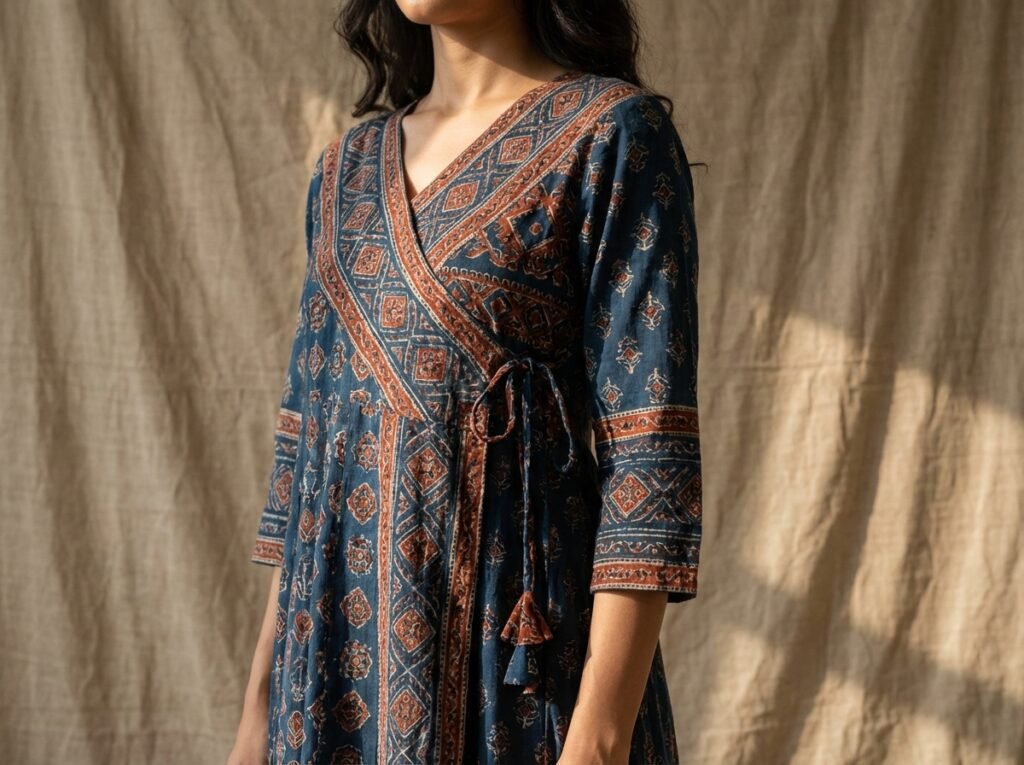
What it is: A traditional Indian neckline where the front panels of the kurta cross diagonally — one panel overlapping the other in an asymmetric wrap — tied together at the waist with dori strings or potli buttons. The neckline is open and angular on one side.
Why it works for cotton suits: The angrakha is one of the most graceful traditional silhouettes in Indian clothing, and cotton makes it incredibly wearable for daily use. The diagonal cut adds movement and drape to even the most ordinary block-printed cotton. It also adjusts beautifully for different bust sizes since it’s wrapped rather than fitted.
How to get it: Show your tailor a reference image — angrakha cuts vary from subtle asymmetric overlaps to deeply wrapped, elaborate front panels. A simple version with a 4-inch diagonal overlap and two dori ties at the side seam is both beautiful and beginner-tailor-friendly.
Best for: All body types. Particularly flattering on plus-size figures as the diagonal line creates movement and breaks horizontal visual lines. Works on all face shapes.
Experience signal: Angrakha suits look best when the fabric has some print or texture — a plain, solid cotton in an angrakha cut can read as shapeless unless it’s in a very rich colour. Go for ajrakh, batik, or ikat prints for maximum impact.
Pro tip: Add a small tassel or button to the dori tie — even a simple one — to make the knot decorative rather than purely functional.
Cost: Standard stitching with an additional charge of ₹100–₹200 for the wrap construction. Dori string and potli buttons cost ₹50–₹100.
10. U-Neck with Kantha Embroidery Border
What it is: A smooth, curved U-shaped neckline — wider and slightly deeper than a round neck — with a border of kantha embroidery (Bengali running stitch in colourful threads) sewn along the inner edge.
Why it works for cotton suits: Kantha embroidery is traditionally done on cotton and muslin, so it has an inherent affinity with the fabric. The running stitches lie flat and don’t add bulk to the neckline — unlike raised embroidery techniques that can feel scratchy against skin. The U-neck itself is cool and comfortable, making it ideal for summer and monsoon-season suits.
How to get it: Purchase a length of pre-worked kantha border fabric (widely available in West Bengal, and online) and bring it to your tailor. Alternatively, commission kantha along the finished neckline from an embroidery artisan — this costs more but allows custom motif choices.
Best for: Oval and round face shapes. The U creates gentle curves that soften angular faces and complement rounder ones without adding width.
Experience signal: Pre-worked kantha borders come on cotton strips — wash them before attaching to your suit to pre-shrink them. Nothing looks worse than an embroidered border that puckers after the first wash.
Pro tip: Match the kantha thread colours to at least two colours in your cotton print or weave. This creates cohesion that makes the embellishment feel designed, not added as an afterthought.
Cost: Pre-worked kantha border strips cost ₹150–₹500 per metre. One metre covers the neckline with material to spare.
11. Scoop Neck with Lace Trim
What it is: A deeply curved U-shape that sits lower than a standard round neck, finished with a strip of cotton or crochet lace sewn along the inner or outer edge of the neckline.
Why it works for cotton suits: The scoop neck is one of the most relaxed, everyday-friendly necklines in the ethnic wardrobe. Adding lace trim elevates it without adding weight — the lace feels airy and feminine, complementing cotton’s natural lightness. Cotton lace trim (rather than synthetic) washes and wears beautifully alongside the fabric.
How to get it: Choose a scoop depth of 3–5 inches for a modest but defined curve. Buy cotton crochet or eyelet lace trim from a local fabric market — 1 cm to 2 cm width works best for a subtle effect, while 3–4 cm lace creates a more decorative statement.
Best for: Slim to average figures. Works on all face shapes. Particularly suited to casual and semi-formal occasions — less appropriate for solemn or traditional ceremonial events.
Experience signal: Lace trim on cotton suits is one of those details that looks inexpensive when done with synthetic lace and genuinely lovely when done with cotton or handmade crochet. The difference is visible at arm’s length.
Pro tip: For Pakistani-style cotton suits, lace trim at the neckline, sleeve edges, and dupatta border creates a cohesive, styled look without any embroidery.
Cost: Cotton lace trim costs ₹30–₹80 per metre. Budget ₹100–₹200 for neckline and sleeve applications.
12. Peter Pan Collar
What it is: A flat, round collar with curved edges that lies flat against the garment — like a rounded sailor collar without a sailor’s points. It wraps from one side of the neck opening to the other, giving a sweet, structured look.
Why it works for cotton suits: The Peter Pan collar carries a charming, retro-feminine quality that works beautifully on simple cotton kurtas for casual and daytime wear. On cotton, it sits flat naturally and can be cut from a complementary fabric — contrast white on a coloured suit, or printed cotton on a plain one — for a playful effect.
How to get it: Ask your tailor for a ‘flat round collar, 2.5 inches wide.’ It can be cut in the same fabric as the suit or in a contrast fabric. The collar is attached over a standard round neck opening.
Best for: Petite figures and younger styling aesthetics. Works well on slim to average builds. Suits oval and heart-shaped faces best.
Experience signal: Peter Pan collars on ethnic cotton suits are a relatively under-explored design — which is exactly why they tend to draw compliments. The unexpected mix of a traditional silhouette with a collar detail that reads both retro and contemporary is genuinely distinctive.
Pro tip: Try a Peter Pan collar in white cotton mull or organdy on a block-printed cotton suit — the sheer white collar floating over a rich indigo or red print is unexpectedly striking.
Cost: Half a metre of collar fabric plus standard stitching. Add ₹100–₹150 to stitching costs.
13. Dori Tie-Up Neck with Tassel Ends
What it is: A rounded or V-shaped neckline with a fabric drawstring (dori) threaded through a channel at the collar edge, gathered slightly at the front and tied in a bow or knot with decorative tassels hanging from each end.
Why it works for cotton suits: The dori tie-up is casual, comfortable, and deeply traditional in its roots — found in everything from Lucknawi chikan suits to Rajasthani cotton kurtas. On cotton, the gathered effect at the neckline creates a soft, slightly ruched texture that adds dimension without embellishment. The tassels add movement and colour.
How to get it: Specify the neckline shape (round or V), dori channel depth, and whether you want tassels in matching or contrast colour. The dori can be a fabric tube, twisted cotton cord, or a ready-made macramé drawstring.
Best for: All body types. The gathered quality slightly camouflages the neckline area, making it a comfortable choice for those who prefer less-fitted upper designs.
Experience signal: Ready-to-wear cotton suits with dori tie-ups are a bestseller in Indian summer fashion — and the reason is always the same: they’re adjustable, comfortable, and photograph beautifully. The tassel ends in particular add dimension to images.
Pro tip: Choose tassel colours from the suit’s print or embroidery palette to avoid the ‘borrowed from a different outfit’ look.
Cost: Dori cord costs ₹20–₹50; tassels ₹10–₹30 each. Total addition is minimal — under ₹200.
14. Shirt Collar / Notched Collar
What it is: A structured collar with two flat panels that fold down from the neck band with a V-shaped notch at the front opening — identical in construction to a formal shirt collar.
Why it works for cotton suits: The shirt collar brings a decisively formal, workwear edge to a cotton suit. On shirting cotton, cambric, or lawn, it creates a crisp silhouette ideal for office wear, formal occasions, and professional ethnic dressing. The structure of a shirt collar works especially well on woven cotton where the fabric has sufficient body to hold the fold.
How to get it: Ask your tailor for a ‘shirt collar with a front placket and buttons.’ Specify whether you want the collar points short (modern, shorter collar tips) or long (classic, more traditional). An interfacing lining inside the collar band is recommended for maintaining shape.
Best for: Slim to average figures. The collar adds structured visual width at the shoulders, which can be overpowering on very broad builds. Works well for professional or office ethnic wear.
Experience signal: Shirt-collar cotton suits in solid colours — particularly white, pale blue, or soft mustard — are a reliable, elegant choice for formal occasions when you want traditional ethnic wear without embellishment.
Pro tip: Keep the placket buttons in matching self-fabric for a tonal, minimalist look. Or use contrast resin or wooden buttons for a craft-market aesthetic.
Cost: Standard stitching with interfacing adds ₹50–₹100 to tailoring costs.
15. Deep U-Neck with Mirror Work Detail
What it is: A smoothly curved, deeper U-neckline with small shisha (mirror) pieces hand-stitched around the neckline edge in a border pattern.
Why it works for cotton suits: Mirror work — particularly in the Kutchi and Rajasthani traditions — is done on cotton, making it an inherently compatible technique. The mirrors catch light beautifully and give festive cotton suits a handcrafted, artisanal character that feels genuinely traditional rather than decorative-for-the-sake-of-it.
How to get it: You can either buy pre-embroidered mirror-work fabric for the neckline panel, or commission a local mirror-work artisan to apply it along the finished neck edge. The latter is more expensive but produces cleaner work on finished garments.
Best for: Medium to full builds. The curved U is flattering across most body types. Mirror work draws the eye upward to the face — a useful focal point for festive occasions.
Experience signal: Mirror-work embroidery on cotton is most durable when the mirrors are secured with a surrounding stitch (chain stitch, satin stitch, or buttonhole stitch) rather than just a loop — the loop-only method loses mirrors within a few wears.
Pro tip: Pair a mirror-work U-neck cotton suit with oxidised silver jewellery — the mixed metals (shiny mirrors, matte silver) create a layered, eclectic look that feels curated.
Cost: Pre-embroidered mirror-work border strips: ₹200–₹600 per metre depending on density and craftsmanship.
16. Asymmetric Side-Opening Neckline
What it is: A neckline where the collar opening is offset to one side rather than running down the centre front — creating a diagonal or asymmetric closure from the neck down to one side of the chest or waist.
Why it works for cotton suits: Asymmetric necklines bring a contemporary, design-forward quality to traditional silhouettes. On cotton, the asymmetry is especially striking when paired with block prints or geometric patterns where the design is cut at an unexpected angle. It also provides modest coverage while still being visually interesting.
How to get it: Specify the direction (right or left side) and depth of the opening to your tailor. A simple loop-and-button closure keeps it neat. For a more elaborate version, add a facing strip in contrast fabric along the opening edge.
Best for: Tall and slim figures where the diagonal line creates movement. Also excellent for plus-size dressing as the asymmetry draws the eye diagonally rather than horizontally.
Experience signal: The asymmetric neckline is where most tailors either excel or struggle — it requires careful pattern adjustment. Show a detailed reference image and ask to see the mock-up before cutting the final fabric.
Pro tip: The side opening direction matters. In traditional Indian dress, closures have cultural significance — but for everyday wear, simply choose whichever side is easier for you to dress yourself.
Cost: Standard stitching. Add ₹150–₹250 for the additional tailoring complexity.
17. Princess-Cut Neck with Zardozi Patch
What it is: A close-fitting round or V-neck combined with a princess-cut kurta (seam running vertically from shoulder to hem rather than side seams) and a small zardozi embroidery patch placed at the centre-front neckline.
Why it works for cotton suits: Princess-cut construction gives cotton suits a tailored, structured fit that flatters the torso beautifully. A zardozi patch — featuring gold or silver wire embroidery — adds a concentrated dose of glamour at the neckline without requiring all-over embroidery. This is efficient luxury.
How to get it: The princess cut must be part of the initial pattern-making — it cannot be retrofitted to a standard kurta. Ask your tailor specifically for a ‘princess-cut kurta with a zardozi patch at the neck.’ Buy the patch separately from an embroidery supplier or fashion district market.
Best for: Slim to average figures. The princess cut emphasises the waist and chest, making it most flattering on figures with defined curves.
Experience signal: Zardozi patches on cotton are best backed with a small piece of muslin or fine cotton before attaching — the metal wires can pull or wear the cotton fabric at the attachment points over time.
Pro tip: For daytime events, choose a zardozi patch in antique gold rather than bright gold — it photographs less harshly and reads as more elevated and understated.
Cost: Zardozi patches range from ₹300–₹1500+ depending on size and intricacy. Even a modest patch elevates a plain cotton suit dramatically.
18. Horizontal Kaira Slit Neckline
What it is: A high or closed neckline with a narrow horizontal slit (rather than a vertical keyhole) at the centre front — like a small, cat-eye-shaped opening just below the collar. The edges are finished with piping or binding.
Why it works for cotton suits: The kaira slit neckline is a distinctive, somewhat unexpected design that creates a hint of skin exposure without a conventional cutout. On a simple, plain-coloured or subtly printed cotton suit, this detail becomes the entire design focus — which is a good thing. It is ideal for festive and party-wear occasions.
How to get it: Specify the slit length (1.5–2.5 inches long, 5mm wide is the classic proportion) and the finishing — piping in a contrast colour makes it pop; matching piping keeps it refined. Ask your tailor to reinforce the slit ends with a small bar tack to prevent tearing.
Best for: Slim and average figures on casual festive and party occasions. Less suited for very formal or conservative settings.
Experience signal: Cotton suits designed around this neckline are best kept simple everywhere else — a kaira slit on a heavily embroidered suit looks confused. The design works because of contrast with simplicity.
Pro tip: Place the kaira slit slightly below the hollow of the throat rather than at the very collar edge — a position 1.5 inches below the base of the neck tends to look most natural.
Cost: Purely a tailoring detail — add ₹50–₹100 for the additional finishing work.
19. Patchwork Contrast Neck Yoke
What it is: A large neck-to-chest yoke panel made from a different fabric than the main kurta body — typically in a contrasting print, colour, or weave — creating a two-toned effect at the upper body.
Why it works for cotton suits: Patchwork and contrast yokes are one of the most traditional approaches to Indian suit construction, particularly in Punjabi suit design. On cotton, the technique also serves a practical purpose — you can use leftover fabric from the salwar bottom as the yoke panel, creating natural coordination between the two pieces.
How to get it: Bring both fabrics to your tailor — the main kurta fabric and the contrast yoke fabric. The yoke runs from the neckline to approximately 6–8 inches below the shoulder seam. It can be cut on the bias for added interest.
Best for: All body types. The yoke design draws attention to the upper body and neckline area — choose a dark or plain yoke fabric if you want to minimise the upper body, and a bright or printed one to accentuate it.
Experience signal: The most visually successful contrast yokes use fabrics that share at least one common element — a colour, a print scale, or a texture — rather than two entirely unrelated fabrics. Complete contrast reads as mismatched; considered contrast reads as designed.
Pro tip: Finish the yoke-to-body seam with a strip of bias tape in a third colour for a bold, multi-toned statement look.
Cost: No additional fabric cost if using salwar fabric for the yoke. Standard stitching charges apply.
20. Scalloped Neckline
What it is: A neckline finished with a series of small, uniform curved arches (scallops) along the edge, creating a decorative wave pattern around the collar.
Why it works for cotton suits: Scalloped edges are delicate-looking but structurally firm on cotton — the fabric’s body supports each arch cleanly without flopping. The effect is simultaneously vintage and feminine, giving even a simple cotton kurta a considered, handmade quality. Works beautifully on white, cream, and pastel suits.
How to get it: Scallops are cut directly into the neckline facing or finished with bias binding. Your tailor will need to cut a template for consistent arch size — specify the arch diameter (1–1.5 cm is subtle, 2 cm is more pronounced) and whether you want them on the front neckline, back, or both.
Best for: All body types. Particularly charming on petite frames where delicate details feel proportionate. Suits casual, daytime, and semi-formal occasions.
Experience signal: Poorly cut scallops — where the arches are different sizes or unevenly spaced — ruin the effect immediately. Insist your tailor uses a cardboard template cut from the exact arch measurement. It takes five extra minutes and makes a significant difference.
Pro tip: For a subtle version, keep the scallops in the same fabric as the suit. For a statement version, cut the scalloped facing from a contrast cotton or eyelet fabric.
Cost: Purely a tailoring skill charge. Add ₹100–₹200 to standard stitching.
21. Cold-Shoulder Cutout Neckline
What it is: A design where the shoulder area of the kurta is partially or fully cut away, leaving a horizontal opening at each shoulder while the neckline itself remains intact. The remaining sleeve begins below the shoulder cutout.
Why it works for cotton suits: Cold-shoulder cotton suits became widely popular in South Asian fashion through the 2015–2020 period and remain a flattering, contemporary option for casual festive occasions. Cotton is the ideal fabric for this style since the cutout edges hold their shape and the fabric doesn’t require complex structural support across the shoulder void.
How to get it: Specify the cutout width (3–5 inches along the shoulder seam) and whether you want the opening as a clean slit or slightly gathered. The sleeve then reattaches below the cut. A simple hem finishing on the cutout edges works well; a contrast facing creates a more designed look.
Best for: Slim to average figures on casual and semi-festive occasions. Not appropriate for formal or conservative settings.
Experience signal: Cold-shoulder suits in dark-coloured cotton paired with light, sheer dupattas create a layering effect where the dupatta softens the cutout for more modest occasions — giving the outfit two distinct looks.
Pro tip: Finish the cutout edges with a very thin band of contrast fabric — even 4mm of a metallic or contrast colour creates a clean, purposeful look rather than a raw-edge opening.
Cost: Standard stitching. Add ₹150–₹200 for the additional pattern and assembly complexity.
22. Gathered Ruched Neckline
What it is: A neckline where the fabric is gathered into soft, ruffled folds along the collar edge, creating a textured, romantic frame around the neck and chest.
Why it works for cotton suits: Lightweight cotton — particularly mull cotton, mul mul, or fine lawn — gathers beautifully into soft ruffles that feel airy and feminine without adding bulk. The ruched neckline softens the geometry of a suit, making it more fluid and less structured — a good counterpoint to angular embroidery or bold prints.
How to get it: The gathering must be built into the initial pattern. Ask your tailor for a ‘gathered/ruched neckline with a lining’ — the lining prevents the gathered layers from sitting directly against skin, which can be uncomfortable in cotton. Specify ruffle depth (1–2 inches is subtle, 3 inches is dramatic).
Best for: Slim figures. Ruffles add visual volume at the chest — flattering for petite builds. Less suited to fuller busts where ruffles can add unwanted width.
Experience signal: Gathered necklines in cotton look best when the fabric has been pre-washed — fabric that shrinks post-stitching can cause the gathers to pull tighter than intended and distort the neckline shape.
Pro tip: A gathered neckline needs a very plain silhouette everywhere else. No embroidery, minimal print — let the texture of the gathering be the entire design story.
Cost: No additional materials. The extra stitching time may add ₹100–₹150 to tailoring charges.
23. Triangle Cutout on High Neck
What it is: A high, closed neckline with a small triangle of fabric cut away at the centre front — pointing downward like an inverted triangle — creating a defined, geometric cutout.
Why it works for cotton suits: High necklines can feel stifling in summer heat — the triangle cutout solves this elegantly. It provides ventilation and visual interest while keeping the overall silhouette modest and structured. On plain or solid-coloured cotton, the geometric cutout becomes an architectural detail that elevates the entire outfit.
How to get it: Specify the triangle dimensions — typically 2 inches wide at the top and 1.5 inches deep works well. Ask for the triangle edges to be finished with a fine bias binding or rolled hem. Reinforce the two lower corners with bar tacks to prevent tearing.
Best for: All body types. Particularly effective on those who prefer high-neck designs but find standard closed collars uncomfortable in warm weather.
Experience signal: The triangle cutout neckline pairs particularly well with structured palazzo trousers and a plain dupatta — the geometric theme of the neckline reads as a considered design decision rather than an incidental detail.
Pro tip: Try the cutout in a contrast direction — instead of pointing down, rotate the triangle so one point faces upward for an unusual, fashion-forward variant.
Cost: Purely a stitching detail. Add ₹50–₹100 to standard charges.
24. One-Shoulder / Off-Shoulder Neckline
What it is: A neckline that covers one shoulder while leaving the other bare — the kurta’s neckline travels from a standard collar point on one side diagonally across to the underarm area on the other.
Why it works for cotton suits: One-shoulder designs in ethnic wear have been popularised by both South Asian runway designers and Bollywood styling. In cotton, the silhouette reads bohemian and artistic — particularly in bold block prints, batik, or indigo fabric. The asymmetry naturally creates visual interest without any embellishment.
How to get it: This requires a pattern specifically designed for the one-shoulder construction — it cannot be adapted from a standard kurta pattern. Bring a detailed reference image. Your tailor will need to add a lining on the exposed-side armhole to ensure the neckline sits securely without slipping.
Best for: Slim and tall figures. The one-shoulder line can visually unbalance shorter or stockier builds. Best for casual festive, beach-wedding, and evening events.
Experience signal: One-shoulder cotton suits look best with minimal jewellery — the bare shoulder already draws attention and competing with heavy necklaces or statement earrings crowds the look.
Pro tip: Pair with a contrast-coloured dupatta draped across the exposed shoulder — it softens the drama and allows the look to work for more conservative occasions.
Cost: Add ₹200–₹300 to stitching for the additional pattern complexity.
25. Tassel Dori Front-Tie Neck
What it is: A low round or U-neck where two fabric or cord strings emerge from either side of the neckline opening and tie in a bow or knot at the centre front, with decorative tassels hanging at the ends.
Why it works for cotton suits: The tie-front neckline is playful, casual, and very easy to style — the adjustable nature means it works across different bust sizes. On printed or embroidered cotton, the tassel strings add movement and femininity without requiring any additional embroidery work.
How to get it: The neckline opening is created first, then fabric loops or cord channels are added at the edges to thread the dori strings through. Ready-made tassel dori sets are available at fabric stores for ₹50–₹150 per pair.
Best for: All body types for casual and daytime festive occasions. The tie-front adds a relaxed, Bohemian quality that works best on cotton suits worn to informal gatherings.
Experience signal: The tie always loosens through the day — which is actually part of the charm. A slightly loosened bow at the neckline by afternoon has a natural, lived-in elegance that stiffly tied bows don’t.
Pro tip: Macramé cord in natural cotton or jute makes a beautiful, earthy dori string that complements natural-dye and block-print cotton suits particularly well.
Cost: Dori and tassel cost ₹50–₹150. Stitching addition: ₹100.
26. Mock Turtleneck / Stand Collar
What it is: A collar that folds over once to create a soft roll just below the chin — taller than a mandarin collar but without the fitted rigidity of a full turtleneck. It sits comfortably against the neck.
Why it works for cotton suits: Mock turtlenecks in cotton are a winter and transitional season staple — warm, comfortable, and understated. On handloom cotton or Khadi, this neckline has a distinctly Indian craft aesthetic that reads simultaneously traditional and contemporary. It works especially well for everyday wear or light festive dressing.
How to get it: Ask your tailor for a ‘mock neck or roll collar, 2.5 inches tall, soft fold.’ Use a double layer of fabric for the collar so it folds cleanly. On thicker handloom cottons, even a single layer provides sufficient body.
Best for: Slim to average figures. The height of the collar creates the illusion of a longer neck on shorter women — most flattering when the collar is in the same colour as the suit.
Experience signal: Mock turtlenecks in cotton are breathable enough for the transitional months (September–October, February–March) but too warm for peak summer — plan your fabric weight accordingly.
Pro tip: A mock turtleneck cotton suit in off-white or natural undyed cotton with subtle pintucks is one of the most versatile ethnic outfits a woman can own — it reads formal enough for Puja and relaxed enough for a weekday.
Cost: No additional material cost. Standard stitching.
27. Back Keyhole with Button Loop Closure
What it is: A plain or simple front neckline combined with a teardrop or round keyhole cutout on the back neckline, closed with a fabric button-and-loop. The drama is in the back.
Why it works for cotton suits: The back keyhole is an under-appreciated design detail — it adds a moment of unexpected elegance visible when the dupatta slips or is worn draped forward. On cotton, the detail is cleanly tailored and very durable. It’s the suit version of ‘nothing to see from the front, everything from the back.’
How to get it: Specify the back keyhole size (1.5–2 inches deep, teardrop shape) and the button loop closure. The front can be as simple as a round neck. Reinforce the keyhole base with a bar tack.
Best for: All body types. Especially effective for those who prefer modest front styling but want a design element that photographs well in group settings and at events.
Experience signal: Back-detail necklines are highly photographed at weddings and events — the moment someone photographs you from behind, the detail does all the work. This makes back keyhole designs a consistently popular choice for special-occasion cotton suits.
Pro tip: Combine a plain front mandarin collar with a back keyhole for a suit that looks conservative from the front and elegant from the back — a combination that works across every type of occasion.
Cost: Purely a tailoring addition. ₹50–₹100 extra.
28. Lotus / Petal Collar
What it is: A decorative collar made of overlapping fabric petals arranged in a circle around the neckline — like a blooming lotus or layered flower. Each petal is individually cut and layered, creating a three-dimensional collar.
Why it works for cotton suits: The petal collar is a statement design that is most effective on solid-coloured or tone-on-tone cotton suits where the dimensional collar can take centre stage. Cotton organdy or stiffened cotton is ideal for the petals as it holds its three-dimensional shape without wilting, unlike heavier weaves.
How to get it: This is a specialist collar construction that requires a tailor familiar with decorative collar work. Bring a reference image. The petals are best cut from a contrast fabric — white or ivory organdy over a deep-coloured cotton suit is particularly striking.
Best for: Occasion and festive wear. Works best on slim to medium builds where the collar volume doesn’t overwhelm the frame. Very photogenic for weddings and formal events.
Experience signal: Petal collars need careful storage — hanging or folding the garment with the collar under pressure flattens the petals. Store hanging with the collar area free, or stuff gently with tissue when storing flat.
Pro tip: Keep jewellery minimal with a petal collar — the collar is the jewellery. At most, wear stud or drop earrings that don’t compete with the collar at the neck level.
Cost: ₹200–₹400 additional for the collar construction and material.
29. Chikankari-Embroidered Round Neck
What it is: A classic round neck with chikankari (white-on-white shadow embroidery from Lucknow) worked in a border pattern around the neckline and down the placket.
Why it works for cotton suits: Chikankari is inherently a cotton-fabric technique — worked traditionally on mull muslin and fine cotton lawn. A chikankari neck border on a cotton suit is therefore not merely decorative but historically and materially correct: the embroidery and fabric are from the same tradition. The result is effortlessly elegant.
How to get it: Buy a chikankari fabric panel or pre-worked border from Lucknow artisans (available widely online and at Hazratganj market, Lucknow). Bring to your tailor for neckline and placket construction. Alternatively, many ready-made cotton suits with chikankari necklines are available from Lucknowi brands.
Best for: All body types and all occasions. Chikankari round neck suits are appropriate from casual home gatherings to Eid celebrations to formal family events — they are genuinely all-occasion.
Experience signal: Authentic chikankari on fine cotton mull has a floating, almost three-dimensional quality when held up to light — the shadow embroidery creates depth within the white fabric. Machine-printed chikankari looks flat and identical; knowing the difference saves money spent on poor imitations.
Pro tip: Wear a chikankari cotton suit with glass or polki jewellery in gold — the warmth of gold against the cool white embroidery is a combination that photographs exceptionally well.
Cost: Authentic chikankari panels: ₹500–₹2000+ depending on stitch count and origin.
30. Phulkari-Patch V-Neck
What it is: A V-neckline with a panel of phulkari embroidery (Punjabi floral embroidery in bright silk threads on cotton) placed symmetrically on either side of the V or along the entire neckline border.
Why it works for cotton suits: Phulkari is traditionally worked on coarse cotton fabric — particularly khaddar — making it inherently suited to cotton suits. The geometric flower patterns in bright orange, fuchsia, and gold against a cotton base are enormously festive and joyful — perfect for Punjabi family occasions, Baisakhi, and Lohri.
How to get it: Phulkari borders and panels are available at markets in Amritsar, Patiala, and Delhi’s Dilli Haat. Or buy online from Punjab artisan cooperatives. Cut to fit your V-neckline shape and have your tailor attach it as a facing.
Best for: All body types and occasions from festive to semi-formal. The bright phulkari reads as celebratory — best saved for occasions rather than daily wear.
Experience signal: Old or heirloom phulkari fabric has a depth and luminosity in its silk threads that new work rarely replicates. If you can source even a small piece of vintage phulkari for a neck panel, the result is something genuinely irreplaceable.
Pro tip: Pair phulkari-neck cotton suits with simple, plain churidar and no dupatta embroidery — the phulkari neckline is your entire statement piece.
Cost: Phulkari border fabric: ₹300–₹1000+ per piece depending on age and craftsmanship.
31. Pintuck Placket with Fabric Buttons
What it is: A front-opening neckline with a placket running from the collar down 4–6 inches, set between two rows of tiny pintucks and closed with small fabric-covered (potli) or wooden buttons.
Why it works for cotton suits: The pintuck placket is a refined, Nehru-collar-era construction that gives cotton kurtas an almost architectural quality. The combination of structural pintucks and handmade buttons creates a garment that looks carefully considered — less designed, more crafted. Ideal for wearers who appreciate understated, heritage-inflected ethnic fashion.
How to get it: The pintucks must be stitched before the placket is constructed — specify ‘3 pintucks on each side of the placket, 3mm wide each, 4mm apart.’ Fabric potli buttons can be made from 2cm scraps of the same fabric. Wooden buttons from handicraft suppliers cost ₹10–₹30 each.
Best for: Slim to average builds who appreciate minimalist, detail-forward styling. Works on all face shapes. Most appropriate for semi-formal and formal occasions.
Experience signal: The pintuck placket is one of those designs that earns compliments from people who pay attention to tailoring — it looks better in person than it does in photographs, which is the hallmark of genuinely well-made clothing.
Pro tip: On handloom or khadi cotton, match the button fabric to the weft thread colour for a tonal effect that reads as an intentional design detail.
Cost: Fabric buttons cost almost nothing — just scraps. Extra stitching time: ₹150–₹200.
32. Criss-Cross / Choli-Back Neck Design
What it is: A back-neckline design where two fabric straps cross over each other in an X pattern across the upper back, with the front neckline kept simple. This creates a choli-inspired back detail that shows when the dupatta is worn forward.
Why it works for cotton suits: The criss-cross back design is one of the most consistently popular festive neck designs in South Asian fashion — it borrows from blouse construction to create a feminine, festive back detail that transforms a simple cotton suit into occasion wear. On cotton, the straps lie flat and don’t stretch or pull the way knit fabrics might.
How to get it: The criss-cross is built into the back bodice construction — two fabric bands cross from one shoulder seam to the opposite side seam. Specify the band width (1.5–2 inches is classic), whether they cross once or twice, and how they attach at the side (hooks, buttons, or sewn-in).
Best for: Slim to average figures. The open back requires confidence with skin exposure. Best for festive, party, and evening events rather than formal or conservative occasions.
Experience signal: The criss-cross back works best when the front neckline is deliberately plain — a mandarin collar or simple round neck. Trying to have an elaborate front and back simultaneously dilutes the impact of both.
Pro tip: Line the inner-facing side of the back straps with cotton jersey — it sits comfortably against the skin without slipping, even without a blouse underneath.
Cost: Add ₹200–₹300 to standard stitching for the additional back construction complexity.
33. Circle Back Cutout with Plain Front Placket
What it is: A plain, modest front neckline (round or mandarin) combined with a circular geometric cutout on the back neckline — a perfect circle of 2–3 inches in diameter cut from the back panel, finished with piping or binding.
Why it works for cotton suits: The circle back cutout is a contemporary design that brings a fashion-forward, architectural quality to traditional cotton suits. It rewards a second look — the front is modest and structured, the back carries the design statement. On a solid-coloured cotton, the circle reads as a graphic design element; on a printed cotton, it frames a piece of the print like a window.
How to get it: Specify the circle diameter (2 inches is subtle, 3 inches is noticeable), position (centred, 3–4 inches below the back neckline seam), and the edge finish (contrasting bias binding is most common). The circle must be reinforced at its edges — thin cotton will fray or tear under tension.
Best for: All body types for festive and contemporary-traditional occasions. Particularly effective on solid cotton in bold colours — rust, emerald, cobalt — where the geometric precision of the circle stands out.
Experience signal: The circle back cutout pairs especially well with statement hair — an upswept hairstyle or bun gives the back detail full visibility and creates a complete styled look that photographers instinctively gravitate toward.
Pro tip: Have your tailor make the cutout after a test run in muslin — the exact position of the circle relative to the shoulder blades affects both the look and the comfort of the garment significantly.
Cost: Purely a tailoring and material finishing detail. Add ₹100–₹150 to standard stitching.
Frequently Asked Questions
Which cotton suit neck design is best for daily wear?
For everyday use, the classic round neck with contrast piping (idea #1), the mandarin collar (idea #3), or the pintuck placket (idea #31) are the most practical. They’re comfortable against the skin for extended wear, easy to tailor, wash well, and hold their shape through repeated laundering. The mandarin collar in particular is the most consistently flattering and versatile — it works from the office to a casual evening gathering without any adjustment.
Which neckline is most flattering on a round face?
V-necks (idea #2) and deep U-necks (idea #10 and #15) are the most flattering for round faces — the vertical and downward-pointing lines create the visual impression of length, counterbalancing the width of a round face. Boat necks and square necklines add horizontal emphasis and can make round faces appear broader. For the most flattering result, combine a V-neck with a medium-depth cut of 4–5 inches rather than an extreme deep V.
How do I tell my tailor the exact neck design I want?
Always bring a reference image — words alone rarely translate precisely into stitching. Print or screenshot a clear photograph of the exact neckline, specify the depth in inches, and describe the finishing (piping, lace, embroidery, etc.) with a fabric sample or reference colour. If it’s a complex design like an angrakha wrap or criss-cross back, ask your tailor to make a toile (test version in cheap muslin) before cutting your actual fabric. This costs little extra and prevents expensive mistakes.
Can I add embroidery to any cotton suit neck design?
Yes, but cotton fabric supports some embroidery techniques better than others. Flat techniques — kantha running stitch, chikankari, phulkari, and printed embroidery borders — work best on fine cottons like mull and lawn. Raised or heavy techniques like zardozi or dense cut-work are better backed with an additional muslin layer before attaching to cotton, as the metal wires and heavy thread can pull and wear the base fabric over time. Mirror work is the most durable embellishment on cotton when each mirror is properly secured with surrounding stitches.
Which neck design works best for a plus-size cotton suit?
The angrakha wrap neckline (idea #9), V-neck (idea #2), and asymmetric side-opening (idea #16) are consistently flattering for plus-size figures. All three create diagonal visual lines that add movement and avoid horizontal emphasis. The angrakha is particularly effective as it wraps rather than fits, allowing comfortable adjustment across different body sizes. Avoid boat necks and square necklines which add width to the upper body. For embellishment, a concentrated detail at the centre-front neckline draws the eye inward rather than outward.
How do I care for cotton suits with embellished necklines?
Hand-wash embellished cotton suits in cool water with a mild detergent, turning the garment inside out to protect the neckline embellishment. Never wring — press gently to remove water and dry flat or hang. For mirror-work and zardozi necklines, lay the suit flat to dry with the embellished side facing up. Dry-cleaning is the safest option for heavily embellished necklines (zardozi, petal collars, heavy mirror work). For kantha and chikankari borders, hand-wash is preferable to machine wash as the agitation can loosen thread ends.
Thirty-three ideas — from the quiet precision of a pintuck placket to the festive drama of a criss-cross choli back — and every single one of them is achievable on a cotton suit with the right tailor and a clear reference image.
If you’re starting from scratch, start with idea #3 (Mandarin Collar) or idea #9 (Angrakha Wrap). Both are endlessly photographable, work on every body type, and can be executed beautifully by any skilled tailor. Once you’ve tried one, the rest of this list becomes easier to envision on your own fabric.
Cotton is the most forgiving, breathable, and tailor-friendly fabric in traditional South Asian wardrobes. The neckline you choose is the one detail that ties the entire garment together — get it right, and even the simplest suit becomes something worth remembering.