
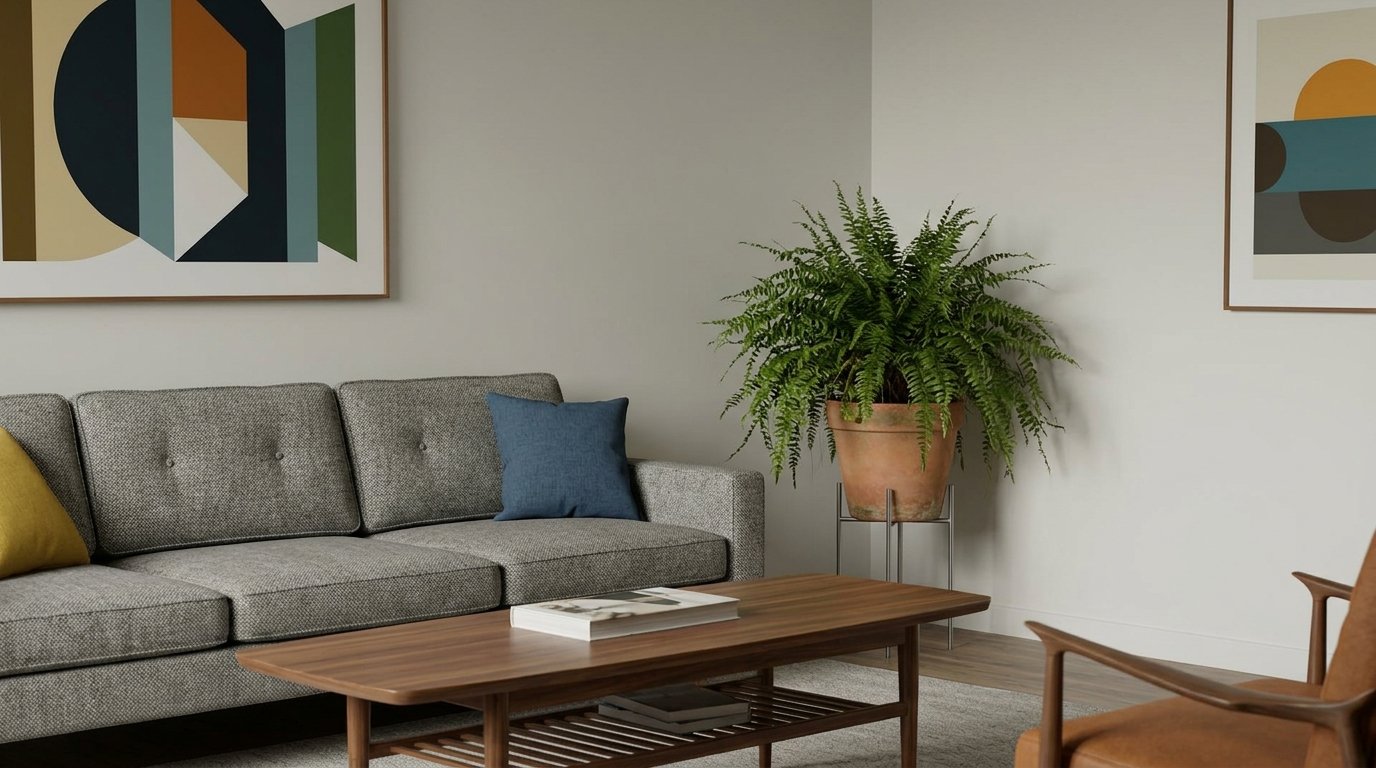
Adding plants to a space isn’t just about picking something that looks nice. It’s about choosing something that belongs.
You’ve done everything right. The furniture is well-chosen. The palette is cohesive. The layout makes sense. And then you drop in a plant — and something feels slightly off. Not wrong exactly, just… unconsidered.
That’s what happens when plants are treated as an afterthought instead of an intentional design element. The good news: fixing it is simpler than you think.
Every interior design style has a visual language — a set of shapes, textures, and moods it speaks in. The right plants don’t just add life to a room. They speak that same language. Here’s how to match them.
Minimalist Style → Snake Plant
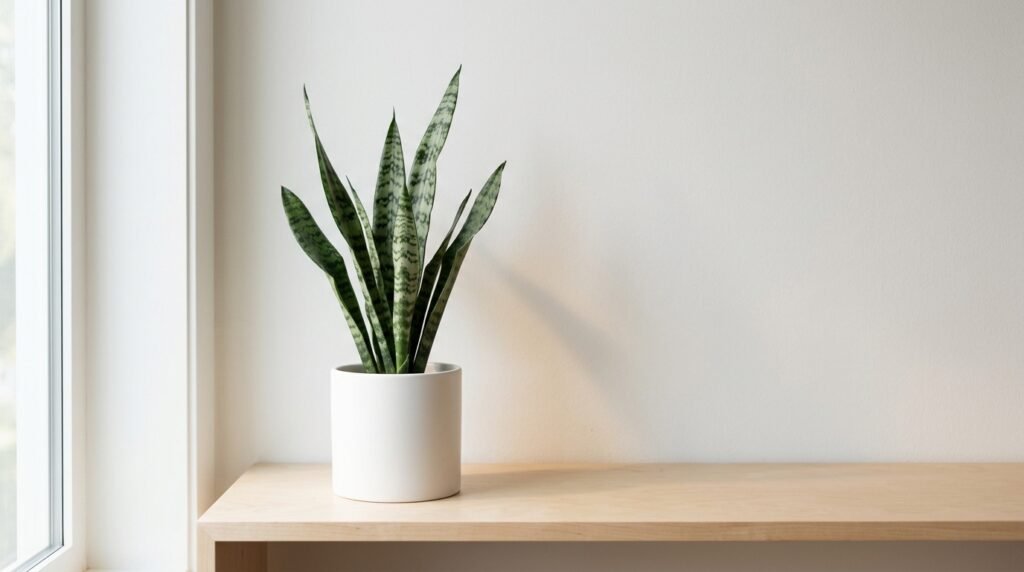
Minimalism is about restraint. Clean lines, negative space, nothing extraneous. The worst thing you could do is bring in a bushy, sprawling plant that competes for attention.
The snake plant is the obvious choice — and it earns that reputation. Its vertical, sword-like leaves are almost architectural. It doesn’t demand much space, doesn’t need much care, and adds life without adding noise. It belongs in a minimalist room the way a well-placed lamp does: quietly essential.
Bohemian Style → Pothos, Palms & Cacti
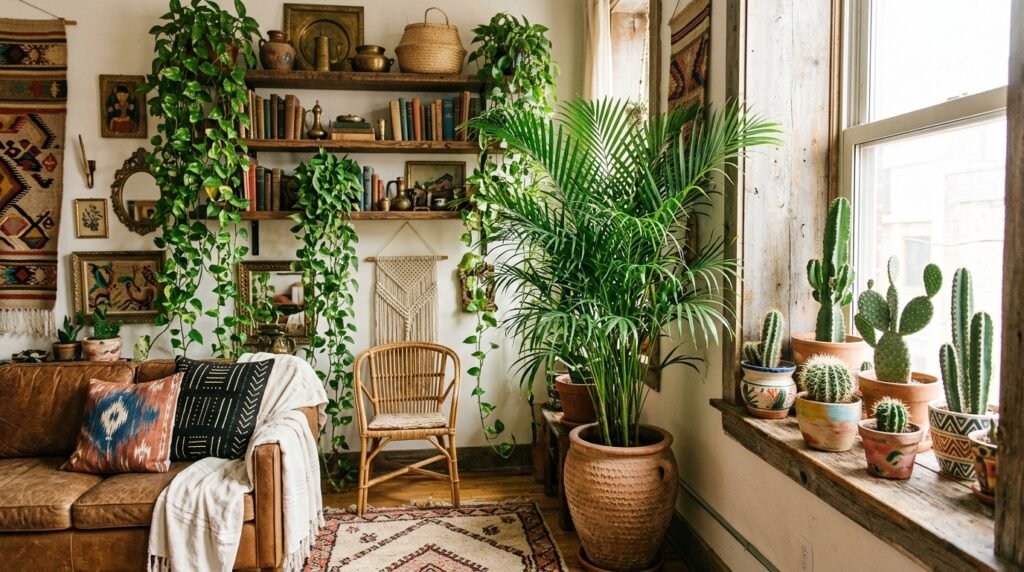
Bohemian interiors celebrate abundance. Layered textures, mixed patterns, collected objects from different places and eras. It’s intentionally eclectic — and the plants should match that energy.
Pothos trailing from a high shelf. A palm adding height in the corner. A cluster of cacti in mismatched pots on a windowsill. The key with boho plant styling isn’t a single statement piece — it’s the layered mix. More is more here. Just make sure the variety feels curated, not random; the difference is usually in the intentional placement.
Scandinavian Style → Monstera & Fiddle Leaf Fig
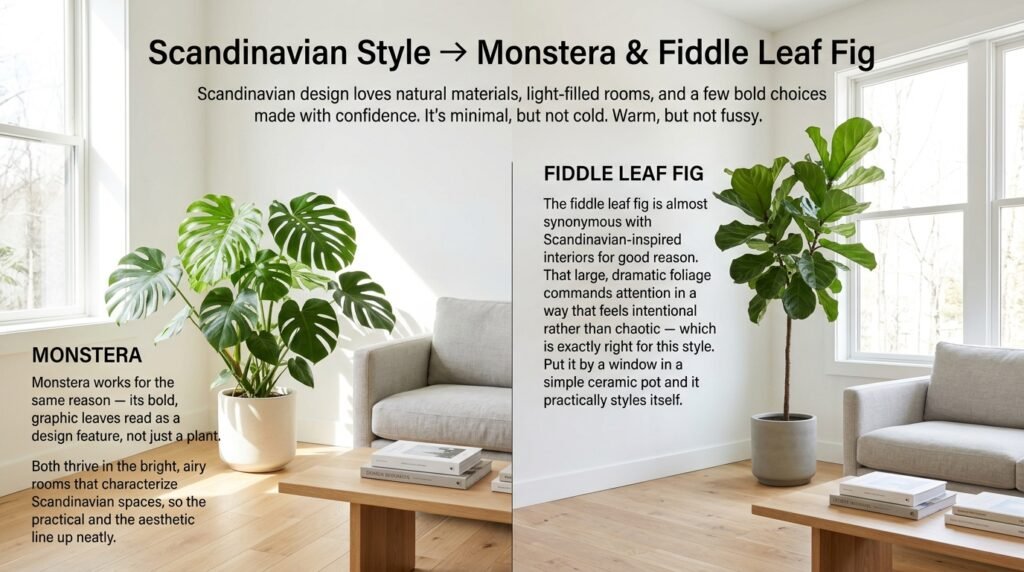
Scandinavian design loves natural materials, light-filled rooms, and a few bold choices made with confidence. It’s minimal, but not cold. Warm, but not fussy.
The fiddle leaf fig is almost synonymous with Scandinavian-inspired interiors for good reason. That large, dramatic foliage commands attention in a way that feels intentional rather than chaotic — which is exactly right for this style. Put it by a window in a simple ceramic pot and it practically styles itself.
Monstera works for the same reason — its bold, graphic leaves read as a design feature, not just a plant. Both thrive in the bright, airy rooms that characterize Scandinavian spaces, so the practical and the aesthetic line up neatly.
Industrial Style → Rubber Plant & Bird of Paradise
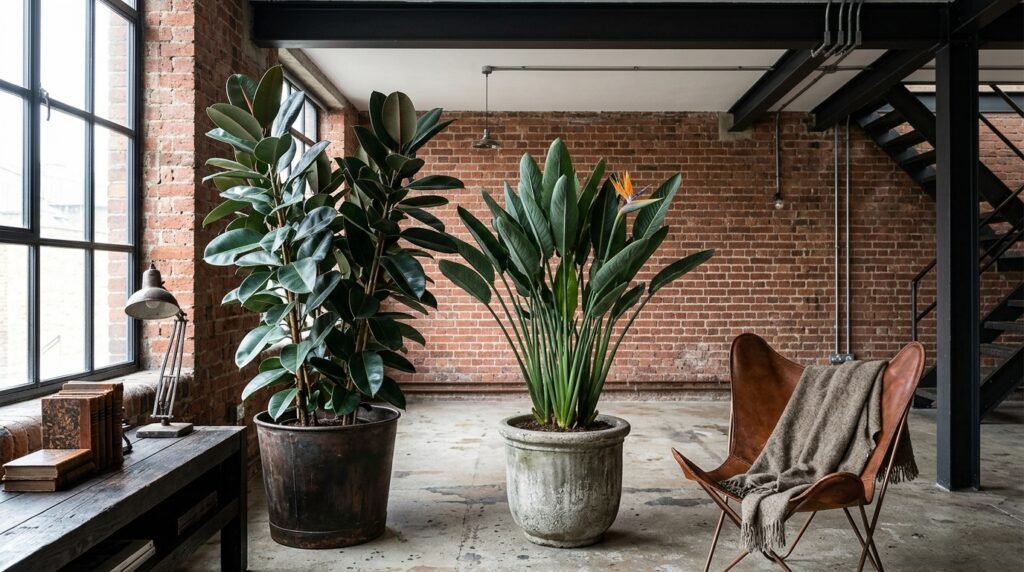
Industrial design leans on raw materials — exposed brick, steel, concrete, dark finishes. It has a certain toughness to it. The plants that work here need to match that strength without softening the space too much.
Rubber plants and bird of paradise both bring strong architectural presence. Their bold forms hold their own against hard surfaces. The rubber plant especially — with its deep, glossy leaves — has a graphic quality that complements industrial palettes beautifully. These aren’t delicate plants and they don’t feel delicate. That’s the point.
Modern Farmhouse Style → Olive Tree, Lavender & Spider Plant
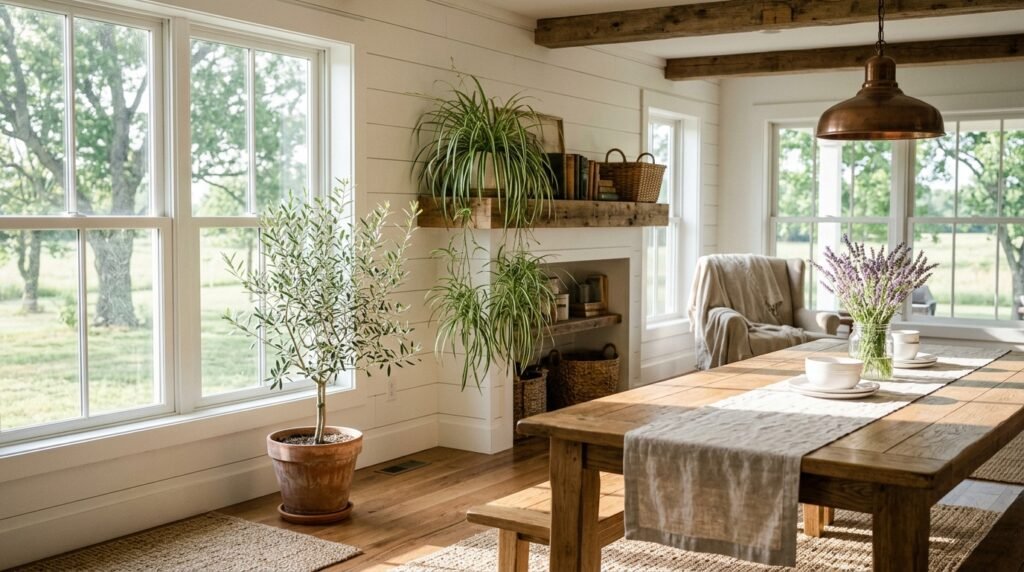
Modern farmhouse is warm, grounded, and a little nostalgic — shiplap walls, natural wood, linen textures. The plant choices should feel like they belong on a sun-drenched windowsill or a big farmhouse table.
Lavender on the dining table is a perfect example: it smells incredible, looks soft and natural, and carries a sense of effortless, everyday beauty that defines the style. An olive tree in a terracotta pot adds that Mediterranean countryside feeling. Spider plants trailing from a shelf bring lightness and movement. Together, they reinforce the style’s core quality: nature brought indoors without overthinking it.
The Bigger Principle: Harmony Is the Goal
The specific pairings above are a starting point, not a rigid rulebook. You can experiment within styles, blend elements, and find combinations that feel right to you. What matters more than the exact plant is the intent behind the choice.
When a plant is chosen deliberately — when it speaks the same visual language as the furniture, the palette, and the layout around it — the room feels complete in a way that’s hard to articulate but immediately obvious to anyone who walks in.
That’s what you’re going for. Not decoration for its own sake. Intention. Every element pulling in the same direction.
So the next time you’re standing in a nursery wondering what to bring home — start by asking what language your space already speaks. Then find the plant that speaks it fluently.