
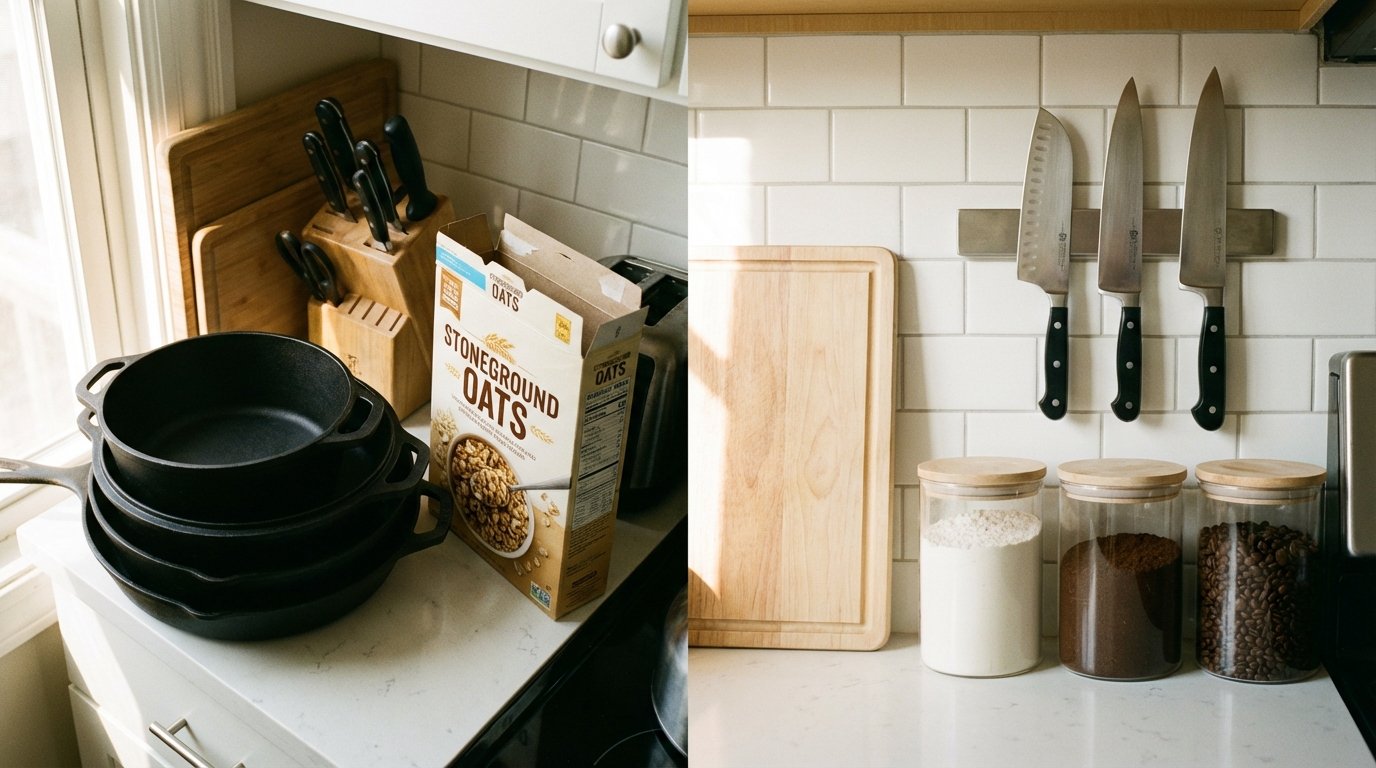
Your kitchen isn’t too small. You just haven’t made it work yet.
That’s not a dig — it’s a genuine reframe. Most people with cramped kitchens spend years wishing for more square footage when what they actually need is a different approach to the space they already have. The right kitchen organization isn’t about buying expensive inserts or tearing out cabinets. It’s about being ruthless, creative, and strategic with the inches you’ve got.
Here are 33 hacks that actually work.
The Cabinet Situation (It’s Not As Bad As You Think)
Cabinets are the most misused storage in the average small kitchen. Most people stack things three layers deep and then forget what’s at the back. Sound familiar?
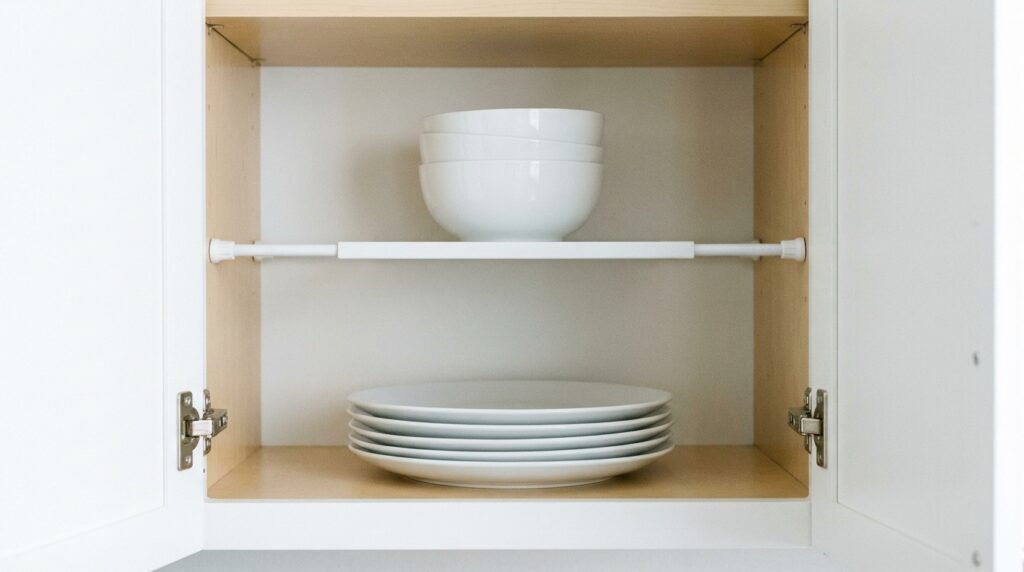
1. Add a second shelf inside cabinets. Tension-rod shelf risers are cheap and double your vertical space instantly. One shelf becomes two. Use the bottom for plates, top for bowls.
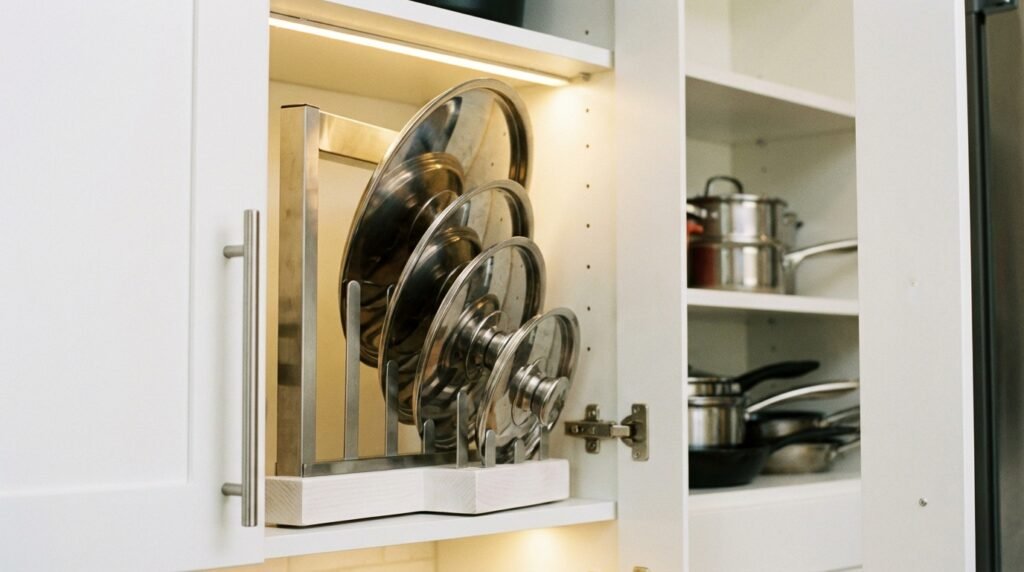
2. Store pots with their lids separately. A lid rack on the back of a cabinet door frees up an enormous amount of shelf space. Lids are the enemy of efficient cabinet storage.
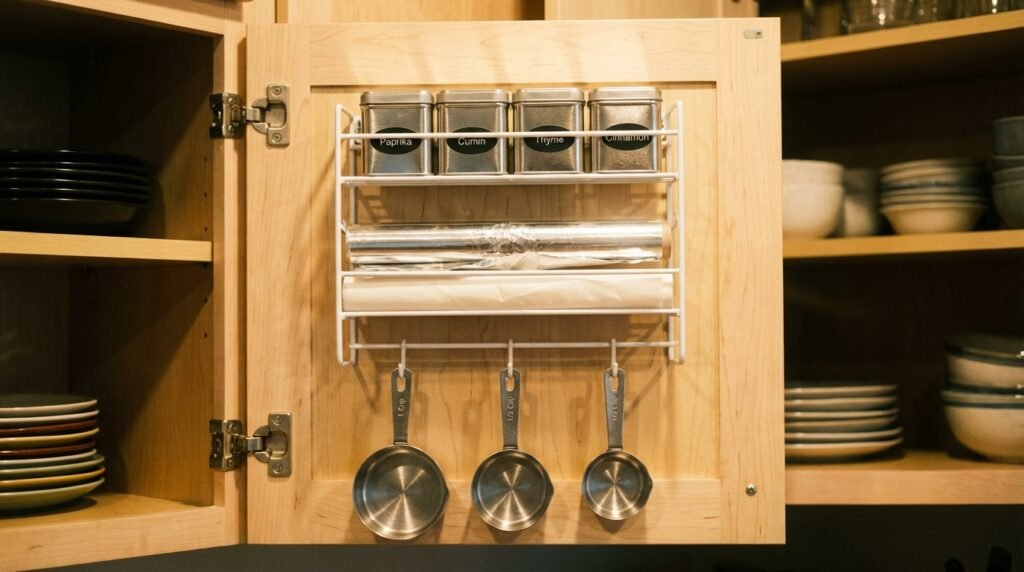
3. Use the inside of cabinet doors. Every door is a storage surface you’re probably ignoring. Mount small racks, hooks, or caddies — spices, foil, measuring cups, cutting boards all live here now.
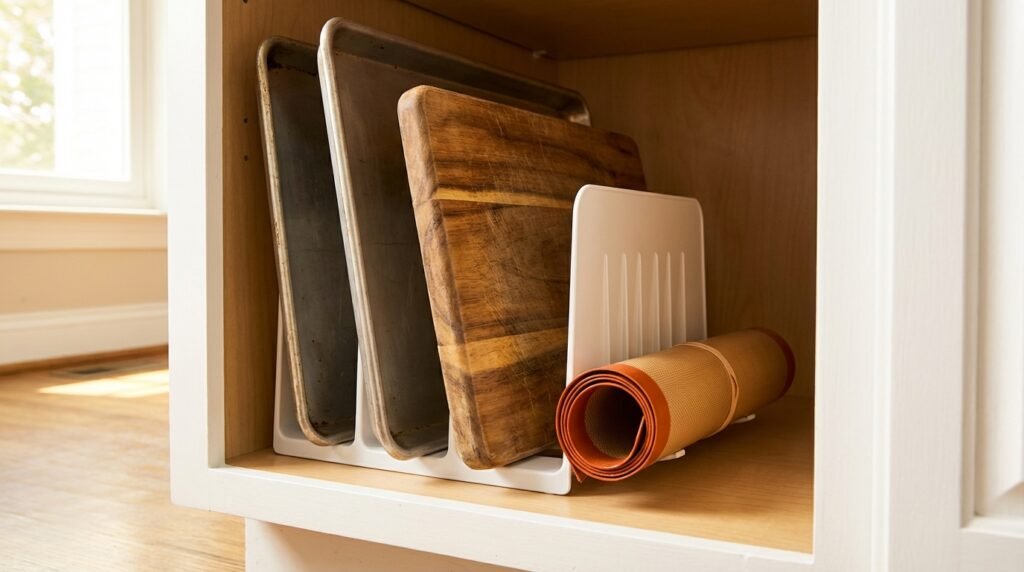
4. Store baking sheets and cutting boards vertically. A small tension rod or a file organizer (yes, a file organizer) slotted into a cabinet keeps flat items upright and accessible.
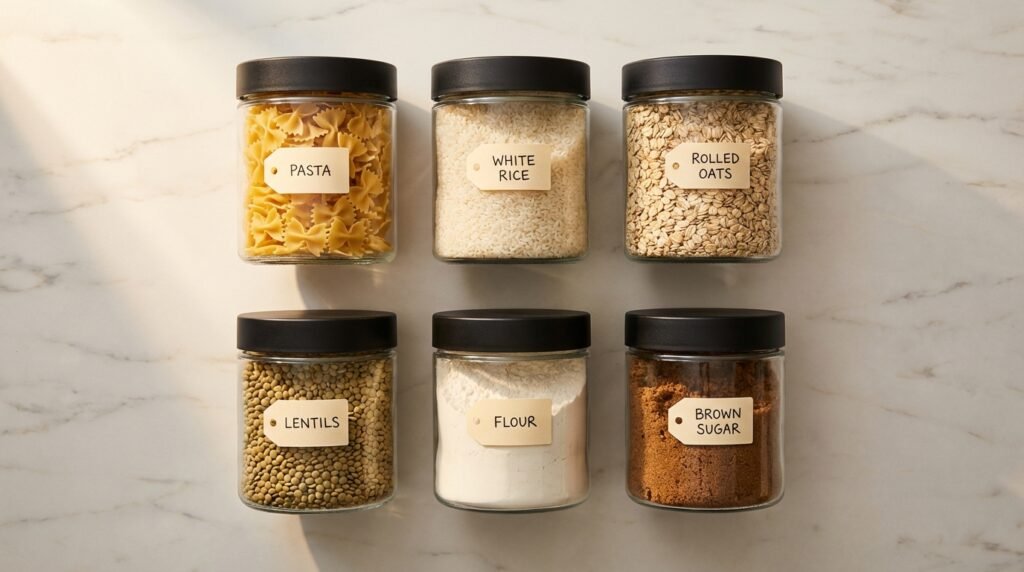
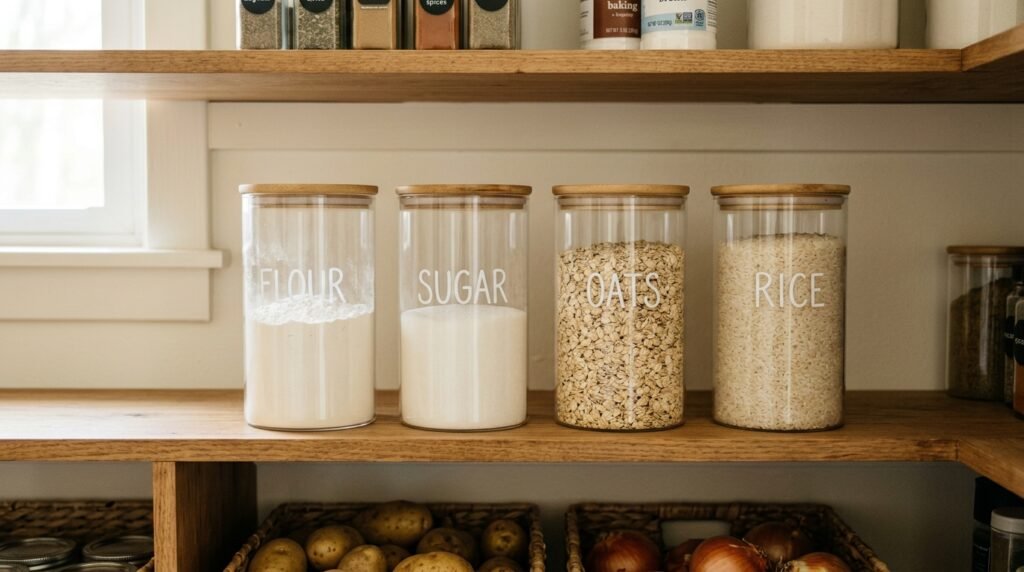
5. Decant dry goods. Bulky boxes of pasta and cereal take up three times the space of the contents. Transfer everything into uniform canisters or jars. Stack them. Label them. Your shelves will feel like a different planet.
6. Keep only what you actually use. This one stings, but it’s the most important hack on this list. Every cabinet has at least a few items you haven’t touched in six months. Get them out. Dead storage is wasted storage.
Make the Counter Work Harder
Counter space is precious. The goal is to keep it clear enough to actually cook — while using the vertical space above it.
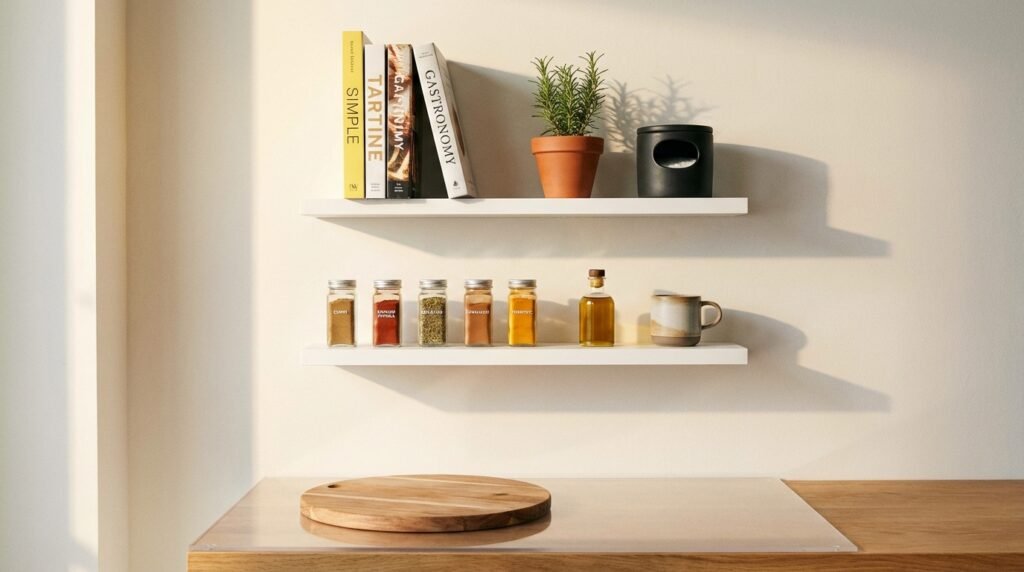
7. Install floating shelves. One or two shelves above the counter handles cookbooks, frequently used spices, and small appliances you reach for daily. Keeps the counter clear without sacrificing access.
8. Use a magnetic knife strip. A knife block takes up a huge footprint. A magnetic wall strip holds your knives, takes up zero counter space, and looks intentional.
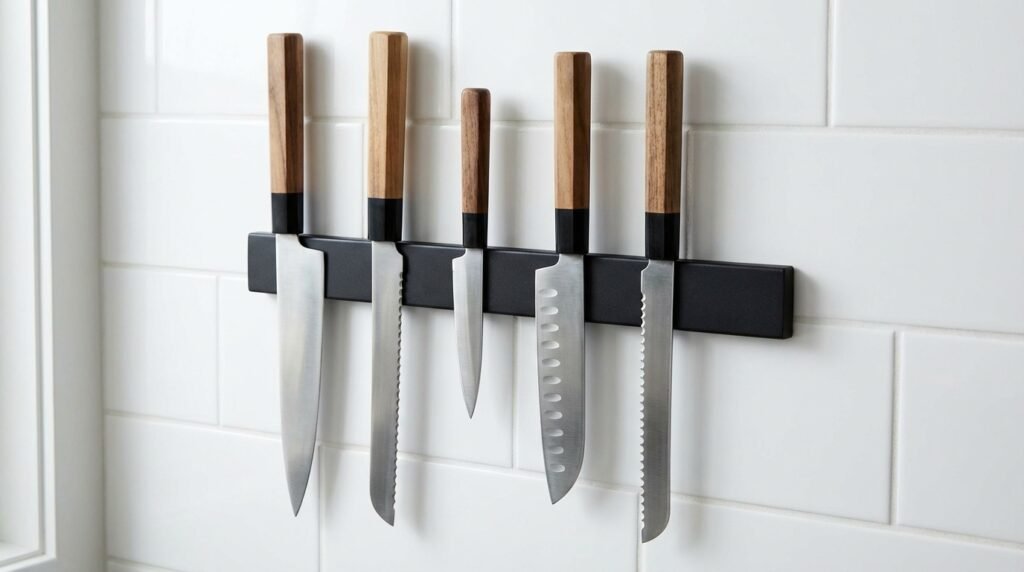
9. Hang a pegboard. A 2×4 foot pegboard on one wall can hold spatulas, ladles, colanders, measuring cups, and more. It’s the most customizable storage you’ll ever install.
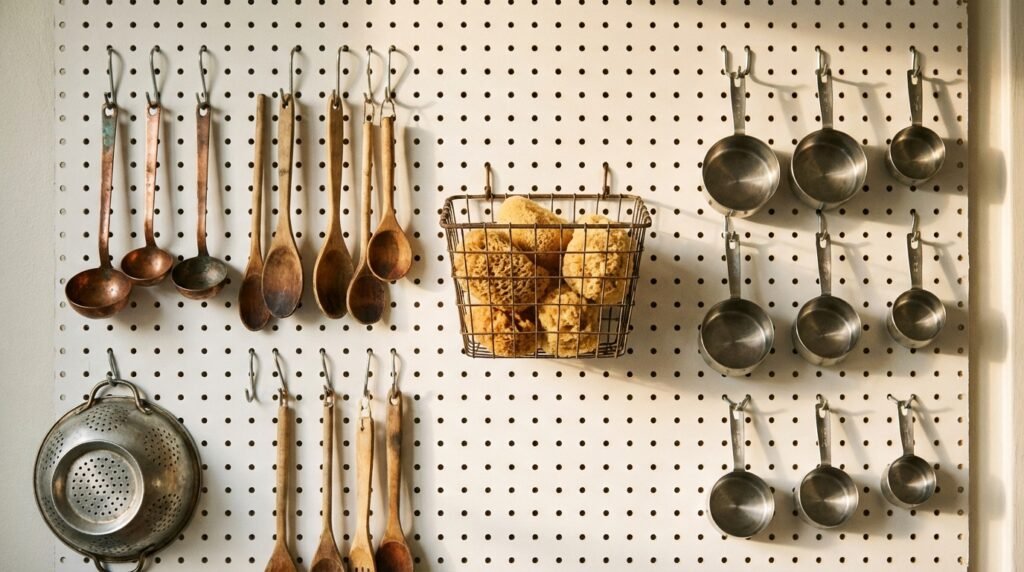
10. Get a wall-mounted paper towel holder. Off the counter, off your list of things in the way.
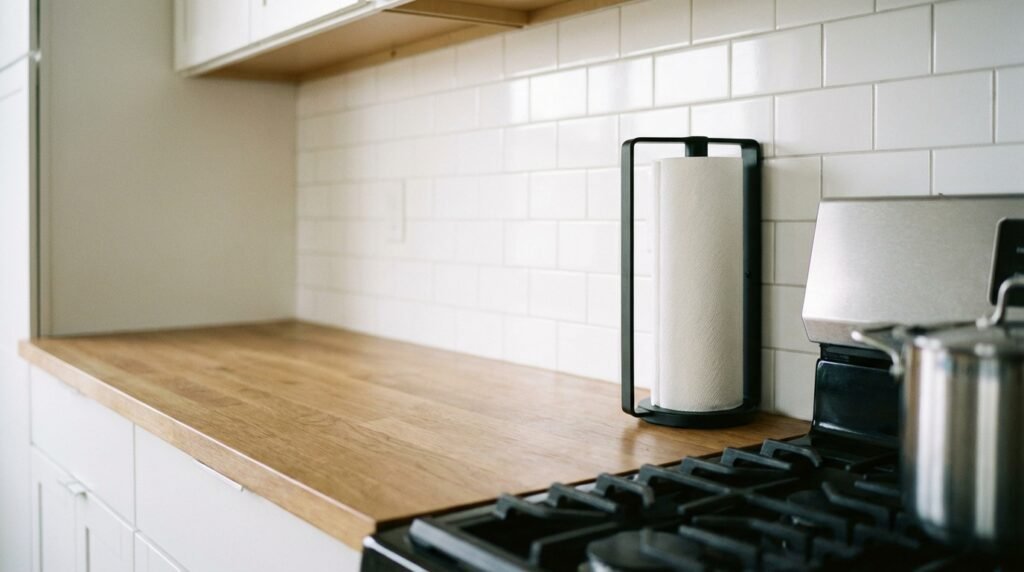
11. Use a small rolling cart. A narrow rolling cart tucked beside the fridge or stove adds a surface when you need it and rolls away when you don’t. Bonus: the sides are great for hanging towels and bags.
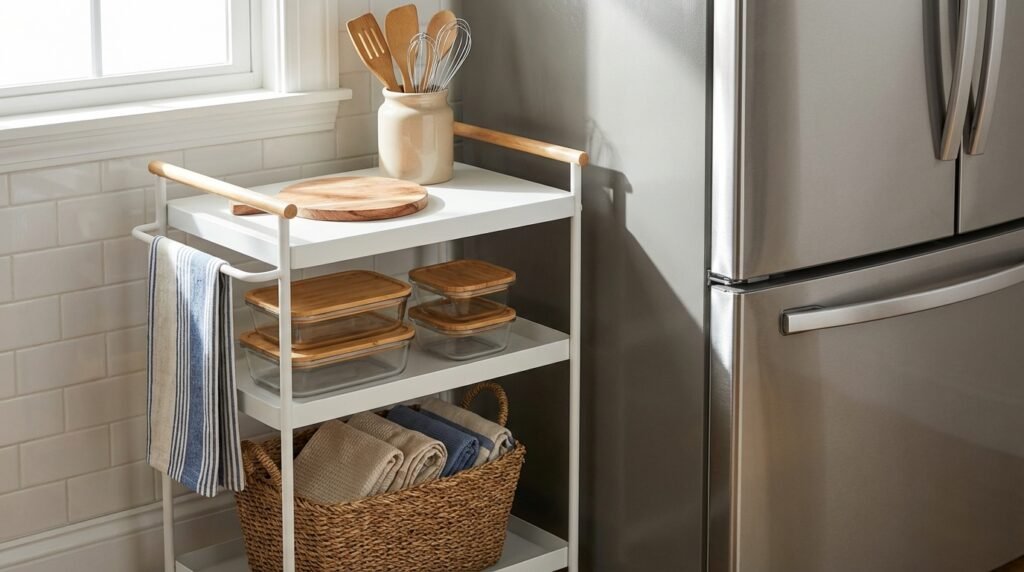
12. Stack your appliances. If you’ve got a microwave sitting on the counter, consider a wall mount or an over-range option. Same footprint, zero counter loss.
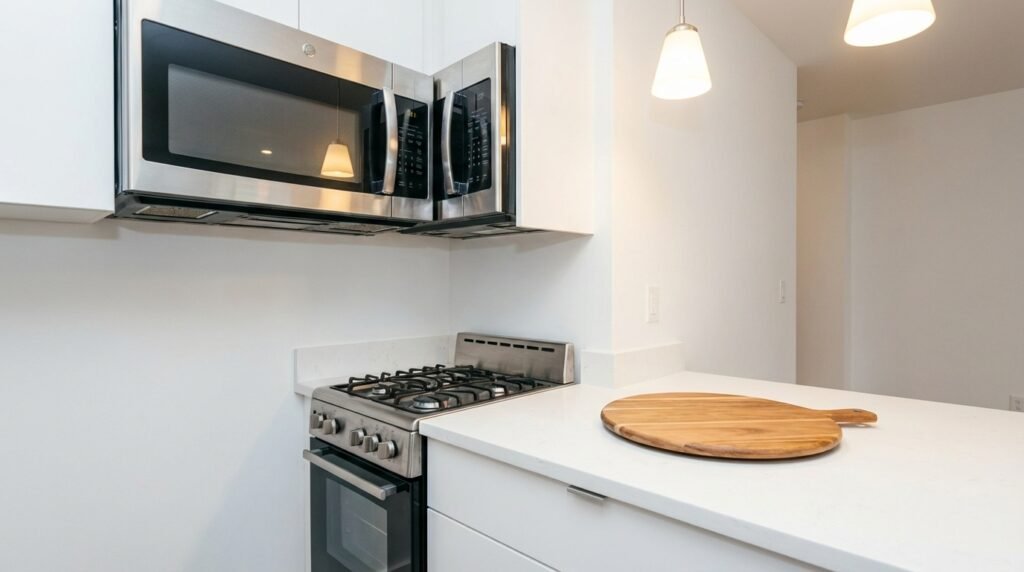
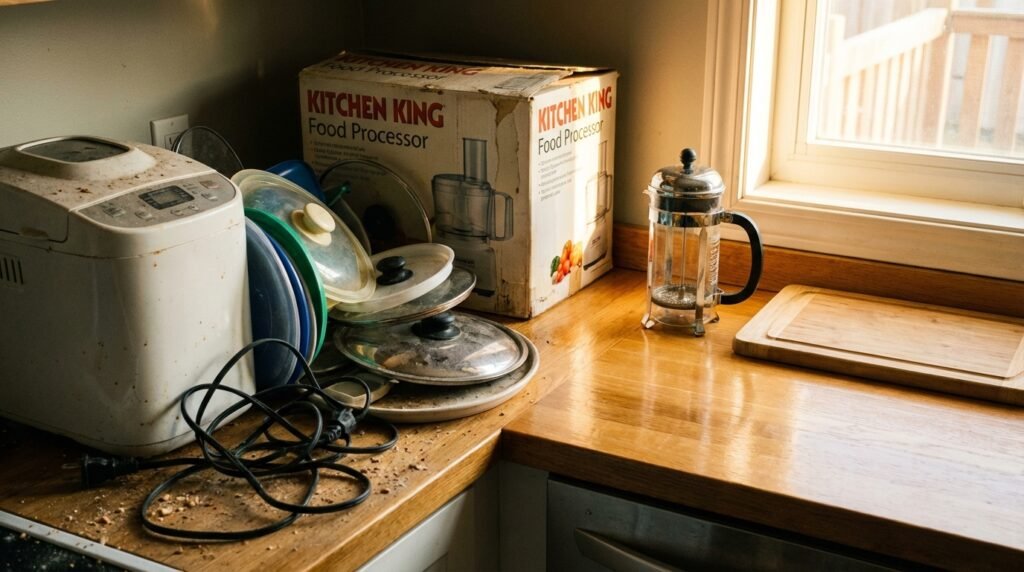
13. Keep only daily-use items on the counter. The coffee maker stays. The pasta machine you use twice a year does not. Be brutal.
The Refrigerator and Freezer (More Space Than You Think)
Most fridges are disorganized by default. A few targeted fixes change everything.
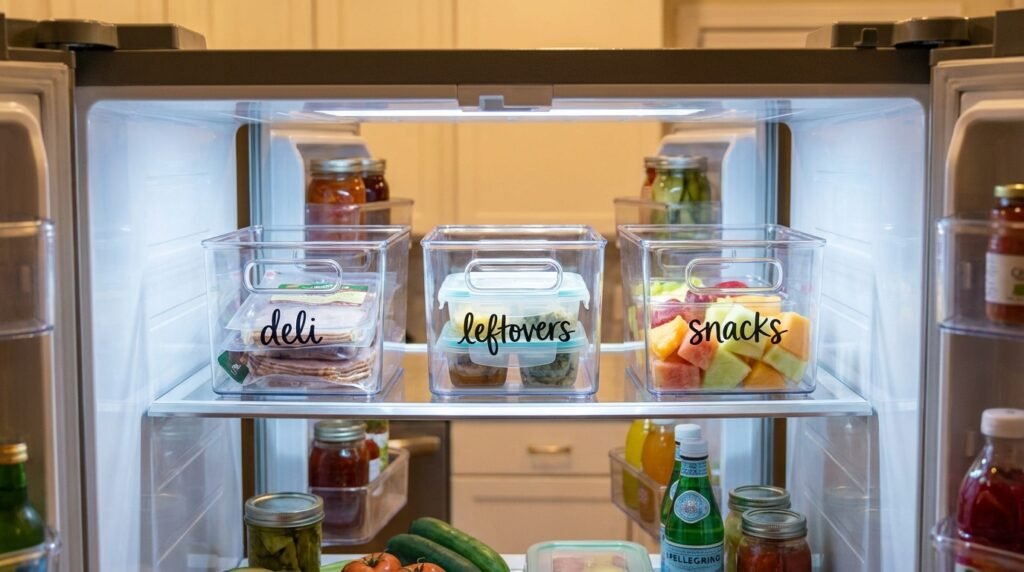
14. Use clear, stackable bins inside the fridge. Group categories — deli, condiments, leftovers — and suddenly you can see everything without digging. Bins also make cleaning easier.
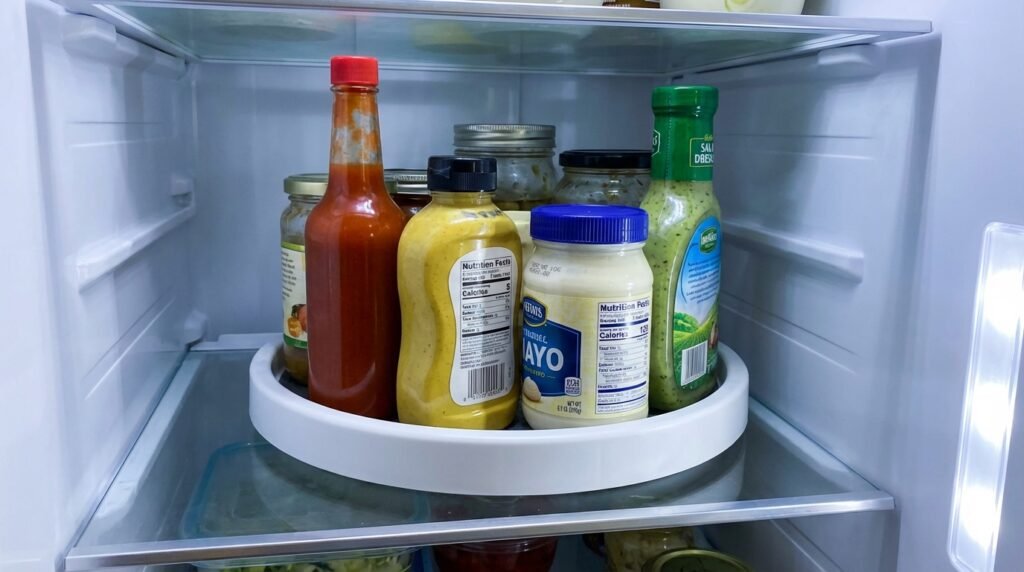
15. Add a lazy Susan to the fridge. For corners or shelves with deep real estate, a turntable lets you reach items in the back without pulling everything out.
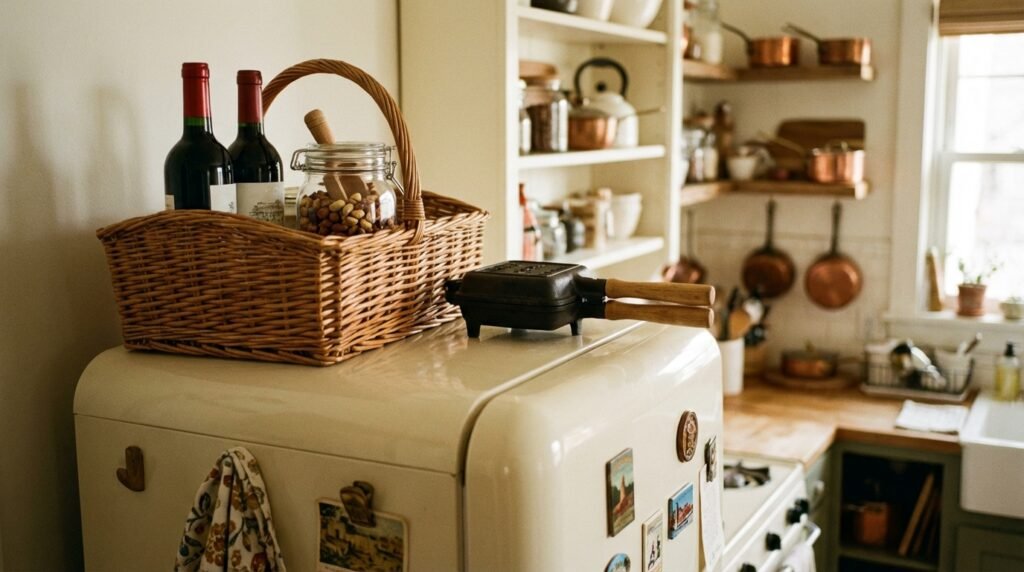
16. Use the top of the fridge. It’s flat, it’s stable, and it’s usually empty. A small basket on top holds overflow items, wine, or rarely-used appliances.
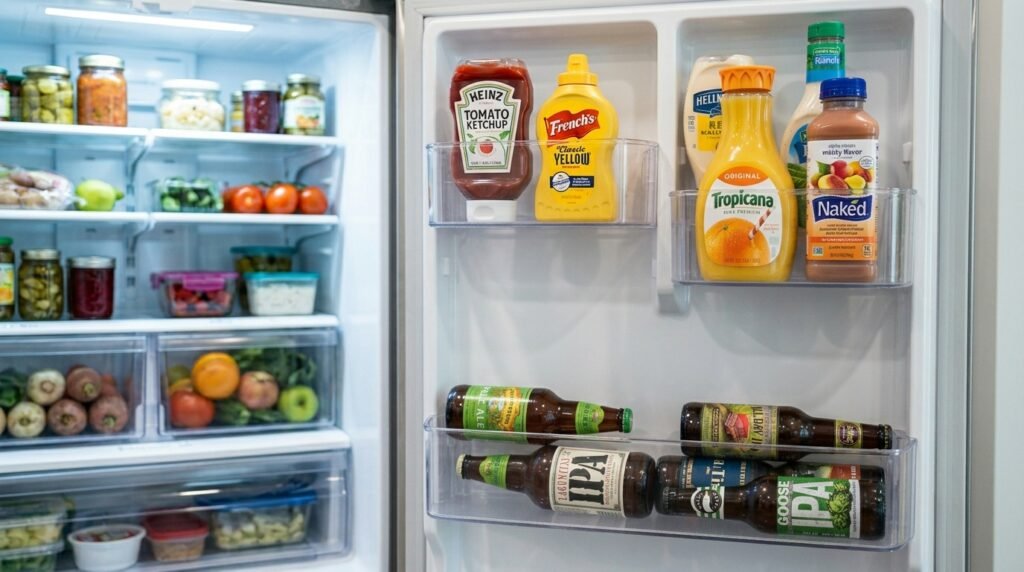
17. Use fridge door organizers wisely. The door is the warmest part of the fridge — store condiments and drinks, not eggs or dairy. And if your door bins are overflowing, that’s a sign the fridge interior needs reorganizing.
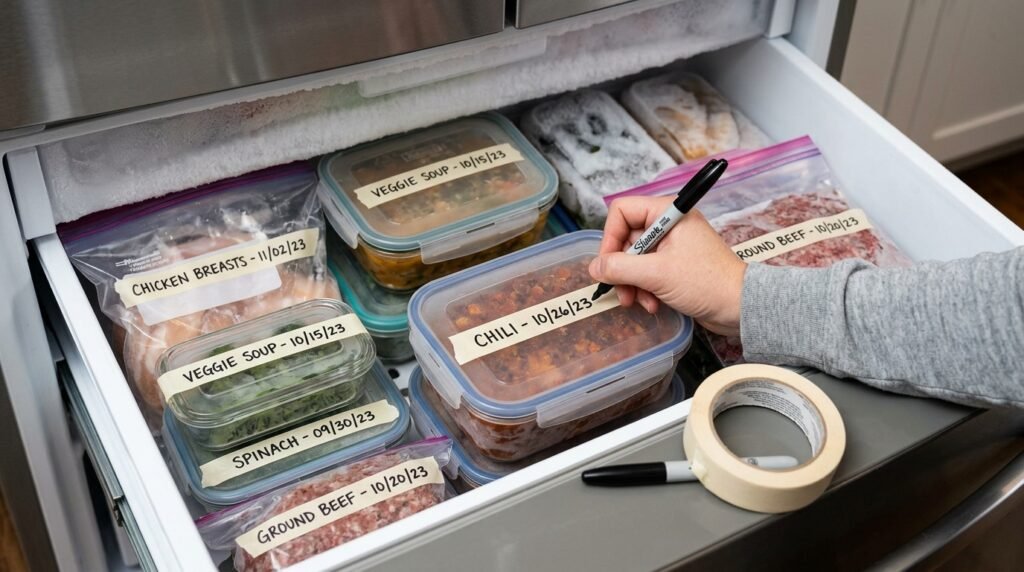
18. Label and date everything in the freezer. A disorganized freezer becomes a black hole. Masking tape and a marker take 10 seconds and save you from the mystery-meat archaeology project six months from now.
Drawer Magic
Drawers are either perfectly organized or completely chaotic. There’s rarely a middle ground.
19. Use expandable drawer dividers. The cheap, adjustable ones from any kitchen store work perfectly. Dedicate zones to utensils, tools, and gadgets and stop the everything-in-one-drawer situation.
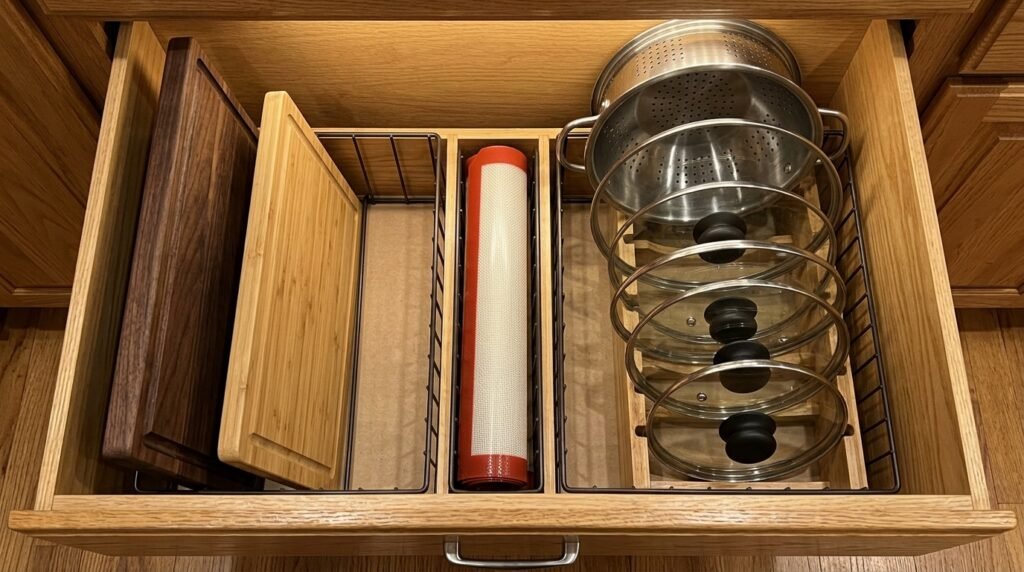
20. Go vertical in deep drawers. Deep kitchen drawers are notoriously hard to use. Vertical organizers — the kind used for pots and pans — work perfectly here to keep items upright and visible.
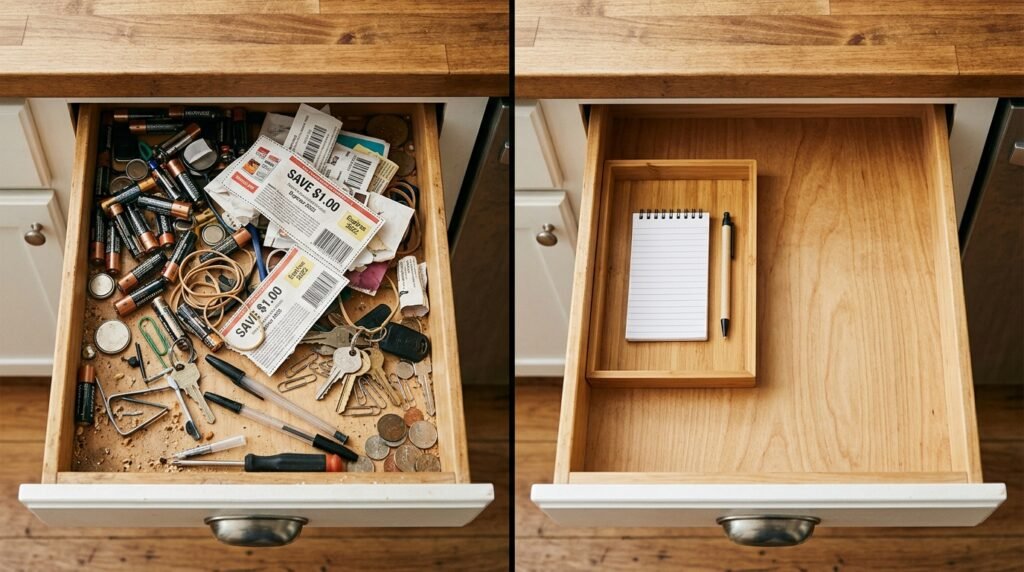
21. Move the junk drawer somewhere else. Every kitchen has one. Move it to a different room. Your kitchen space is too valuable for miscellaneous batteries and expired coupons.
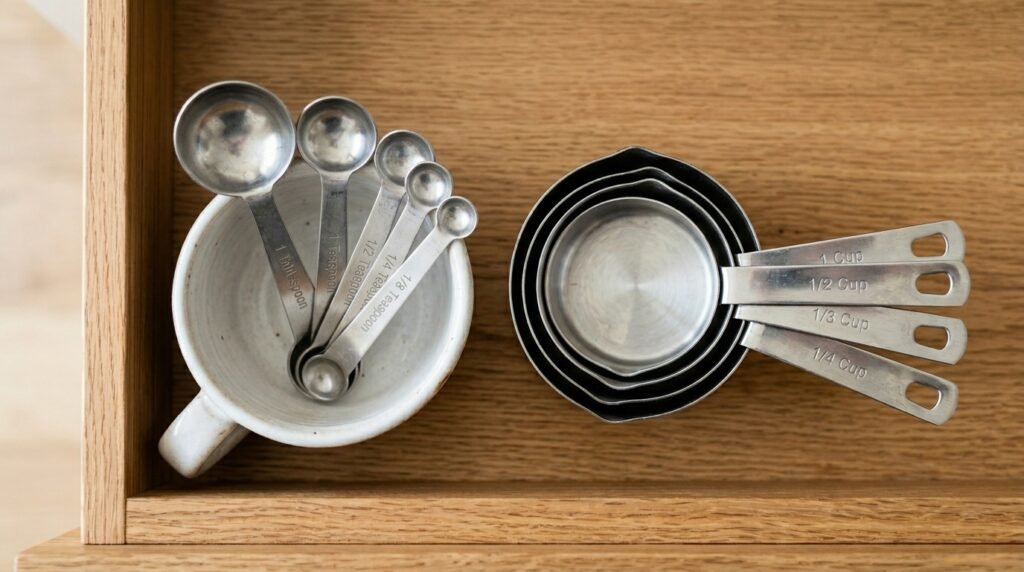
22. Nest measuring cups and spoons. Don’t just toss them in loose. Nest them, hang them on a hook inside a drawer, or use a small cup to hold them vertically. They disappear otherwise.
Under the Sink: The Final Frontier
Under the sink is almost always a disaster. The pipes make it awkward; the leaks make it damp. But it can hold a lot if you approach it right.
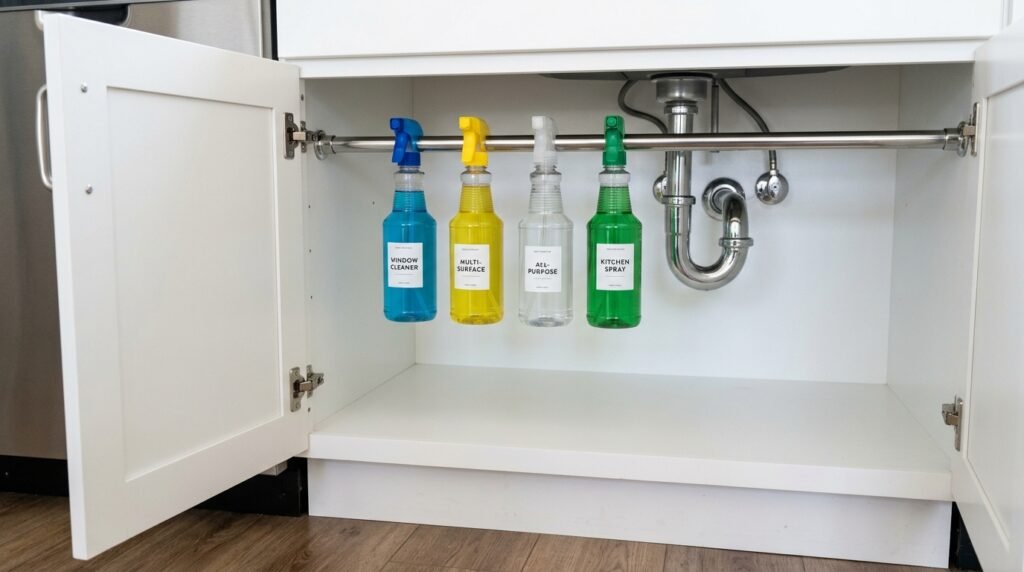
23. Use a tension rod for spray bottles. Hang all your cleaning spray bottles on a horizontal tension rod. Done. Free up the entire floor of the cabinet.
24. Add a small shelf over the pipes. Custom-fit shelves designed for under-sink storage sit over the plumbing and double the usable area.
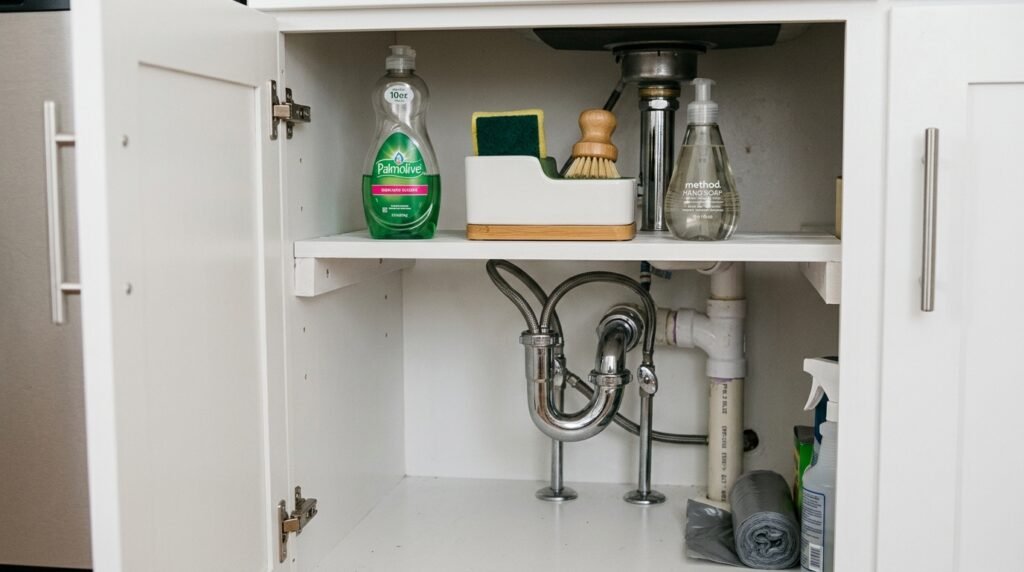
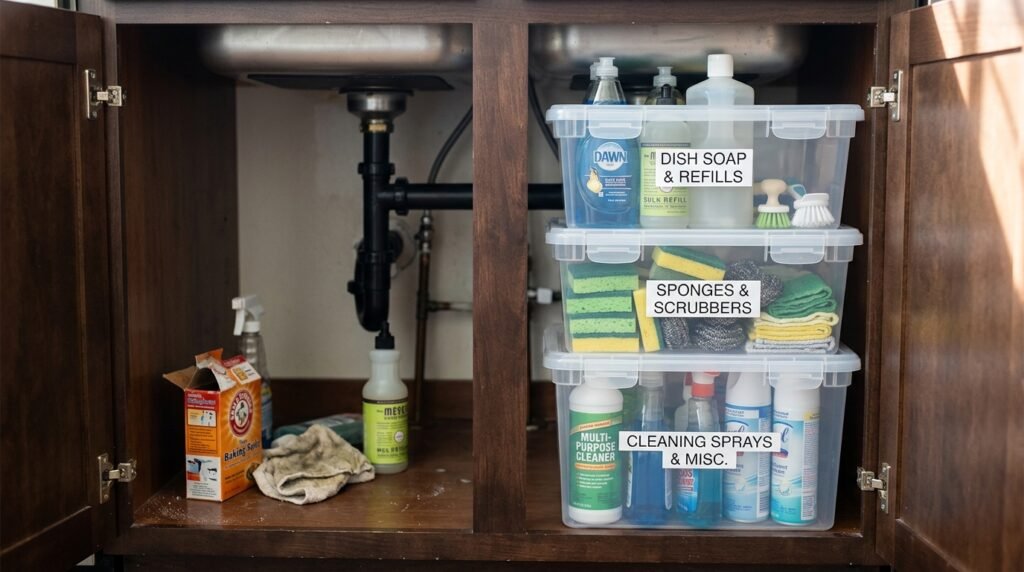
25. Use stackable bins. Cleaning supplies, sponges, and extra dish soap live here in clear, labeled bins. Stack what you can, and stop losing things at the back.
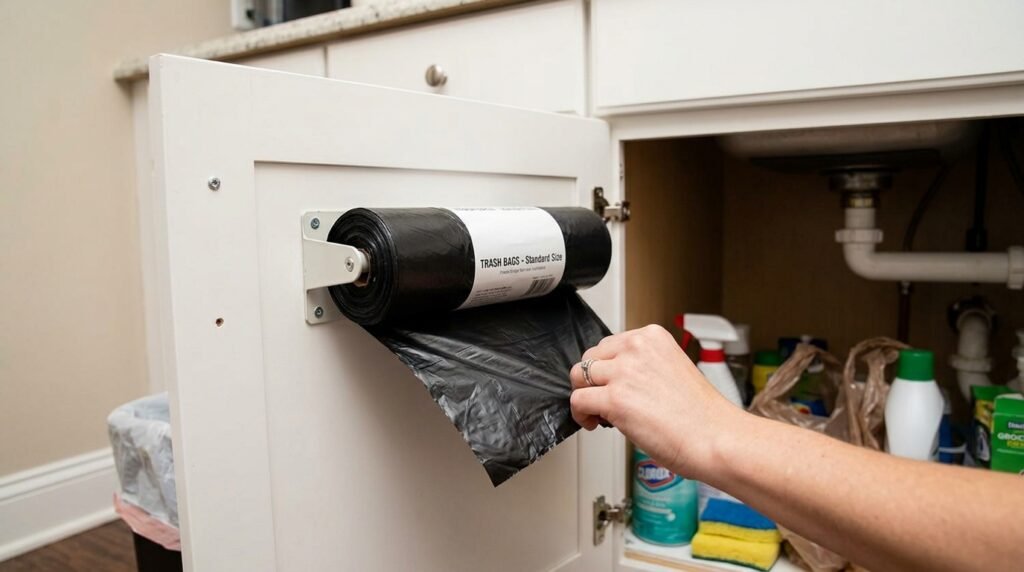
26. Keep a trash bag dispenser under there. Mount a roll dispenser inside the cabinet door. You’ll never dig through a box for a bag again.
Pantry Hacks (Even If You Don’t Have a Pantry)
No pantry? No problem. You can create dedicated food storage from almost nothing.
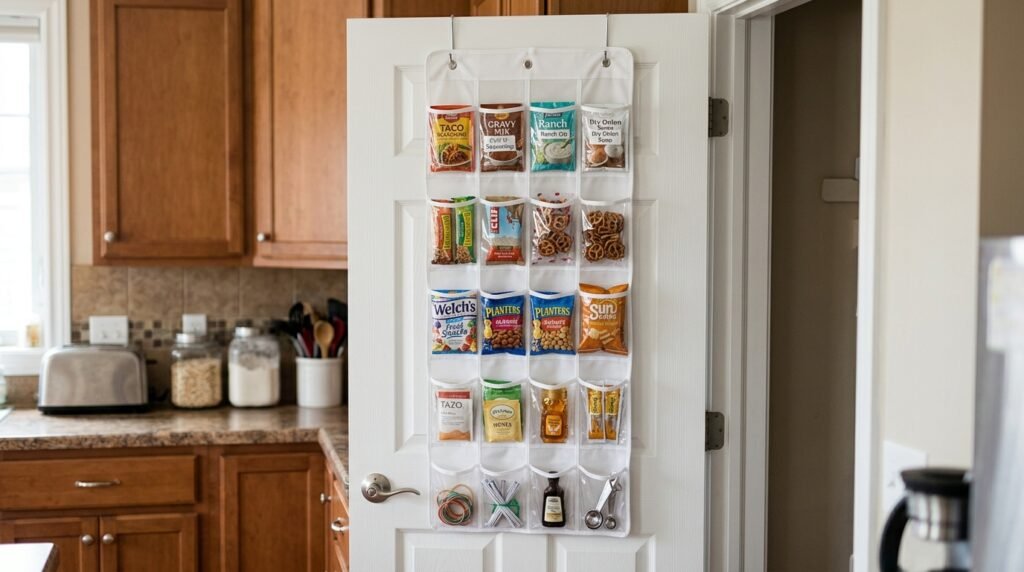
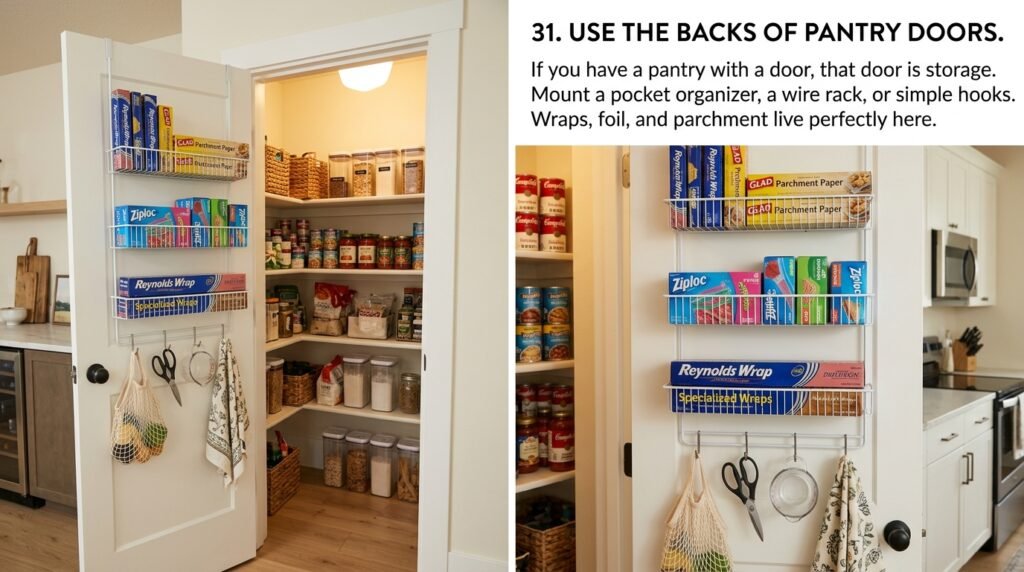
27. Use a narrow over-door organizer on a pantry closet or even a regular door. The clear-pocket organizer style holds spice packets, snacks, and small items beautifully.
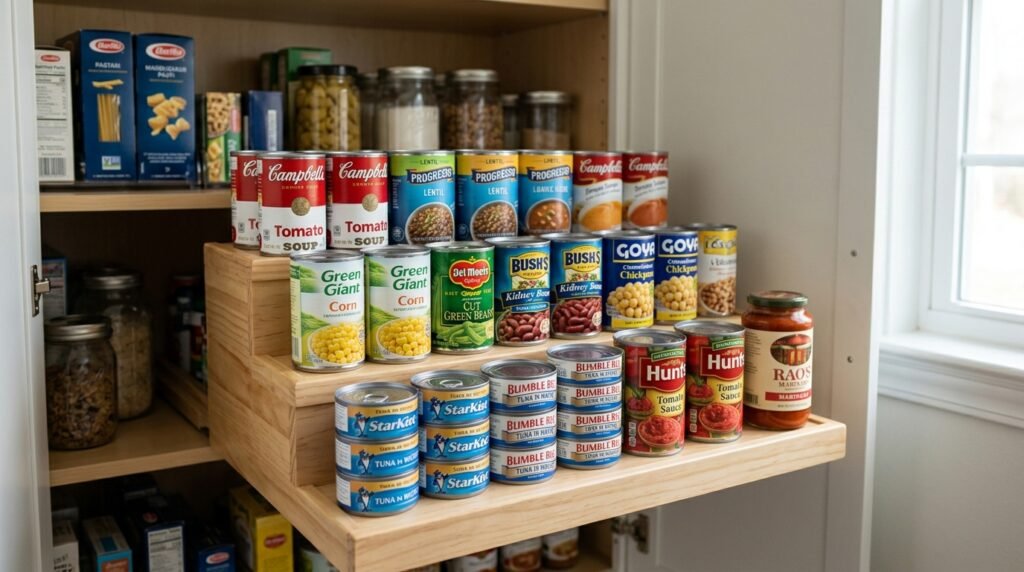
28. Get a tiered shelf for canned goods. A simple riser shelf lets you see every can at once, so nothing gets lost and nothing expires quietly in the back.
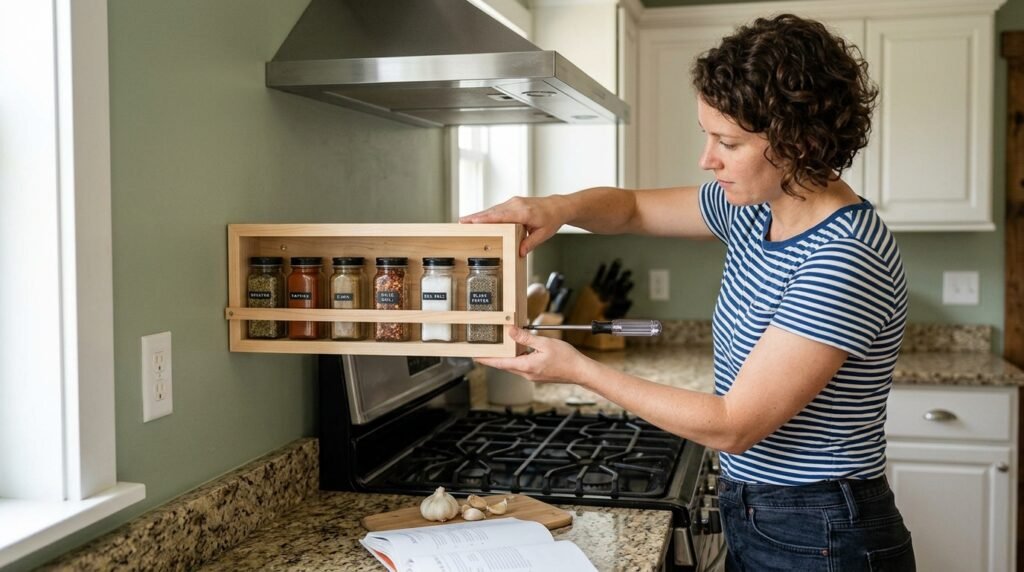
29. Install a spice rack on the wall. A small wall-mounted spice rack near the stove keeps everything in arm’s reach without consuming a single inch of counter or shelf space.
30. Store bulk items in uniform containers. Flour, sugar, oats, rice — in matching containers they stack, store easily, and tell you at a glance when you’re running low.
31. Use the backs of pantry doors. If you have a pantry with a door, that door is storage. Mount a pocket organizer, a wire rack, or simple hooks. Wraps, foil, and parchment live perfectly here.
The Finishing Touches
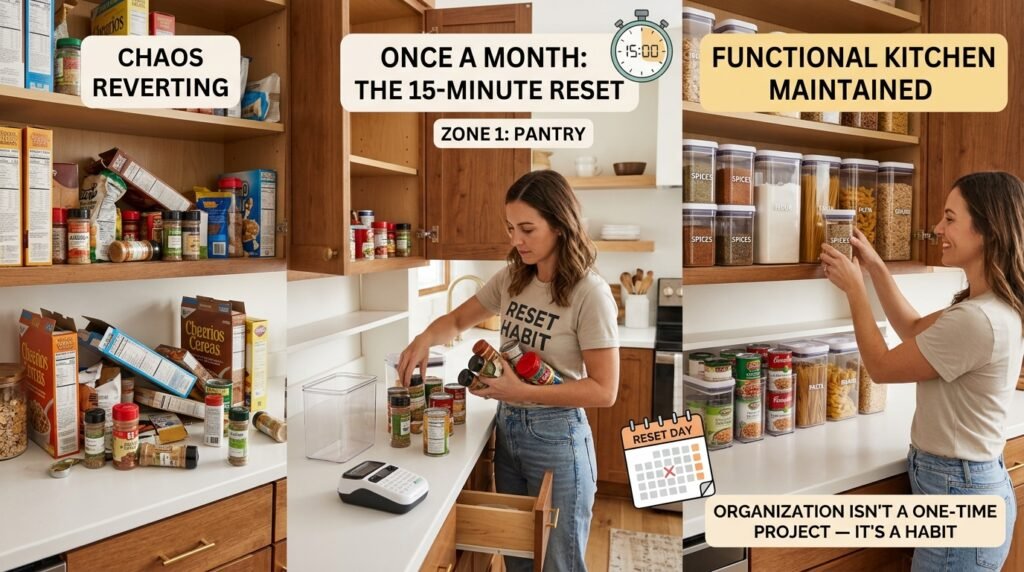
32. Do a monthly reset. Organization isn’t a one-time project — it’s a habit. Once a month, spend 15 minutes pulling everything out of one zone and putting it back intentionally. The kitchen stays functional instead of gradually reverting to chaos.
33. Buy less. The deepest kitchen organization hack is this: the less you own, the less you need to store. Before buying another gadget or appliance, ask whether you have space for it and whether you’ll actually use it. Half the time, the answer is no on both counts.
The Bigger Picture
A small kitchen forces clarity in a way a big one never does. When you only have so much space, you have to decide what actually matters — what you cook, what tools you actually reach for, what’s worth keeping. That process, annoying as it is, tends to make you a more intentional cook and a less cluttered human.
You don’t need a renovation. You need a strategy, a free Saturday, and the willingness to let go of the pasta maker you’ve used once.
Start with three hacks from this list. Just three. Then let the momentum carry you.