
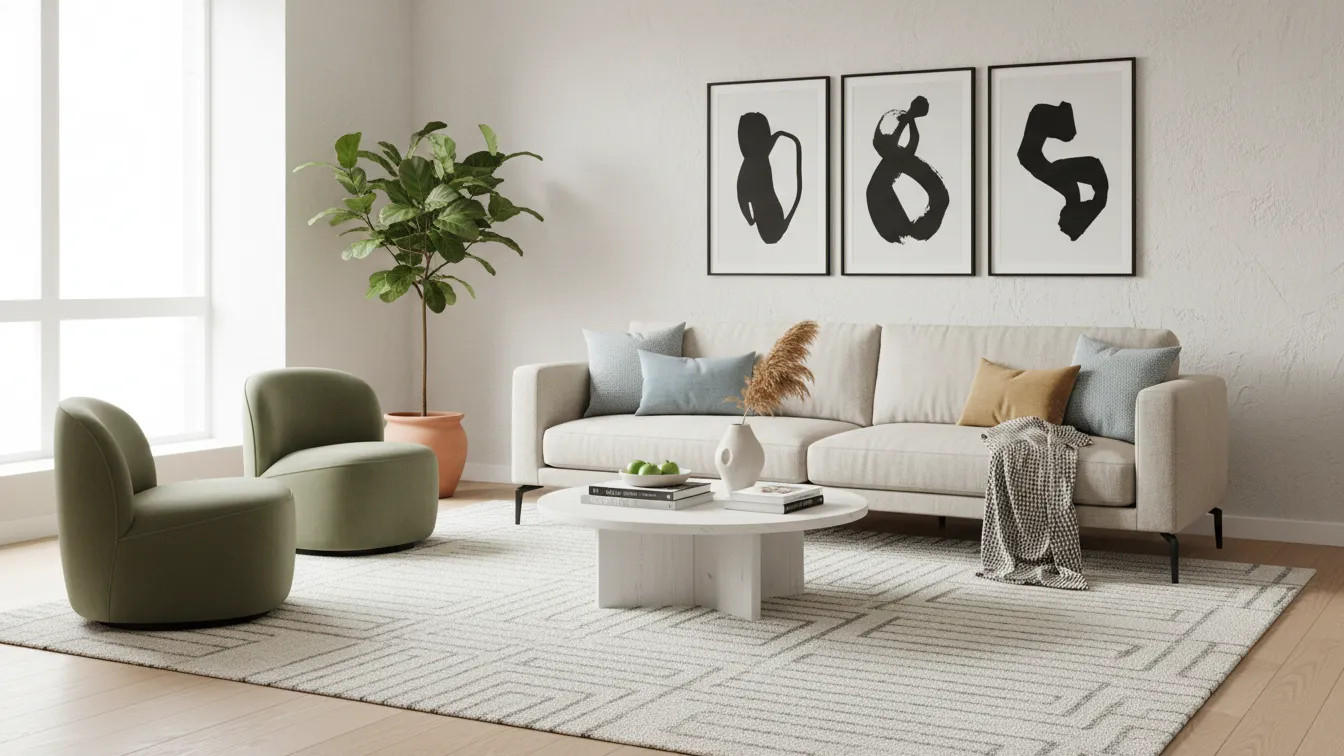
Why does your small living room still feel cramped—even after you’ve cleaned, rearranged, and downsized the furniture?
The problem usually isn’t square footage. It’s the invisible layout mistakes that quietly shrink the room, no matter how stylish your pieces are.
Push everything to the walls, choose bulky furniture, or block visual flow—and the space feels boxed in. This guide fixes those exact mistakes with fast, realistic changes that make a small living room feel noticeably bigger.
Stop Pushing Furniture Against the Wall (It Shrinks the Room)
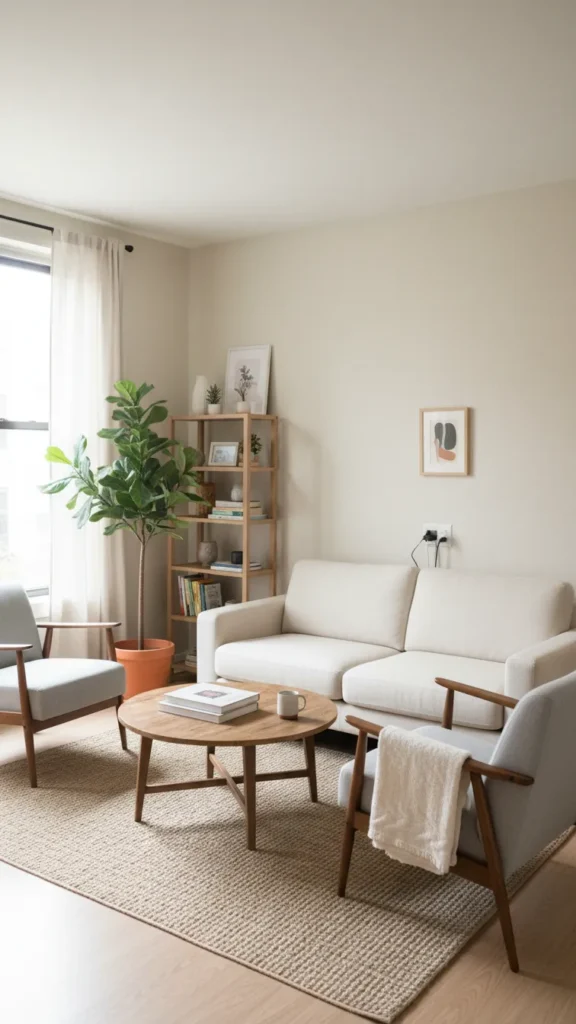
It feels logical to push furniture against the wall. More floor space must mean a bigger room—right?
In reality, this flattens the layout and makes the room feel narrow and stiff.
When furniture hugs the walls, you lose depth. The room reads as a tight box instead of a layered, intentional space.
Try this instead:
- Pull the sofa 2–6 inches away from the wall
- Float chairs slightly inward instead of corner-loading them
- Anchor the seating area with a properly sized rug
Key takeaway:
A little breathing room behind furniture creates depth, and depth makes rooms feel larger—instantly.
Use Furniture With Legs to Let the Room Breathe
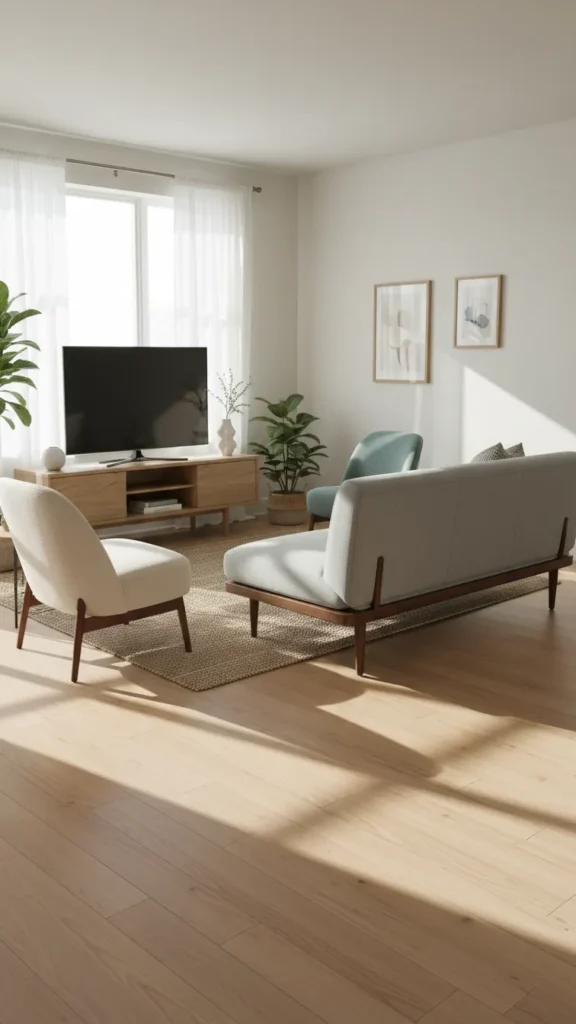
Heavy furniture that sits flat on the floor blocks sightlines. When you can’t see the floor, the room feels heavier and smaller—even if it’s tidy.
Furniture with visible legs creates air and light underneath. That empty space helps the eye travel, making the room feel more open without changing the layout.
What works best:
- Sofas and chairs with slim, exposed legs
- Open-base media consoles instead of solid boxes
- Side tables that don’t touch the floor fully
Key takeaway:
Seeing more floor equals feeling more space. Legs matter more than you think.
One Rug Can Visually Double Your Living Room
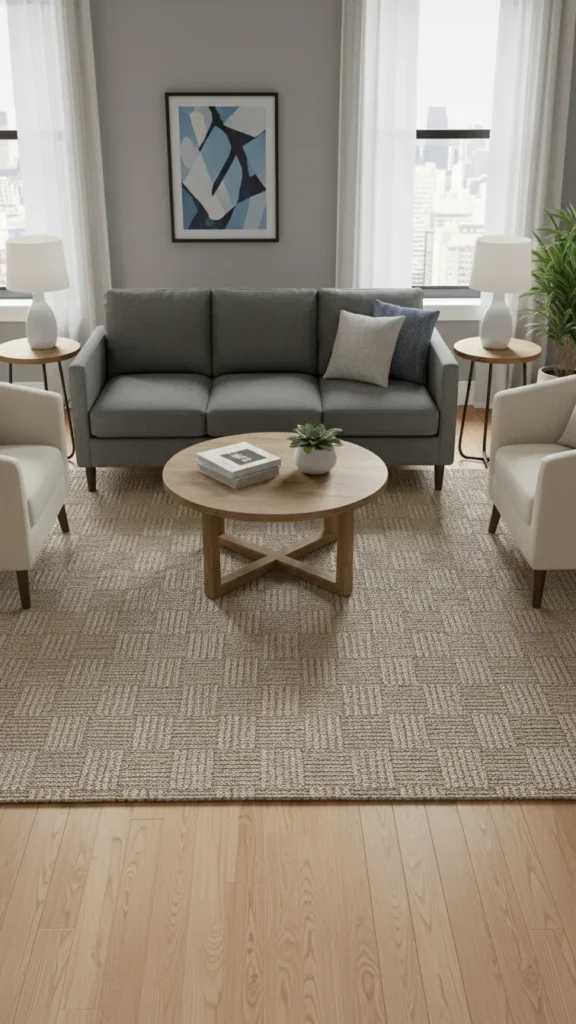
A rug that’s too small breaks the room into pieces. Instead of one cohesive space, your living room starts to feel choppy and cramped.
The right rug pulls everything together. It defines the seating area and gives the room clear boundaries that feel intentional, not tight.
Fix the common rug mistakes:
- Choose a rug large enough for front legs of all furniture to sit on
- Avoid “floating” rugs that sit alone in the center
- Stick to simple patterns or solid tones for smaller rooms
Key takeaway:
A correctly sized rug expands the room by creating one clear visual zone instead of many small ones.
The Sofa Size Mistake That Overwhelms Small Apartments
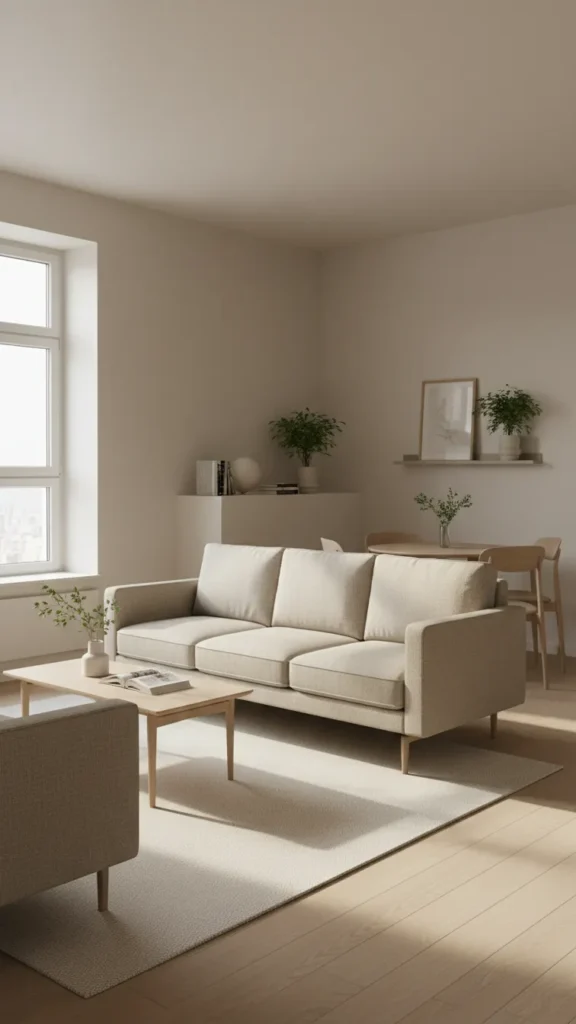
A sofa can ruin a small living room faster than anything else. Too deep, too wide, or too bulky—and suddenly the room feels crowded no matter how you style it.
Many people buy for comfort first and forget scale. The result is a sofa that eats walkways and visually dominates the space.
What to look for instead:
- Slim arms instead of thick, padded sides
- A shallower seat depth that fits the room
- Clean lines without oversized cushions
Key takeaway:
The right sofa doesn’t fill the room—it fits the room. Scale beats softness every time.
How Floating Furniture Creates Invisible Square Footage
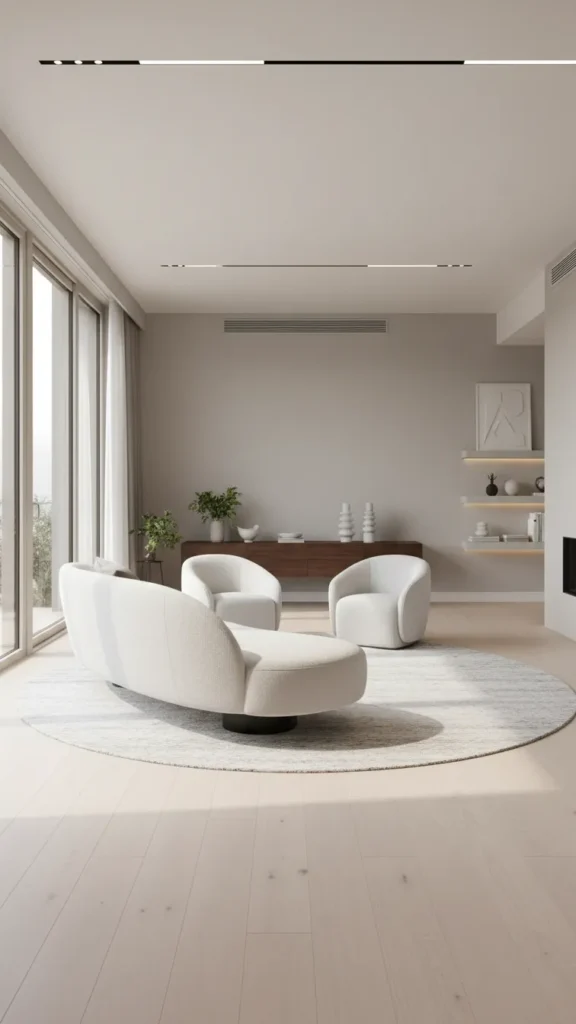
If every piece of furniture is locked in place, your living room feels stuck. Floating furniture breaks that rigid layout and makes the space feel flexible and open.
This works especially well in apartments where rooms serve more than one purpose. A floating setup creates flow without adding walls or dividers.
Easy ways to float furniture:
- Place the sofa slightly away from walls or windows
- Use a console table behind the sofa to anchor it
- Let furniture define zones instead of room edges
Dark Corners Are Making Your Living Room Feel Smaller
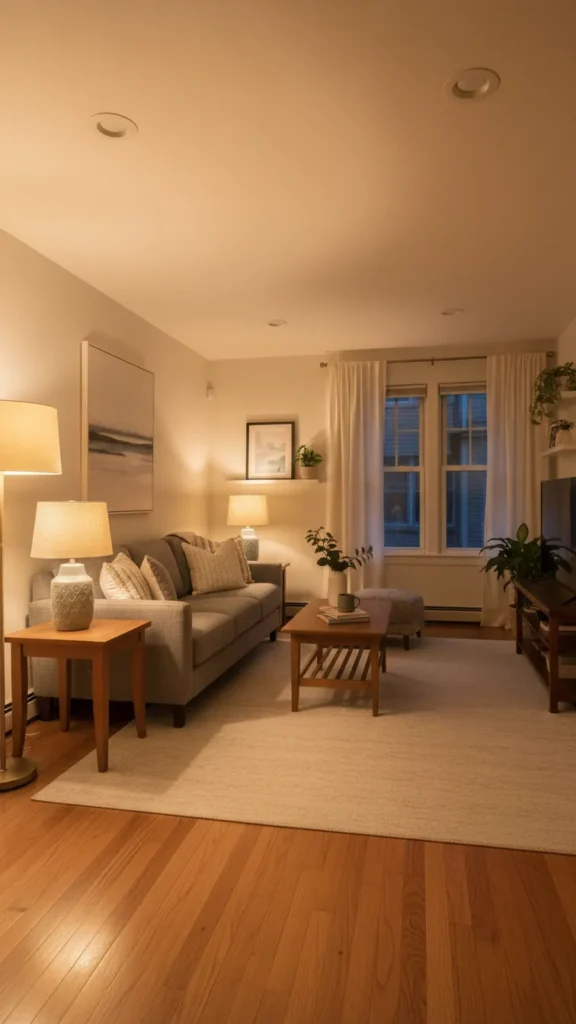
Even a well-furnished room can feel tight if light doesn’t reach every corner. Shadows compress the space and make walls feel closer than they are.
Most apartments rely on one overhead light—and that’s the problem. Layered lighting spreads brightness evenly and softens hard edges.
Fix dark corners fast:
- Add a floor lamp where walls meet
- Use table lamps to balance overhead lighting
- Choose warm, soft bulbs instead of harsh white
Key takeaway:
Even lighting stretches a room visually. Shadows shrink it.
Why Too Many Small Décor Pieces Create Visual Clutter
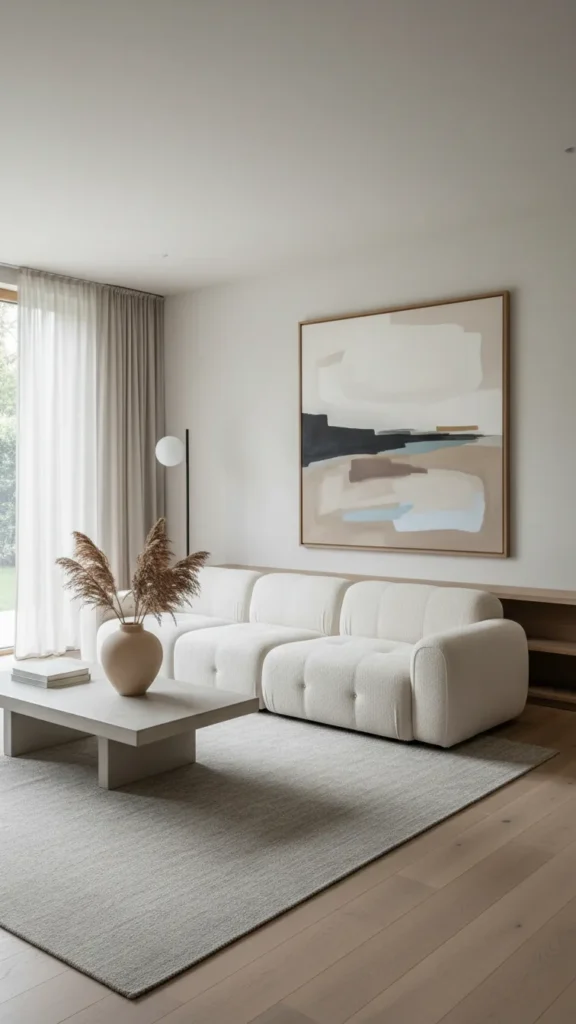
Lots of small items seem harmless, but together they overwhelm the eye. Instead of noticing the room, you notice the noise.
Small living rooms need clarity. Fewer, larger pieces feel calmer and make the space easier to read.
Edit your décor:
- Replace clusters of small items with one statement piece
- Leave open space between objects
- Keep surfaces partially empty on purpose
Key takeaway:
Less visual noise makes a small living room feel wider and more relaxed.
Vertical Space Is Wasted Space in Most Apartments
When everything stays low, the room feels short. Your eyes stop at sofa height, and the walls feel smaller than they are.
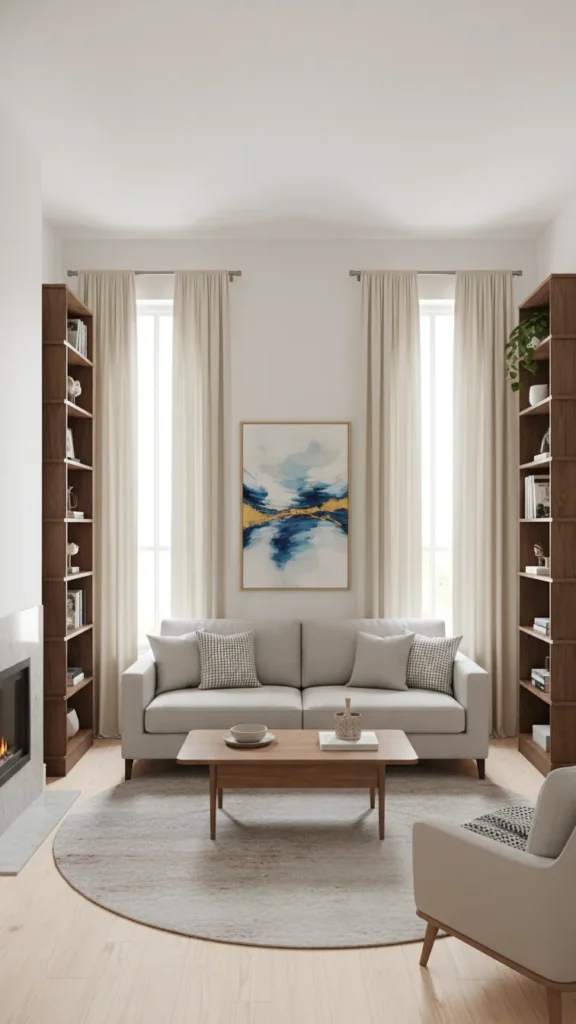
Using vertical space draws the eye upward and changes how the entire room is perceived. The goal isn’t to fill the wall—it’s to guide the gaze.
Use height the right way:
- Hang curtains closer to the ceiling
- Install shelves higher, not stacked low
- Choose tall, narrow bookcases over wide ones
Key takeaway:
When the eye moves up, the room feels taller and more open.
Low Furniture = Higher Ceilings (Visually)
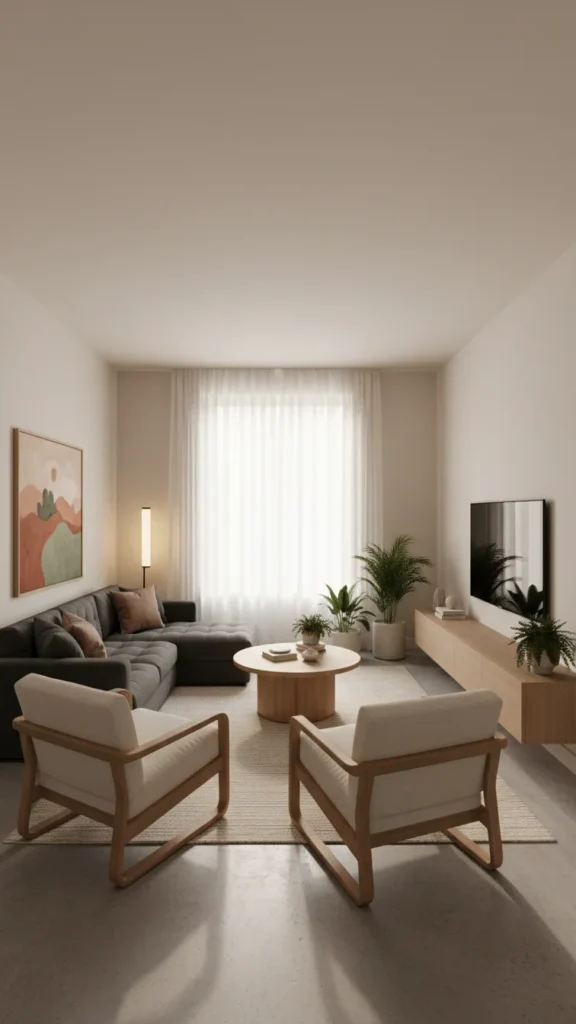
Tall, bulky furniture cuts the room in half. It makes ceilings feel lower and walls feel closer together.
Low-profile furniture keeps sightlines open. More wall is visible, and that makes the ceiling feel farther away.
Smart low-profile choices:
- Sofas with lower backs
- Platform-style seating
- Low media units instead of tall cabinets
Key takeaway:
Lower furniture tricks the eye into seeing higher ceilings—no renovation needed.
Mirrors Only Work If You Place Them Correctly
Mirrors don’t magically make rooms bigger. Put them in the wrong spot, and they just reflect clutter or dark corners—making the problem worse.
The right placement bounces light and extends sightlines. That’s what creates the illusion of more space.
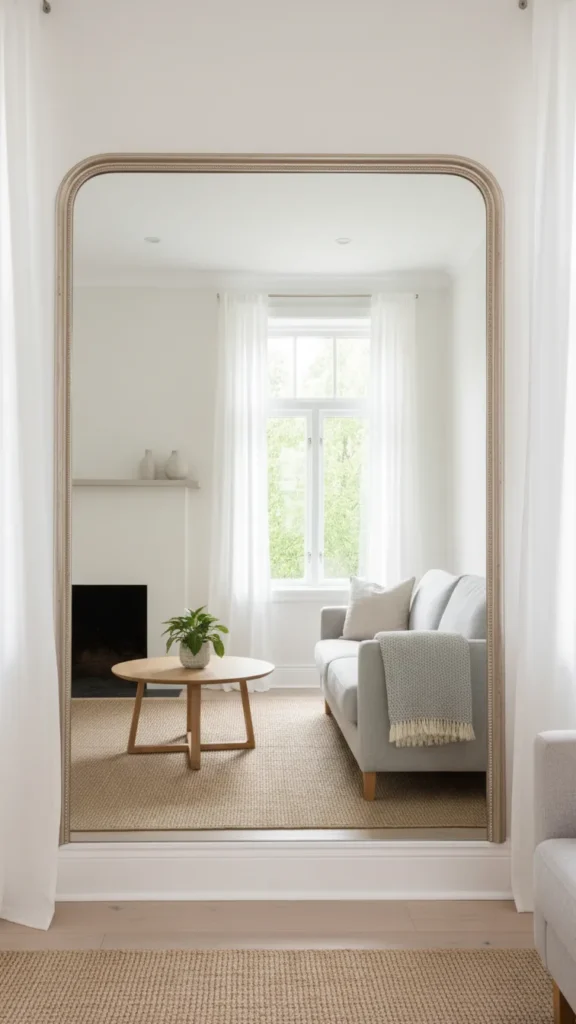
Use mirrors with purpose:
- Place mirrors across from windows to reflect natural light
- Avoid reflecting busy shelves or tight corners
- Choose one larger mirror instead of many small ones
Key takeaway:
A mirror should reflect light or openness—never mess or walls that feel too close.
Neutral Doesn’t Mean Boring—It Means Bigger
Too many colors break the room into pieces. Each contrast line makes the space feel smaller and busier.
Neutrals calm the eye and let the room read as one continuous space. That unity is what makes a small living room feel larger.
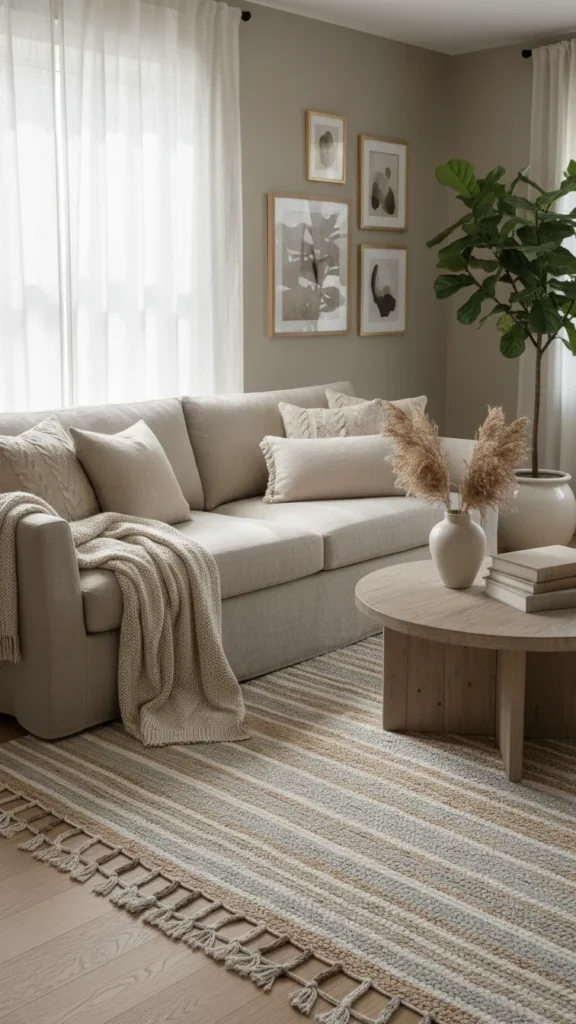
Make neutrals work harder:
- Stick to one main tone with subtle variations
- Add texture instead of more color
- Use darker shades sparingly for depth, not dominance
Key takeaway:
Fewer colors create visual flow, and visual flow makes rooms feel bigger.
Why Bulky Coffee Tables Kill Small Living Rooms
A heavy coffee table blocks movement and sightlines. It becomes an obstacle instead of a helper.
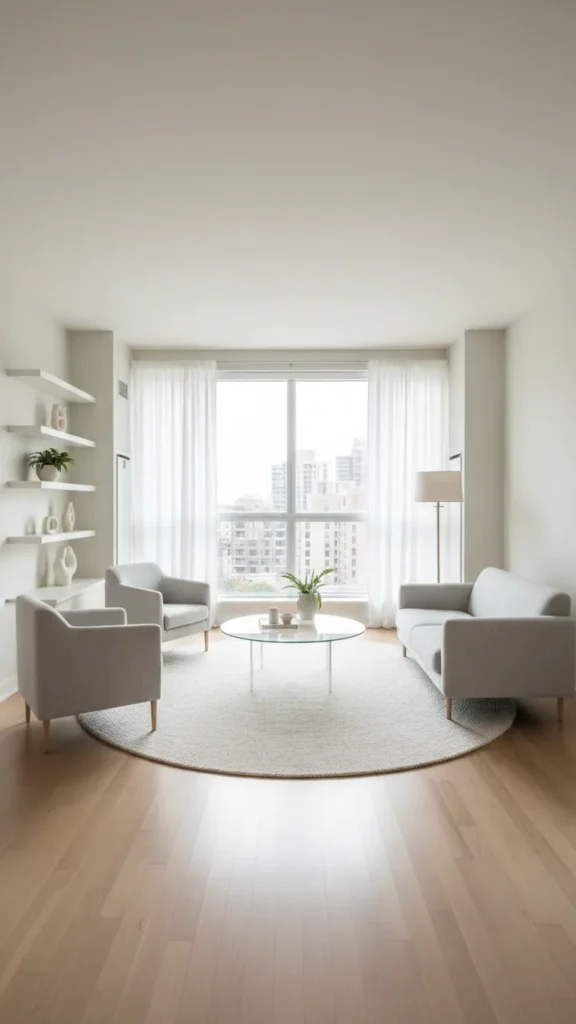
In a small living room, every inch of walking space matters. The wrong table makes the room feel tight and awkward to move through.
Better options:
- Round or oval tables that soften pathways
- Glass or open-base designs
- Nesting tables that tuck away when not needed
Key takeaway:
The lighter the coffee table looks, the easier the room feels to navigate.
How to Use Curtains to Make Windows Look Larger
Short or low-hung curtains shrink your walls. They visually chop the window and pull the ceiling down.
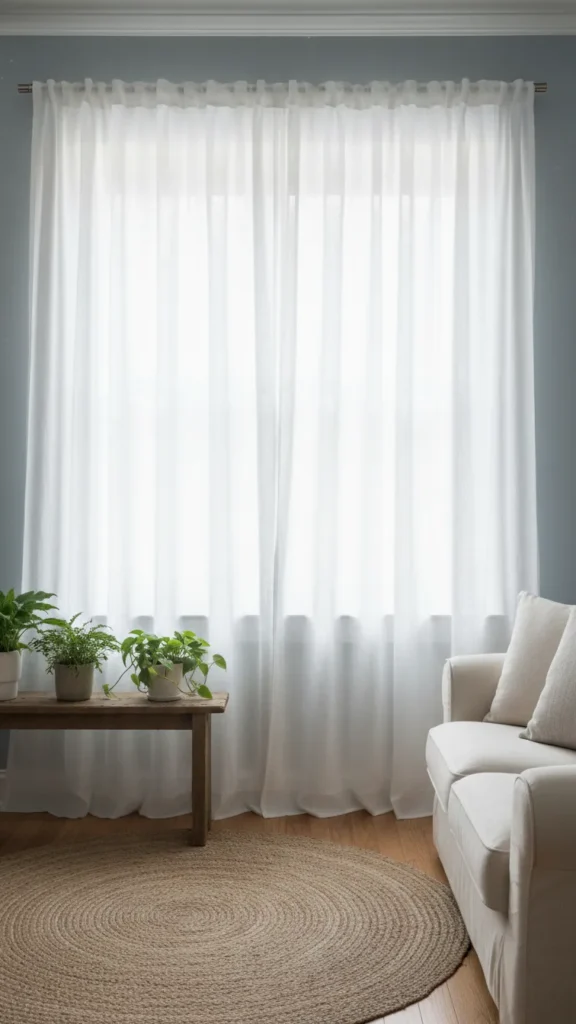
Properly hung curtains stretch the room upward and outward. It’s one of the fastest visual fixes you can make.
Hang curtains the right way:
- Mount rods closer to the ceiling, not the window frame
- Let curtains fall to the floor
- Keep fabrics light and simple
Key takeaway:
High, flowing curtains make windows—and the entire room—feel bigger.
Open Shelving vs. Closed Storage—Which Feels Bigger?
Open shelves can look airy—or completely chaotic. When they’re overloaded, they add visual noise that makes a small room feel crowded.
Closed storage hides the mess and calms the space. The trick is knowing when visibility helps and when it hurts.
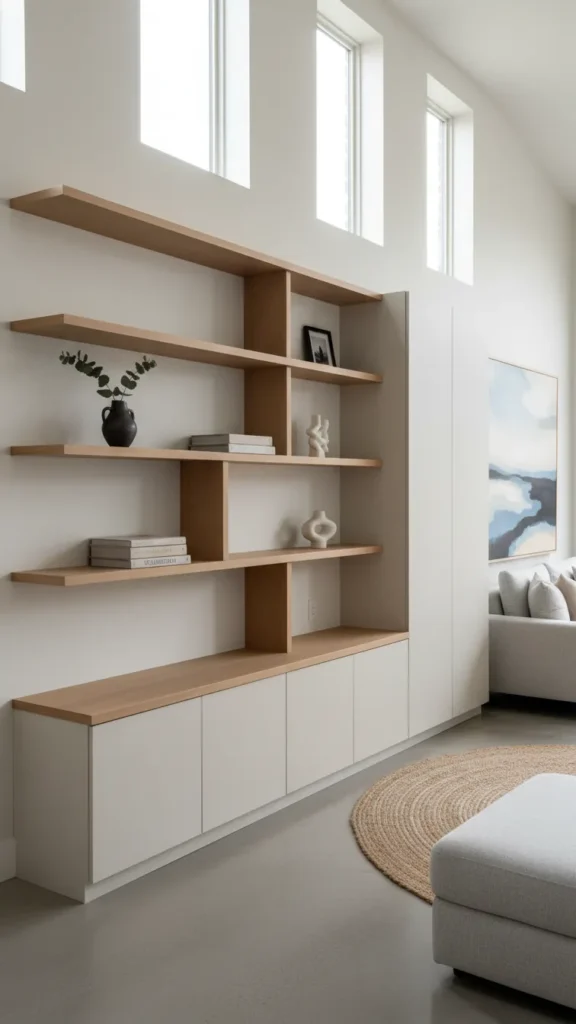
Use each wisely:
- Open shelving for a few intentional items
- Closed cabinets for everyday clutter
- Match storage colors to the wall to reduce contrast
Key takeaway:
What you hide matters just as much as what you show in a small living room.
Decluttering Isn’t Enough—You Need Visual Editing
A room can be clean and still feel busy. That’s because clutter isn’t just physical—it’s visual.
Too many shapes, patterns, and surfaces competing for attention make the space feel smaller. Editing brings clarity back.
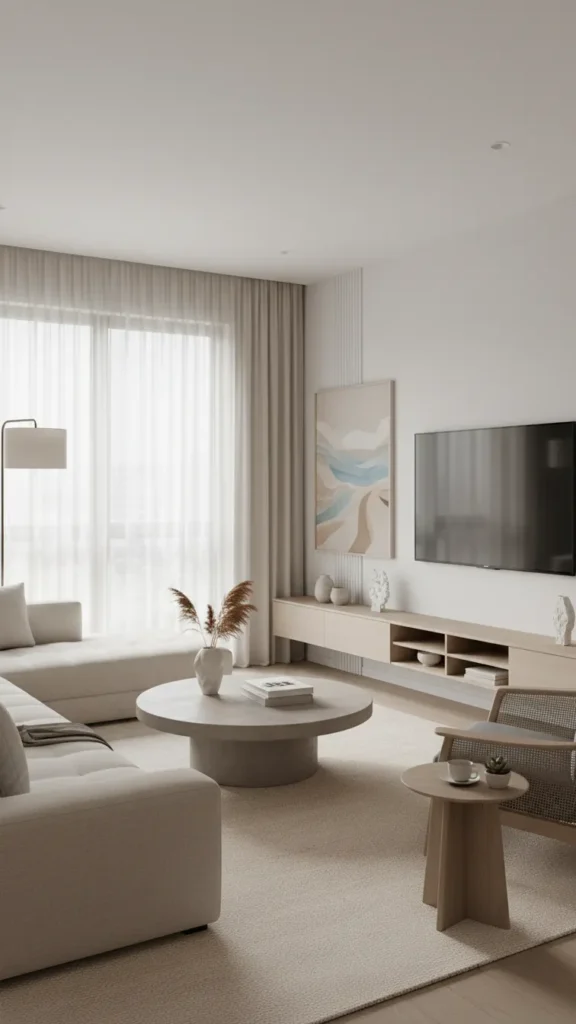
Edit the room visually:
- Remove extra throws, pillows, and accessories
- Repeat materials and finishes for consistency
- Let some areas stay intentionally empty
Key takeaway:
A visually edited room feels calmer, wider, and easier to live in.
The Power of Negative Space (And Why Empty Is Good)
Empty space isn’t wasted space. It gives the eye somewhere to rest, which makes everything else feel more intentional.
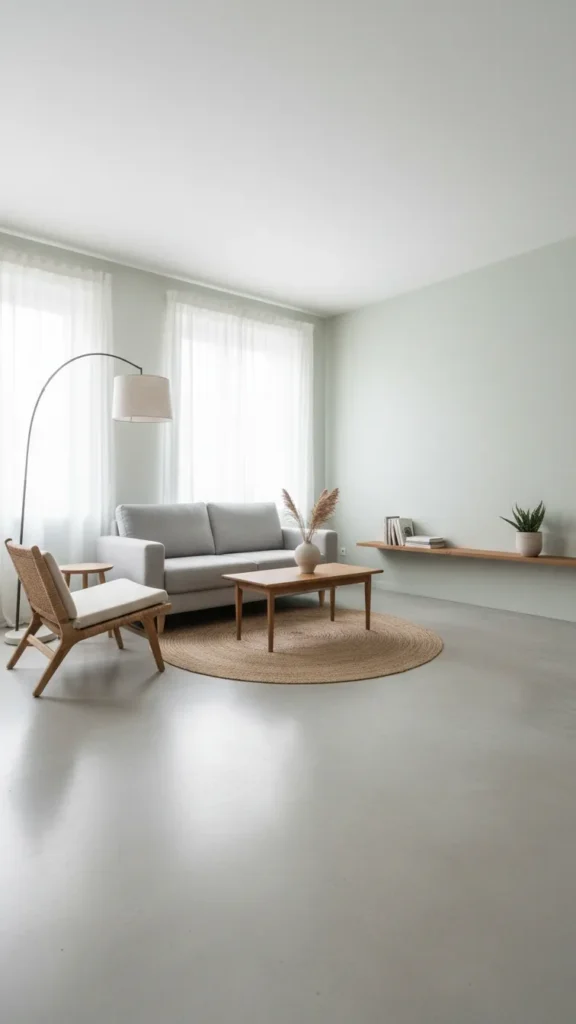
When every corner is filled, the room feels tight and overworked. A little openness lets the layout breathe.
Create negative space on purpose:
- Leave gaps between furniture pieces
- Avoid filling every wall or surface
- Let one area stay simple and open
Key takeaway:
Empty space makes a small living room feel calmer—and larger by contrast.
Light Reflection Tricks That Multiply Natural Light
Light that hits a dark surface stops there. Light that hits reflective surfaces spreads across the room.
Small changes in materials can dramatically brighten a living room. More light means softer edges and a more open feel.
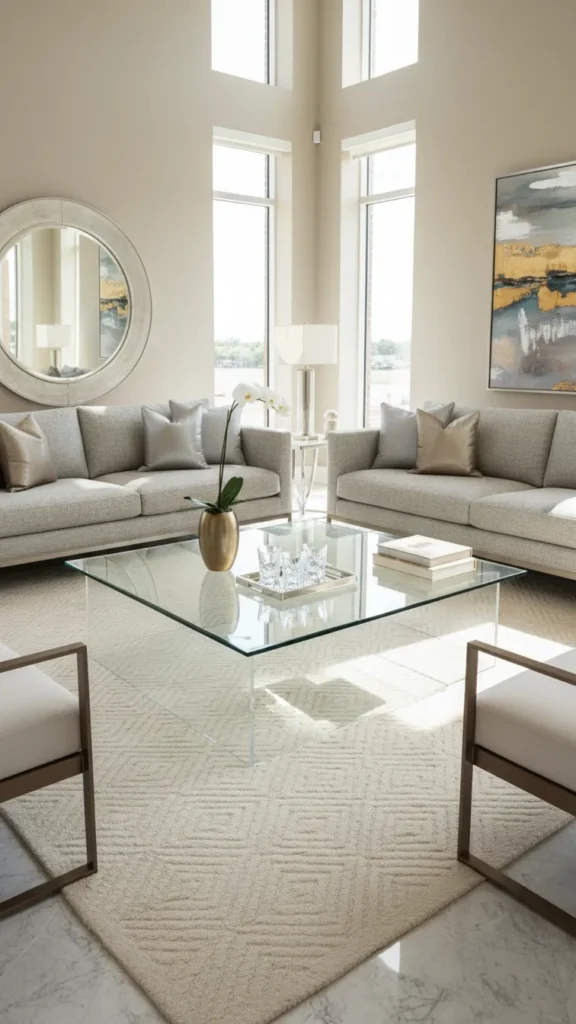
Use reflection wisely:
- Choose glass, metal, or glossy finishes
- Add a light-toned rug or table surface
- Avoid too many dark, matte pieces in one area
Key takeaway:
When light moves freely, the room feels bigger without adding a single inch.
Zone the Room Without Walls or Dividers
Open-plan apartments often feel messy because nothing feels defined. When a living room has no clear zones, it can feel chaotic and smaller than it is.
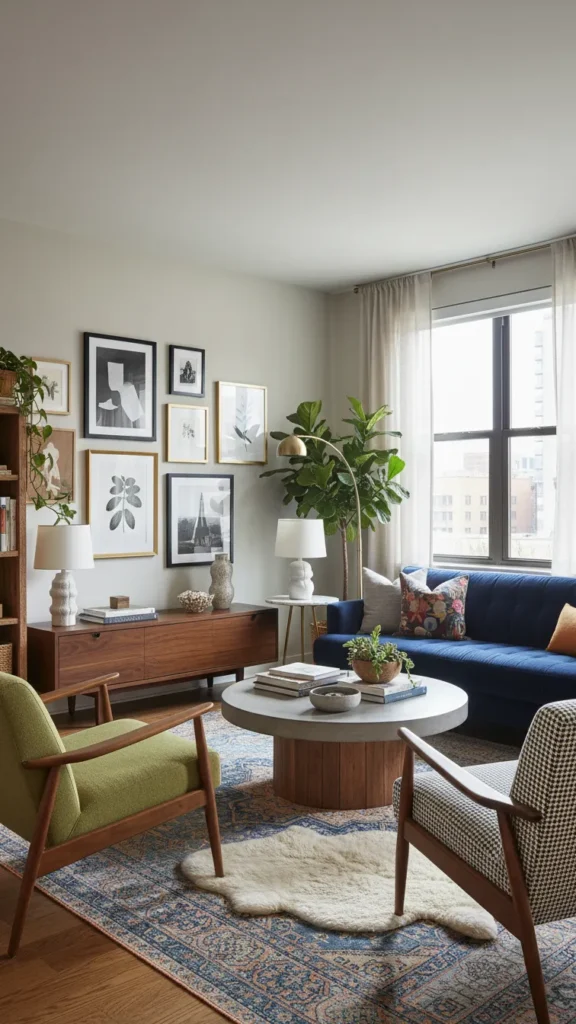
You don’t need walls to create order. Smart placement tells the eye where one area ends and another begins.
Simple zoning tricks:
- Use a rug to anchor the seating area
- Turn the sofa to face the main focus point
- Add a narrow console or chair to mark boundaries
Key takeaway:
Clear zones make a small living room feel organized, not crowded.
Why Matching Furniture Sets Make Rooms Feel Smaller
Buying a full matching set seems safe. In a small space, it often does the opposite—it makes the room feel flat and heavy.
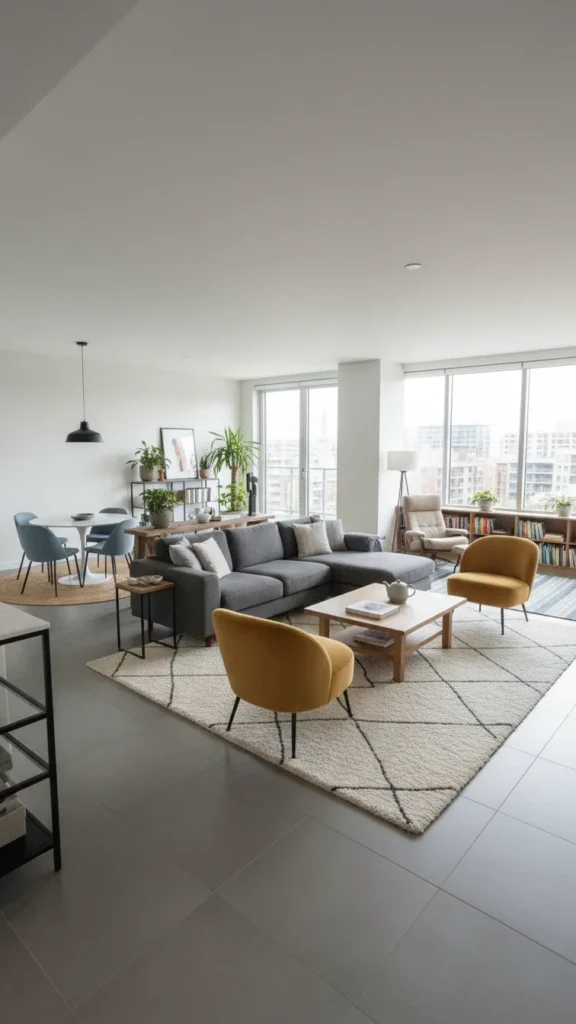
Too much sameness removes depth. Mixing pieces creates layers that add visual interest without clutter.
Mix without chaos:
- Vary shapes while keeping colors consistent
- Combine different materials in small doses
- Avoid identical silhouettes next to each other
Key takeaway:
A little contrast adds depth, and depth makes rooms feel bigger.
Slim Arm Sofas vs. Chunky Designs
Thick arms steal valuable inches. In a small living room, that lost space adds up fast.
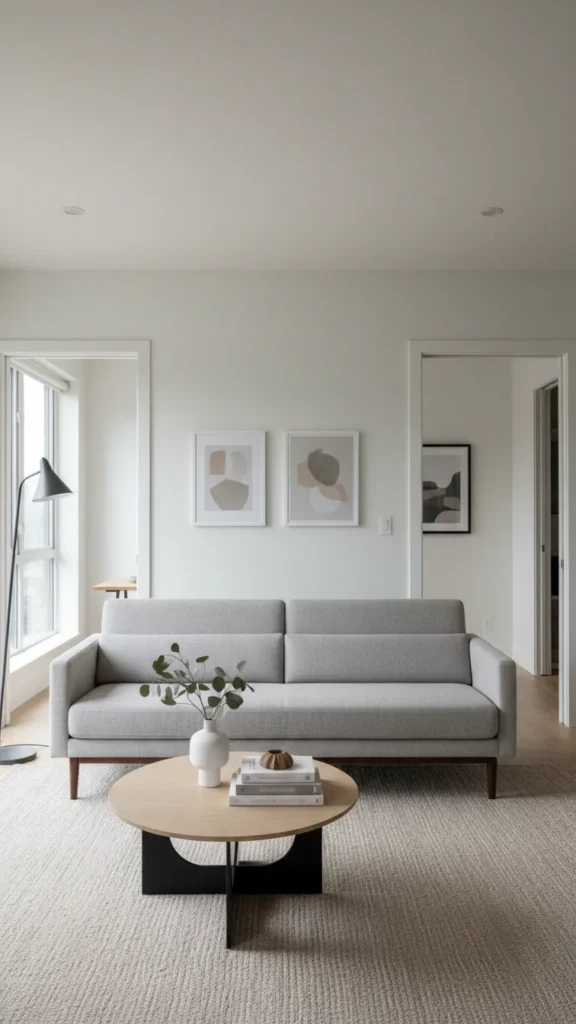
Slim-arm sofas give you the same seating without the bulk. The room feels lighter, and walkways stay clear.
What to choose:
- Narrow, straight arms over padded rolls
- Exposed legs to reduce visual weight
- Simple silhouettes without extra detailing
Key takeaway:
Slim designs free up space without sacrificing comfort.
How to Hide Storage Without Adding Visual Weight
Storage is necessary—but visible storage can overwhelm a small room. The goal is to keep what you need without advertising it.
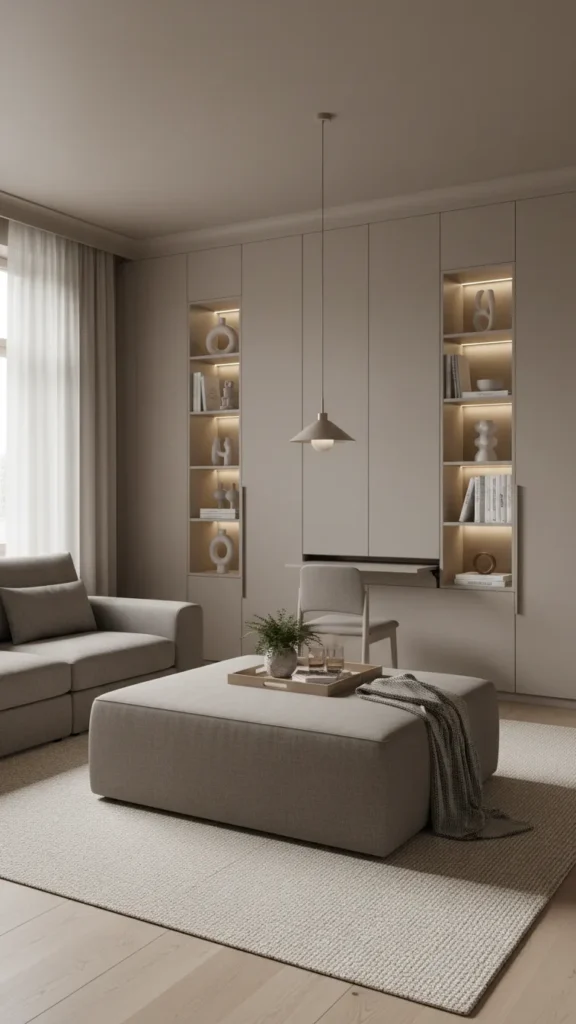
When storage blends in, the room feels calmer and more open.
Smart storage solutions:
- Ottomans with hidden compartments
- Built-ins painted the same color as the wall
- Furniture that serves two purposes
Key takeaway:
The best storage disappears into the room instead of standing out.
Accent Walls That Expand, Not Compress
An accent wall can help—or hurt—a small living room. Choose the wrong wall or color, and the room feels boxed in.
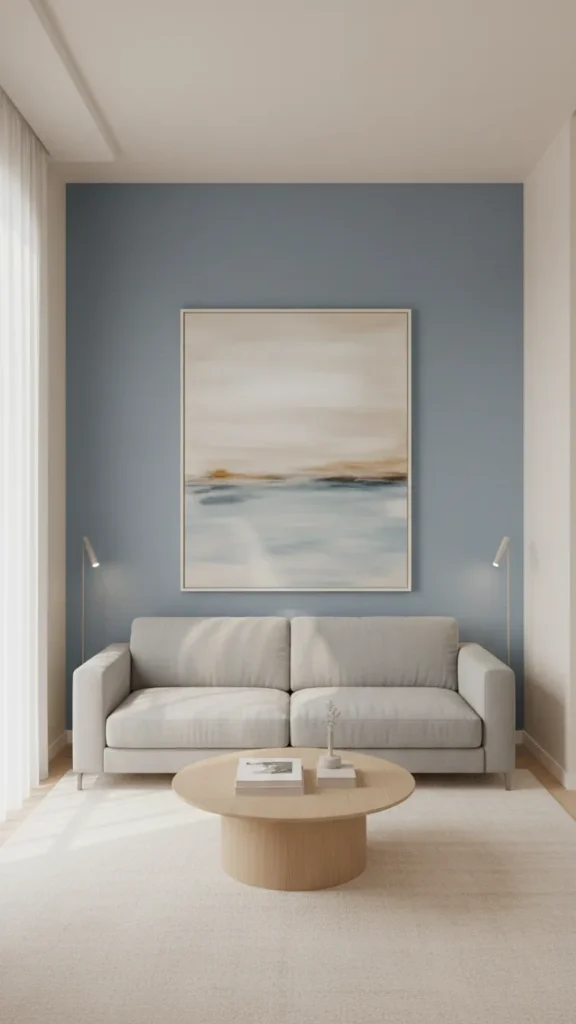
The right accent adds depth instead of pressure. It should pull the eye forward, not close the space.
Get it right:
- Accent the wall farthest from the entry
- Use soft contrast, not harsh color breaks
- Keep adjacent walls light and simple
Key takeaway:
Accent walls should create depth, not visual tension.
Use Symmetry to Calm a Busy Living Room
Uneven layouts make small rooms feel restless. When the eye keeps jumping, the room feels tighter than it is.
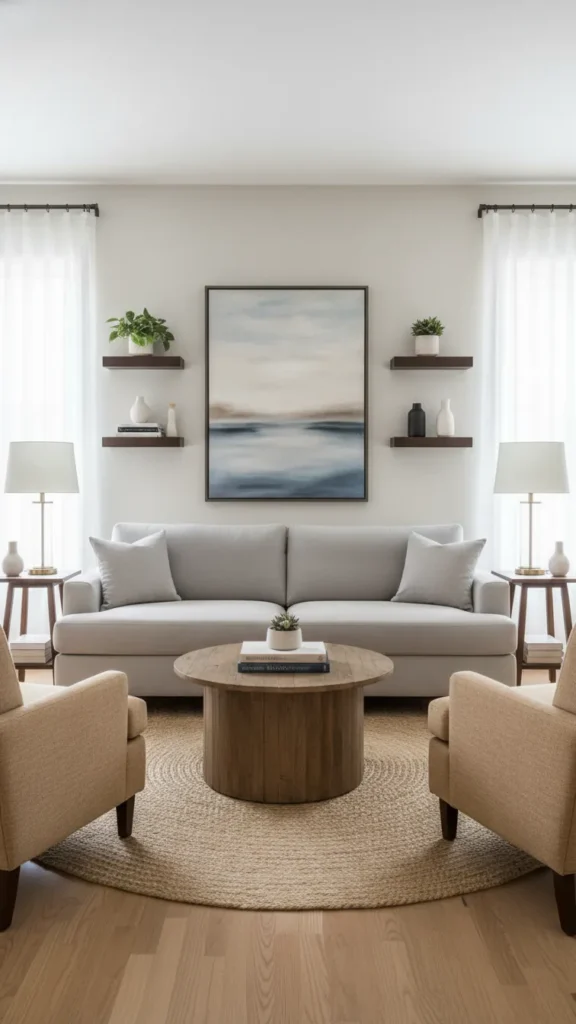
Symmetry brings balance and calm. That calm makes the space easier to read—and feel larger.
Easy symmetry wins:
- Match lamps on either side of the sofa
- Center artwork and furniture where possible
- Balance visual weight left and right
Key takeaway:
Balanced rooms feel calmer, and calm spaces feel bigger.
Multi-Functional Furniture That Doesn’t Look Temporary
Small spaces need furniture that works harder. But pieces that look overly practical can make the room feel like a setup, not a home.
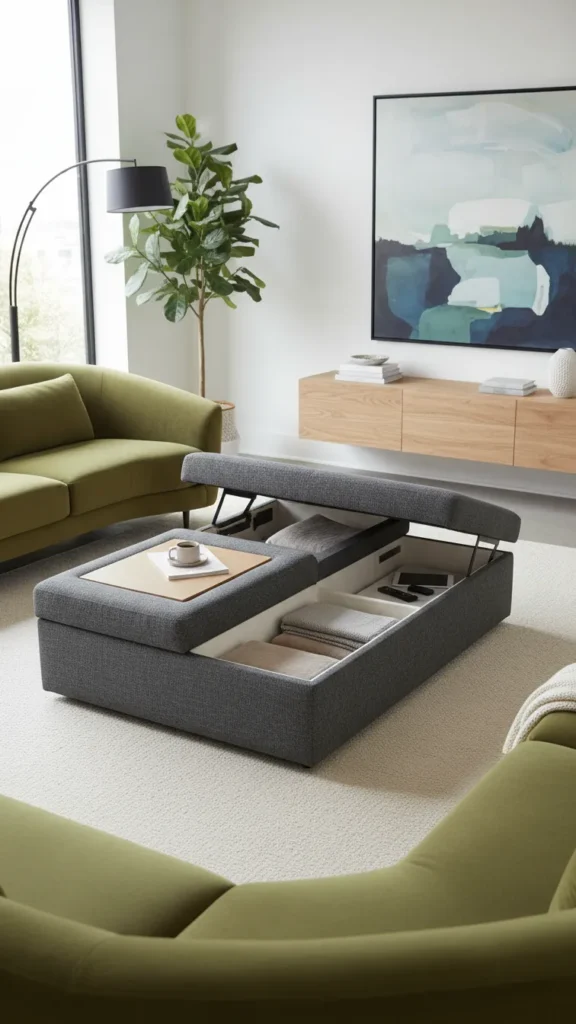
The best multi-use furniture blends in. It solves problems quietly without calling attention to itself.
Smart picks:
- Storage ottomans that double as seating
- Coffee tables with hidden compartments
- Sofas that offer storage without bulky frames
Key takeaway:
Function should support the room—not dominate it.
Artwork Placement That Lifts the Entire Room
Artwork hung too low drags the room down. It shortens walls and makes ceilings feel closer.
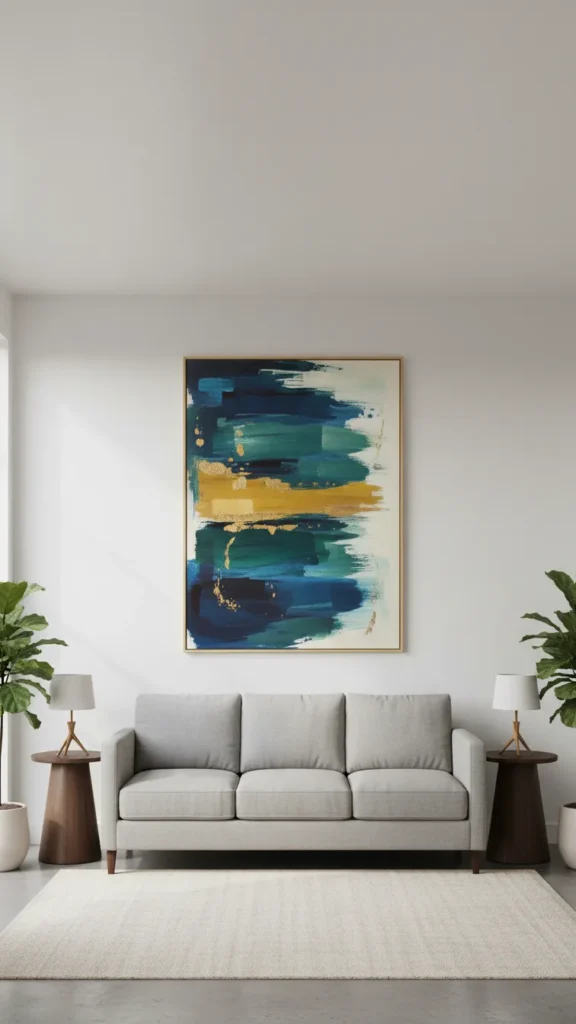
Proper placement pulls the eye upward and adds height without adding clutter.
Hang art correctly:
- Keep the center at eye level or slightly higher
- Use one larger piece instead of many small ones
- Align art with furniture width, not wall width
Key takeaway:
Well-placed artwork raises the room visually and adds breathing room.
The Floor Is Part of the Design—Don’t Ignore It
When flooring changes abruptly, the room feels chopped up. Each break makes the space feel smaller.
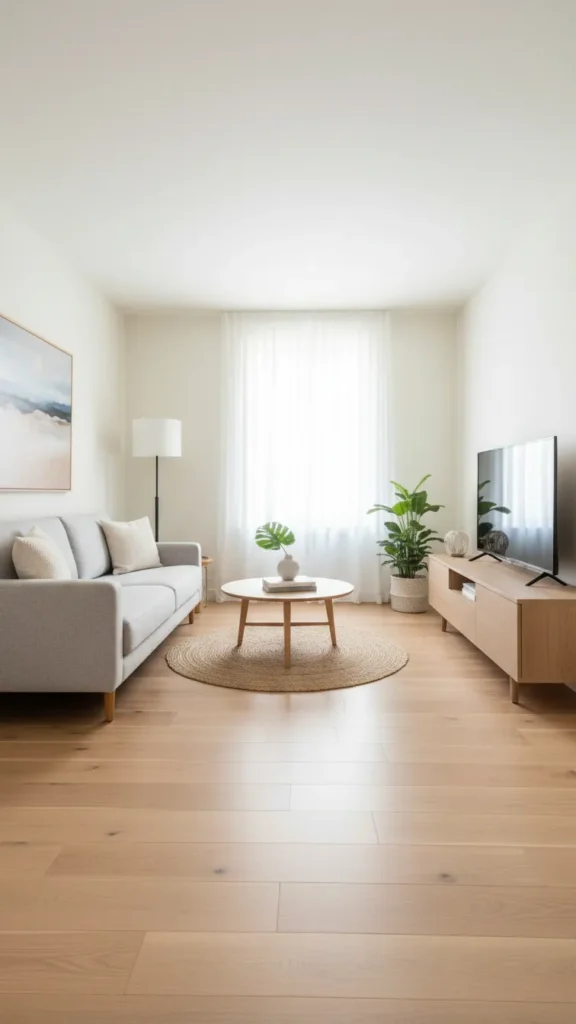
Consistent flooring creates flow. The eye moves smoothly, and the room feels wider and more connected.
Make the floor work for you:
- Keep flooring consistent across the space
- Use light to mid-tone finishes to reflect light
- Avoid busy patterns in small rooms
Key takeaway:
One continuous floor makes a small living room feel longer and more open.
When Minimalism Goes Too Far (And Feels Cold)
Stripping a room down too much can backfire. Instead of open, it starts to feel empty and uninviting.
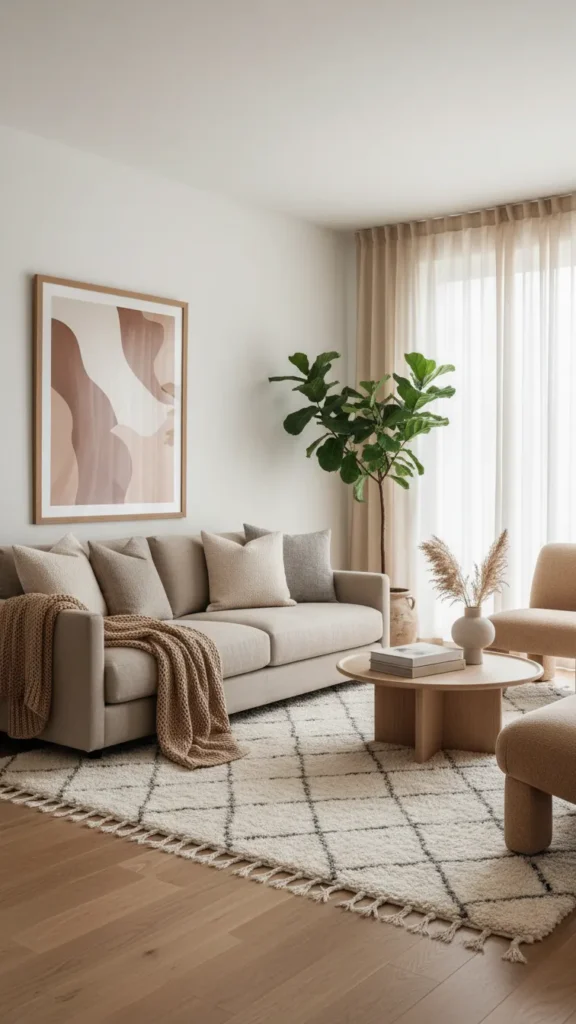
Warmth matters in small spaces. The goal is balance, not bare.
Add warmth without clutter:
- Use soft textures like rugs and throws
- Add one or two personal items
- Keep a consistent color palette
Key takeaway:
A lived-in feel makes a small living room comfortable without shrinking it.
Small Living Room Layouts That Always Work
Some layouts fail no matter how nice the furniture is. Others work almost every time because they respect flow and scale.
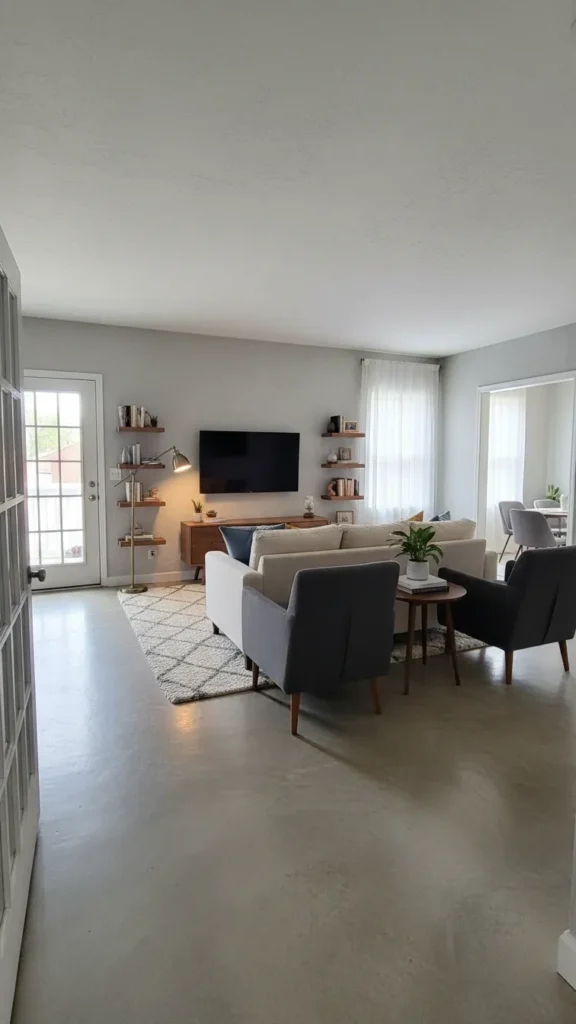
Reliable layouts reduce guesswork. They keep walkways clear and make the room feel organized, not forced.
Layouts that rarely fail:
- Sofa facing a focal point with chairs angled inward
- L-shaped seating to define the room edge
- A single clear pathway through the space
Key takeaway:
Good layouts protect movement—and movement makes rooms feel bigger.
The One Rule That Makes Any Small Living Room Feel Bigger
If you remember only one thing, remember this: cluttered sightlines shrink rooms.
When the eye can move freely—from wall to wall, floor to ceiling—the room feels open, even if it’s small.
Apply this rule everywhere:
- Keep furniture visually light
- Avoid blocking windows and pathways
- Edit anything that interrupts flow
Key takeaway:
Clear sightlines are the fastest shortcut to a bigger-feeling living room.