
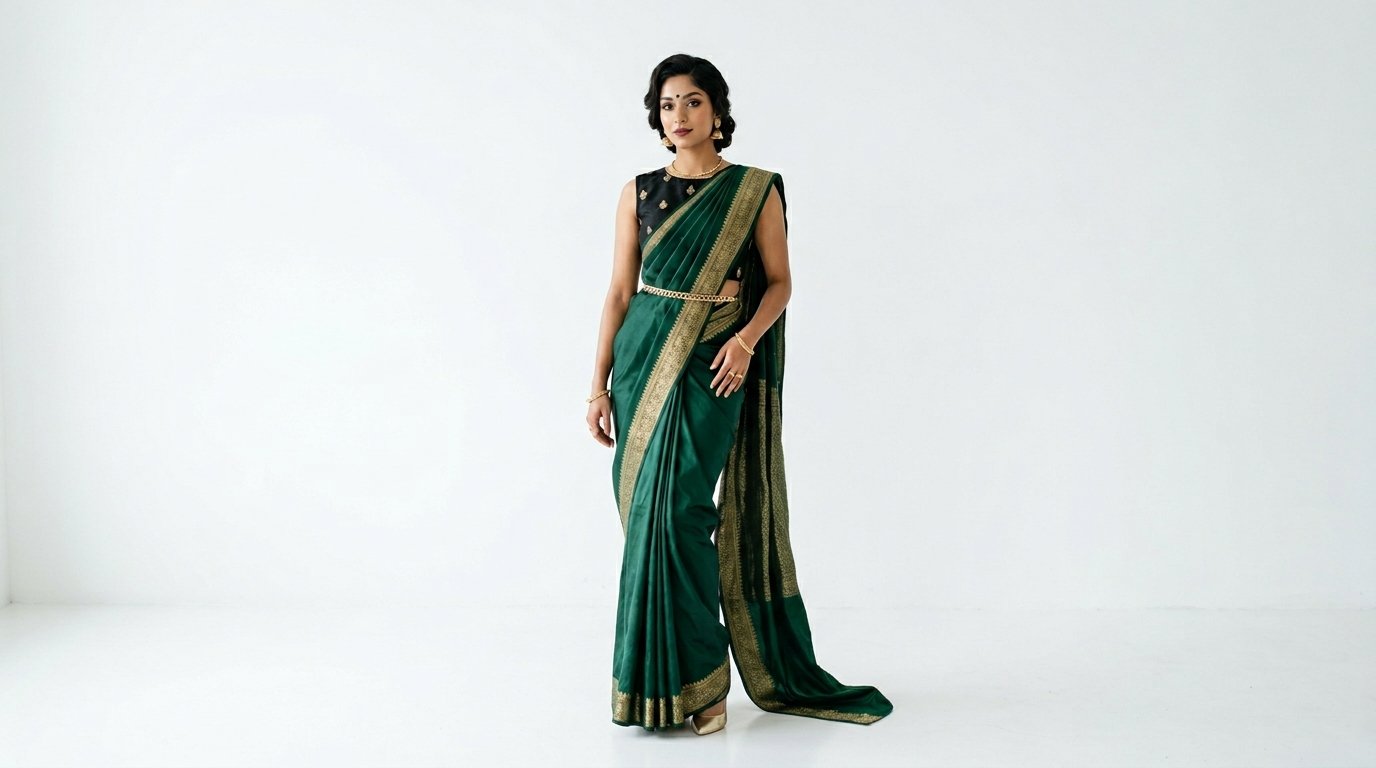
The saree has been draped, rewrapped, styled, and reinvented for thousands of years — and somehow, it keeps getting more exciting. Today’s saree is not your grandmother’s six yards of silk tucked away for special occasions. It’s a power outfit, a street style statement, a bridal masterpiece, and a canvas for some of the most creative fashion thinking happening anywhere in the world.
Whether you’re a saree beginner who wants to look effortlessly put-together or a seasoned wearer ready to experiment, these 35 modern draping styles will show you just how endlessly versatile six yards of fabric can be.
Classic Styles Reimagined
1. Nivi Drape With a Modern Twist
The Nivi drape is the most universally recognised saree style — the one most people picture when they think of a saree. But the modern Nivi is nothing like your standard drape. Today’s stylists are pairing it with deep V-neck structured blouses, opting for minimal borders, and letting the fabric do the talking in muted, sophisticated tones like dusty rose, sage green, and warm ivory.
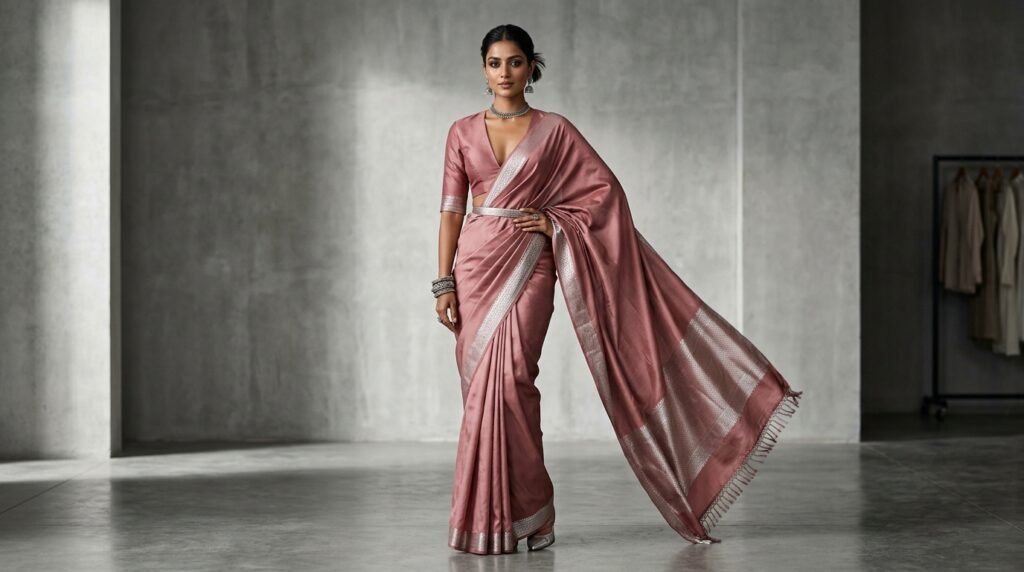
The key update? Tighter, more deliberate pleating. Instead of loose fabric bunching at the front, modern Nivi devotees spend time ensuring each pleat is equal width and pressed flat. The result is crisp, polished, and completely current. Try a silk Nivi in a monochrome palette for the most editorial look.
Styling tip: Keep accessories minimal. A slim gold chain and small earrings let the clean lines of a modern Nivi breathe.
2. Pre-Stitched Saree Style
The pre-stitched saree is the answer every busy woman has been waiting for. It looks exactly like a traditionally draped saree — perfect pleats, elegant pallu — but it slips on in under two minutes. Designers have gotten incredibly skilled at engineering these so the drape looks hand-done rather than ready-made.
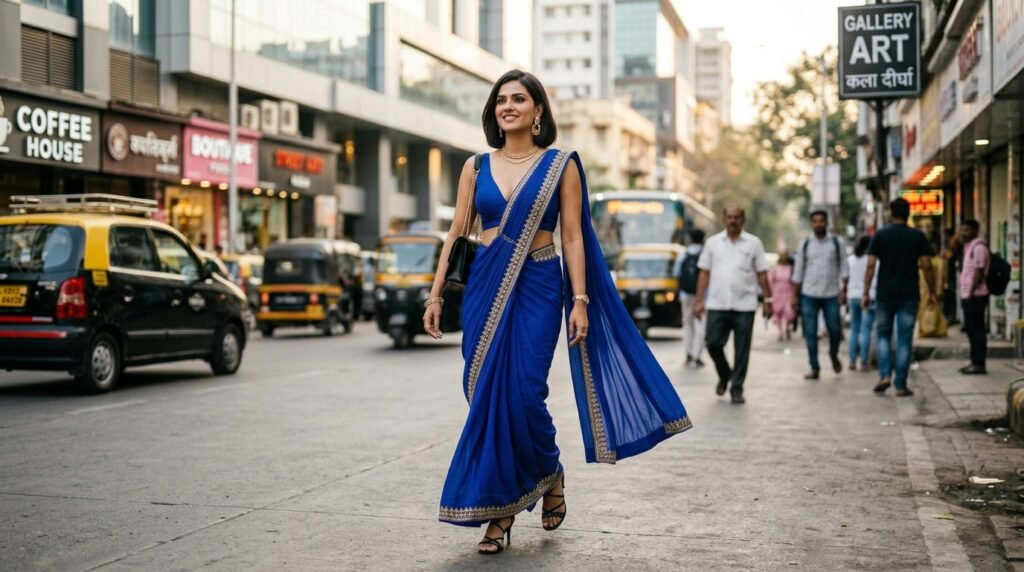
Cobalt blues and emerald greens in georgette or chiffon are particularly stunning in this style because the fabric holds the stitched pleats naturally. Pair it with a sleeveless crop blouse and minimal jewellery for a clean contemporary look that works from office to evening event.
Styling tip: A pre-stitched saree is perfect for saree beginners. Build confidence before moving to the traditional drape.
3. Belted Saree Drape
The belt changed everything. When stylists started cinching sarees with wide leather belts or statement metallic waistbands, the garment went from flowing and traditional to architectural and runway-ready. The belt creates a defined waist, gives the saree a more structured silhouette, and adds an unexpected fusion element that makes the look feel entirely modern.
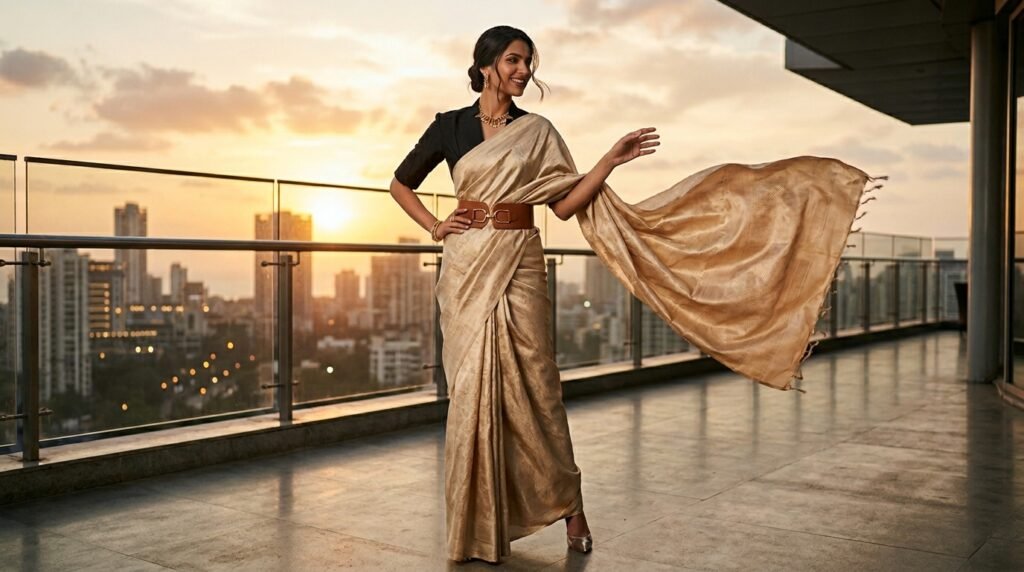
Champagne gold silks, ivory tissues, and sheer organzas all work beautifully with a belt because the contrast between the soft draped fabric and the firm structured belt is what makes the look sing. This draping style photographs exceptionally well — the defined silhouette reads clearly even in full-length shots.
Styling tip: Match your belt material to your blouse for a cohesive, intentional look rather than an afterthought.
4. Dhoti-Style Saree Drape
Inspired by the traditional dhoti worn across India, this draping style takes the front pleats and shapes them to fall wide and soft like trousers. The result is a silhouette that is simultaneously traditional and completely avant-garde. Fashion designers like Anamika Khanna and Tarun Tahiliani have sent dhoti sarees down their runways for years — and now the style has fully crossed over into everyday fashion.
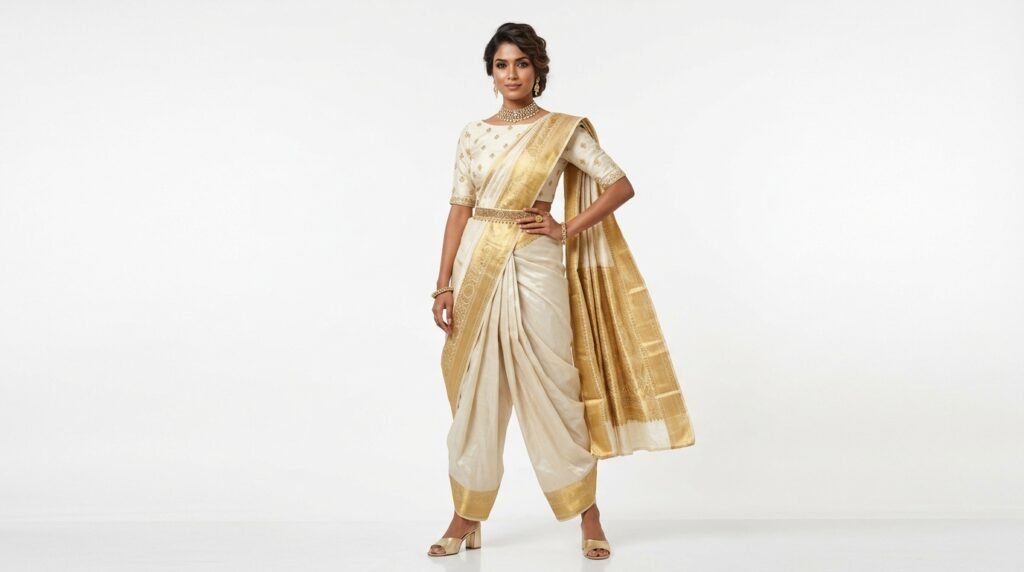
Ivory and gold tissue silk is the classic fabric choice for this look, but it also works brilliantly in structured cotton for a daytime take. The dhoti silhouette is particularly flattering because it creates length through the leg line while maintaining the drama of the traditional pallu over the shoulder.
Styling tip: Keep the blouse very fitted and minimal — the volume is all in the drape, so the top half should be streamlined.
5. Butterfly Drape Saree
The butterfly drape is one of the most visually dramatic ways to wear a saree, and it’s surprisingly achievable. The pallu is fanned open and secured on both sides so that it spreads behind the wearer like a pair of wings — creating a breathtaking silhouette whether you’re standing still or in motion.
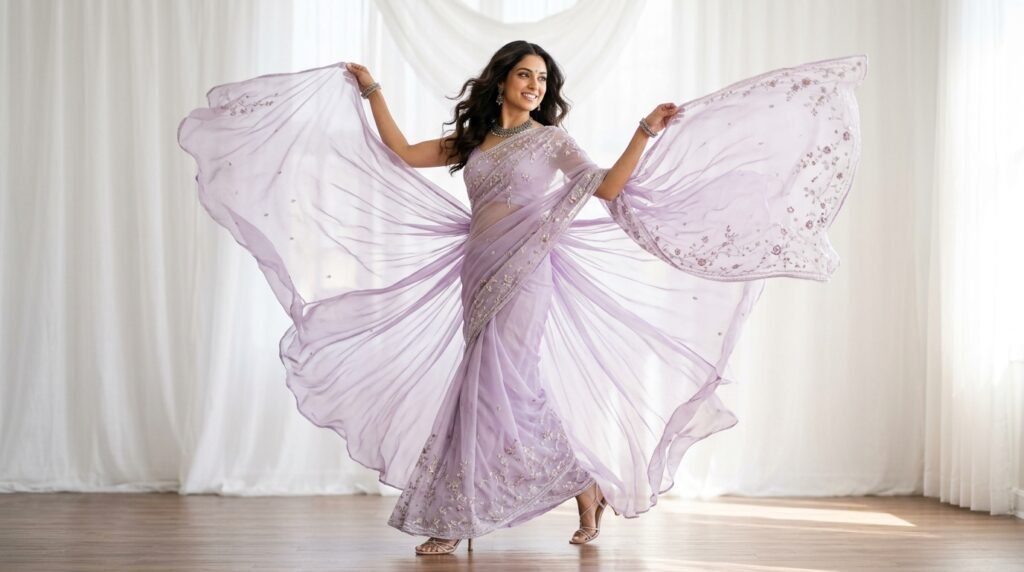
Sheer chiffon and organza with delicate embroidery are the ideal fabrics for this drape because the lightness of the material allows the wings to hold their spread without stiffness. This is a saree drape made for photographs — especially the kind taken at golden hour or with a breeze.
Styling tip: This is an occasion look. Wear it to weddings, receptions, or styled shoots where you’ll have time to adjust the pallu before photos.
Indo-Western Fusion Drapes
6. Saree With a Blazer
The saree-and-blazer combination is one of the most powerful outfits in modern Indian fashion. It bridges traditional and contemporary in one look — all the grace of a saree with all the authority of tailoring. Drape your saree in a classic Nivi style, then throw a crisp oversized blazer over the blouse.
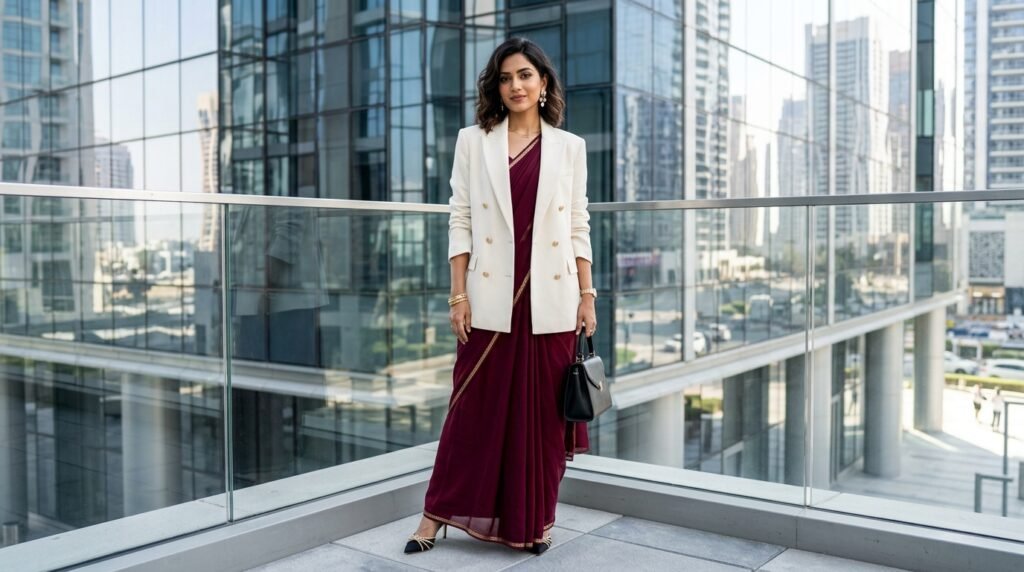
Deep burgundy georgette sarees with ivory blazers, or ink navy silks with camel blazers — these combinations feel completely of the moment. This is the look for job interviews, board meetings, client presentations, or any situation where you want to walk in and own the room.
Styling tip: Choose a blazer that is one or two sizes larger than usual — the oversized proportion plays beautifully against the soft draped fabric.
7. Saree With a Turtleneck Top
This is the draping style that made fashion people sit up and take notice of Indian style globally. The combination of a sheer organza saree — or even a lightweight chiffon — draped over a fitted ribbed turtleneck is unexpected, edgy, and completely sophisticated.
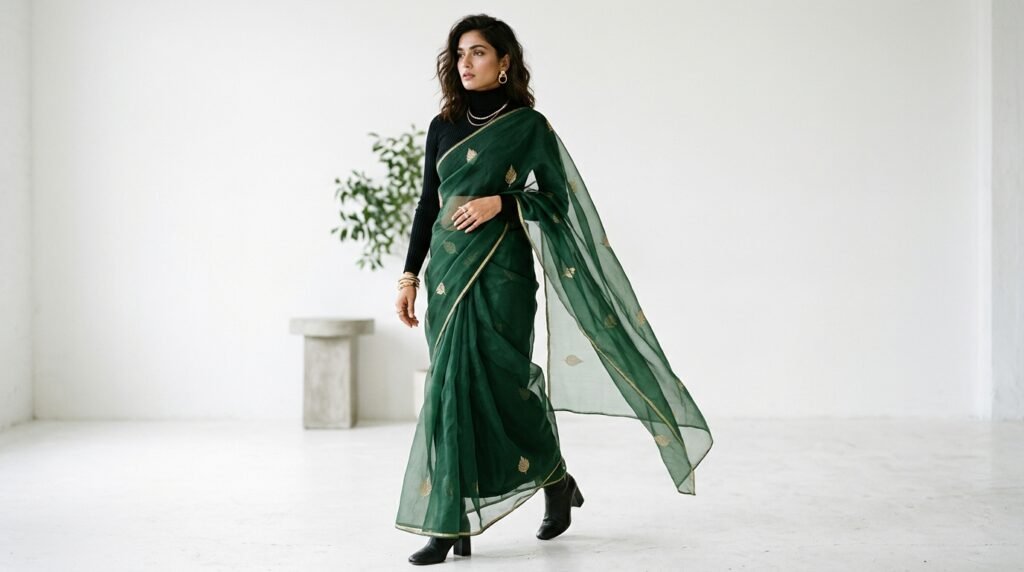
Forest green organza over a black turtleneck, or pale blush chiffon over a cream roll-neck — the layering creates a depth of texture that looks considered and intentional. This works particularly well in winter months when a regular saree blouse would feel too exposed, and it photographs incredibly well because of the contrast between the clean neckline and the draped fabric.
Styling tip: Keep the turtleneck fitted and in a solid neutral colour so it acts as a base layer rather than competing with the saree.
8. Saree With a Denim Jacket
Young Indian women have completely reimagined the saree as casual wear — and the denim jacket drape is the best example of that shift. Take a vibrant printed cotton or Chanderi saree in warm saffron, deep orange, or electric blue, drape it casually, and add a cropped vintage denim jacket on top.
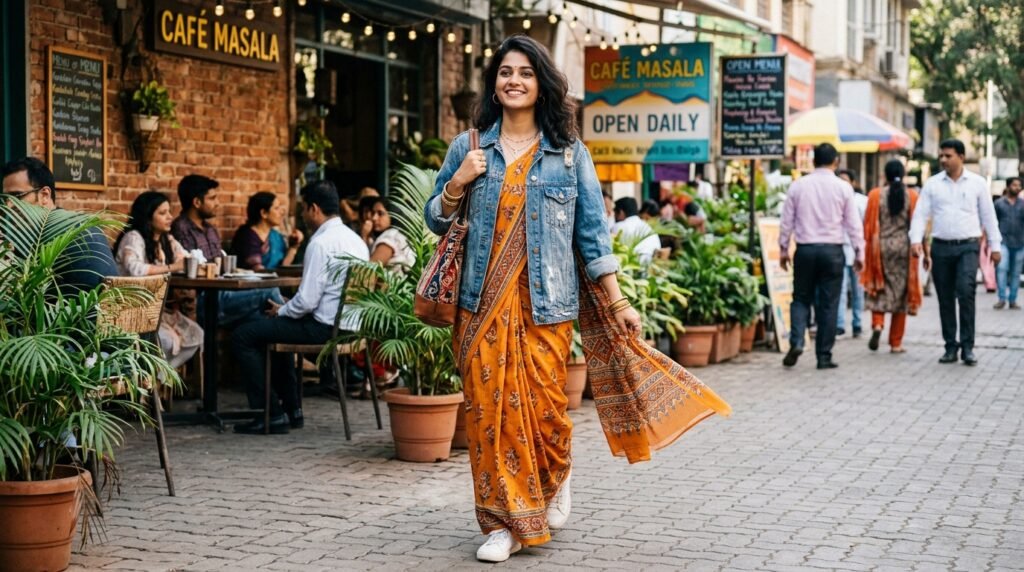
The combination works because denim is the universal casual fabric and it grounds a saree that might otherwise read as too formal. This is a weekend look, a farmers market look, a coffee-with-friends look. It says: I love my culture and I also love fashion, and I see no reason those can’t be the same thing.
Styling tip: Tie the denim jacket loosely or wear it open — the drape should still be visible and the jacket acts as a layer rather than a replacement for the blouse.
9. Pant-Style Saree Drape
The pant drape takes everything we love about the dhoti style and refines it further — the front pleats are tucked, shaped, and arranged to flow with the clean vertical lines of tailored trousers. The effect is strikingly modern, almost architectural, and works exceptionally well with heavier fabrics like silk, tissue, or brocade that hold their shape.
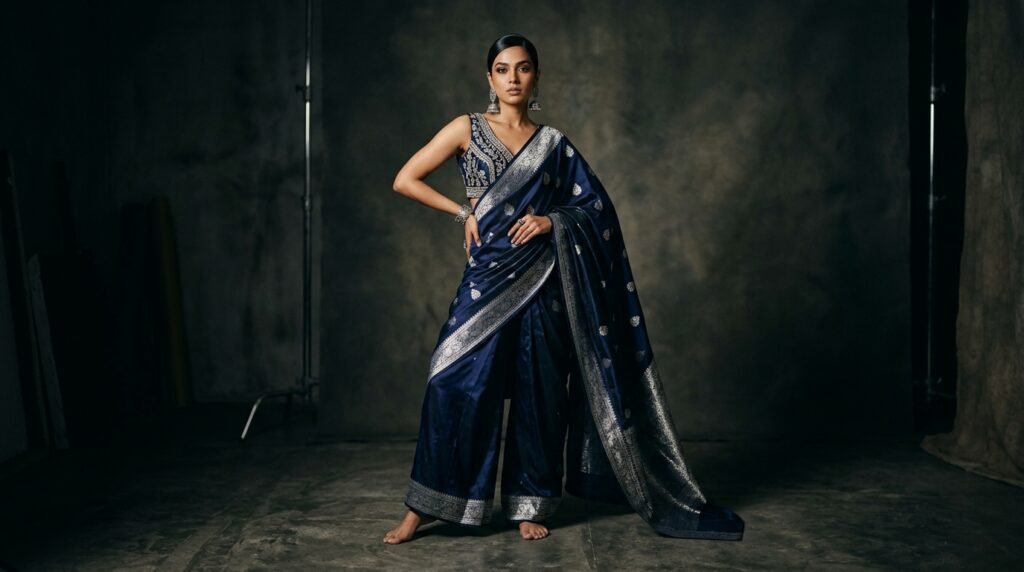
Midnight navy with silver zari, deep forest green with gold — colours that have weight and richness suit this style perfectly. Pair with a sleek embroidered or structured blouse and minimal footwear. This is one of the most versatile draping styles in this list because it works for festive occasions, fashion events, and even formal dinners.
Styling tip: Let the fabric length just graze the floor for maximum elegance. Too short and the trouser illusion is lost.
10. Saree With a Corset Blouse
The corset blouse revolution in Indian fashion has been one of the most exciting developments of the last decade. A boned, structured corset blouse — whether laced at the back or with hook-and-eye closures — paired with a rich Banarasi or embroidered silk saree creates a silhouette that is simultaneously bridal, fashion-forward, and deeply dramatic.
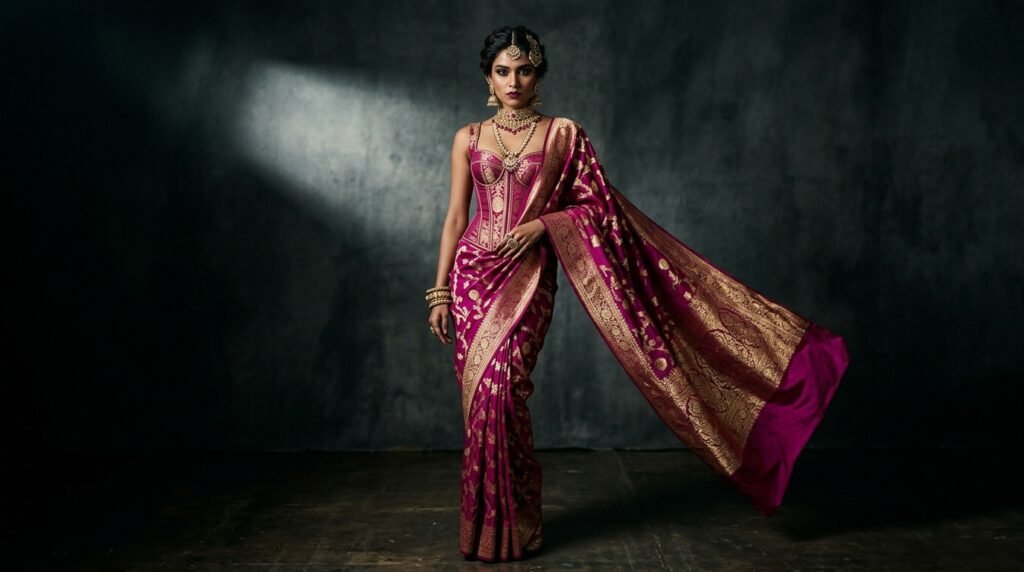
This is not a subtle look. The structure of the corset against the fluidity of the draped saree creates a beautiful tension between rigid and soft, controlled and free. Deep magenta, royal cobalt blue, and midnight black are the colours that work best here because they match the drama of the silhouette.
Styling tip: Keep jewellery architectural and minimal — geometric earrings or a single statement cuff. Heavy traditional sets compete with the corset’s structure.
11. Saree With Sneakers
Nothing signals the complete democratisation of saree fashion quite like styling it with sneakers — and the look has gone from controversial to mainstream in just a few years. A pastel chiffon or printed cotton saree with clean white chunky sneakers or neutral canvas shoes is now a legitimate fashion choice embraced by influencers, celebrities, and everyday wearers alike.
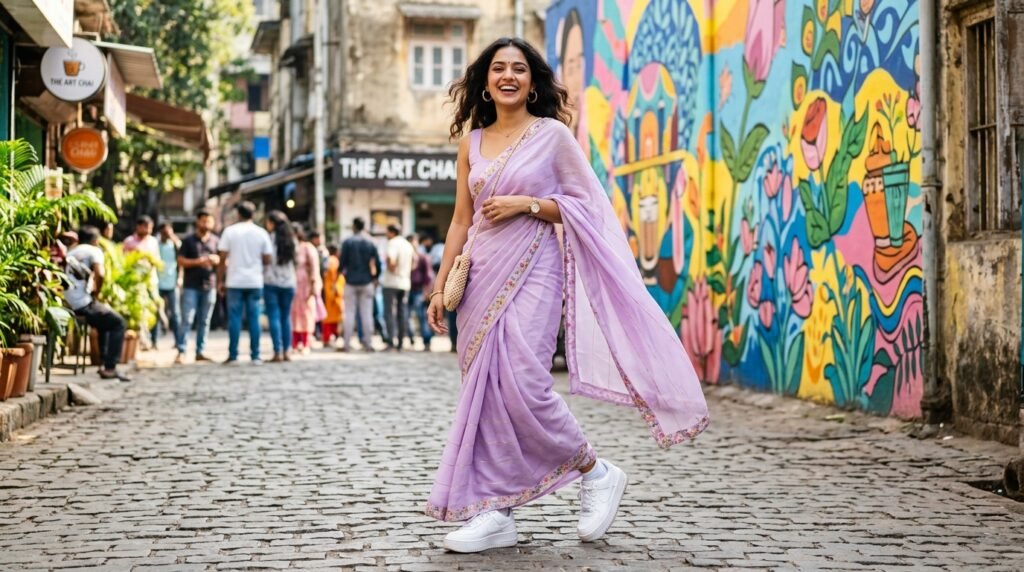
The key is contrast. The elegance of the draped fabric against the casual utility of the sneaker creates that intentional juxtaposition that defines contemporary street style. Keep the drape clean and the pleats precise — a polished drape with casual shoes reads as fashion-forward. A messy drape with sneakers just reads as underdressed.
Styling tip: Crop your drape slightly above the ankle so the sneakers are fully visible — showing the shoe is the whole point of this look.
Regional Draping Styles
12. Bengali Style Drape
The Bengali atpoure draping style is one of the most distinctive regional variations in India — immediately recognisable by the absence of a stitched blouse (the fabric wraps around the upper body instead) and the way the pallu falls in a broad sweep over one shoulder, often with the border folded outward for display.
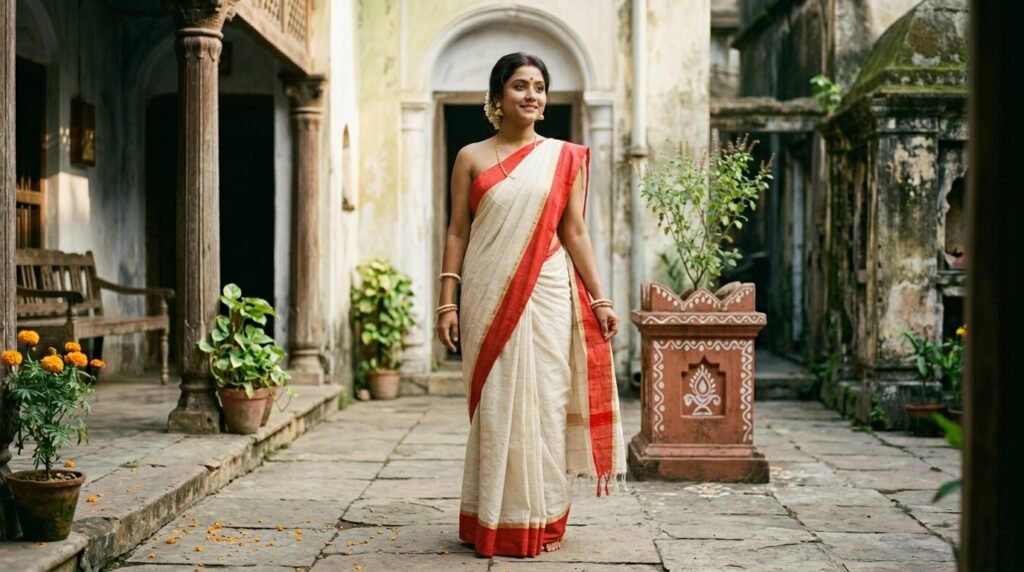
A white cotton saree with a bold red border is the classic Bengali look, and it remains one of the most elegant and culturally resonant saree styles in existence. Worn during Durga Puja and other Bengali celebrations, this drape connects the wearer to centuries of cultural history while remaining completely timeless in its beauty.
Styling tip: The Bengali drape requires practice — the upper body wrap takes time to master. Start with a firm cotton fabric that holds its position better than silk or chiffon.
13. Gujarati Seedha Pallu Drape
What makes the Gujarati draping style distinctive is the direction of the pallu. While most Indian draping styles bring the pallu over the left shoulder, the Gujarati seedha pallu style brings it forward over the right shoulder — allowing the embroidered or printed border to be fully displayed across the front of the body.
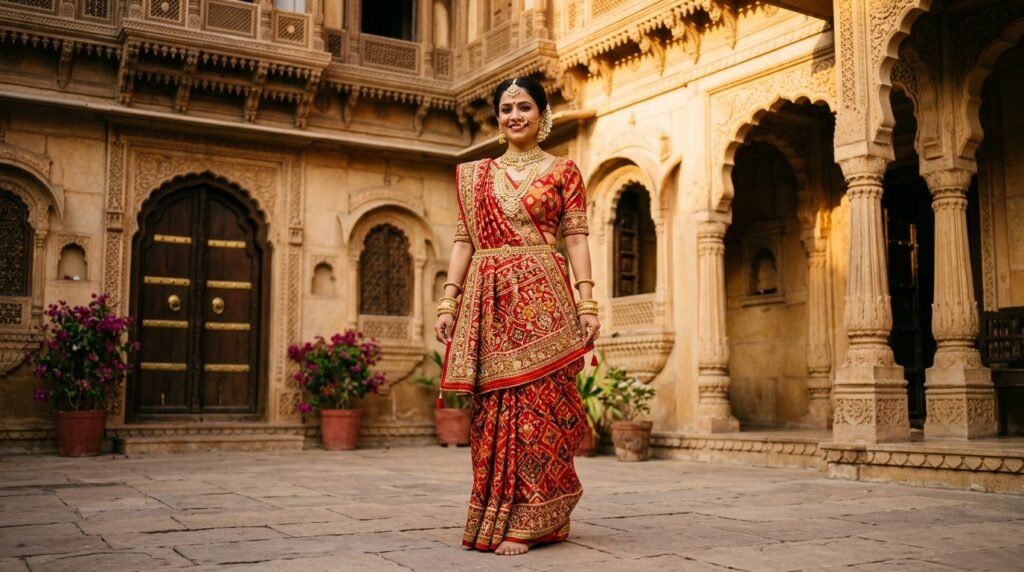
This is a style that was made to show off extraordinary fabric. The richly embroidered Patola silks of Gujarat, with their complex geometric designs in jewel tones, are the traditional choice — and they deserve to be seen. The seedha pallu acts like a frame, putting the fabric front and centre.
Styling tip: Traditional Gujarati draping is accompanied by full jewellery — glass bangles stacked to the elbow, a maang tikka, and a nose ring. The complete look is extraordinary.
14. Tamil Madisar Drape
The Madisar is a nine-yard saree draped in a style unique to Tamil Brahmin communities. The extra length allows the fabric to be wrapped around both legs in a style that looks similar to a dhoti from the front — functional, dignified, and deeply traditional. The Madisar is worn for religious ceremonies, weddings, and festivals and carries enormous cultural significance.
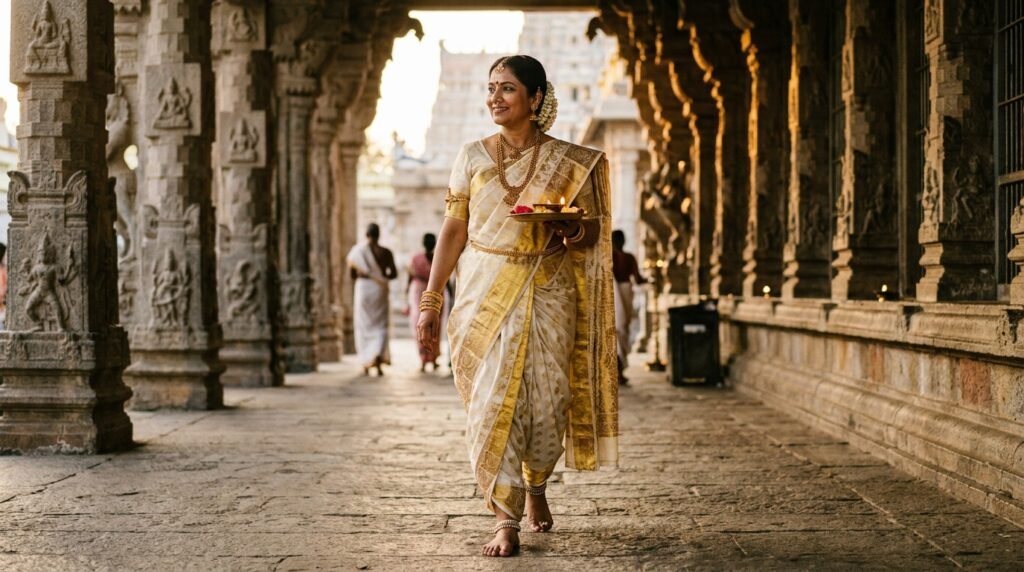
Ivory and gold Kanjivaram silk is the classic choice — the weight of the silk and the brilliance of the zari making the Madisar drape one of the most physically magnificent saree styles in existence. A nine-yard Kanjivaram in full Madisar drape is genuinely one of the most beautiful things in Indian fashion.
Styling tip: The Madisar drape requires an experienced hand — if you’re new to it, ask a family elder or watch video tutorials specific to this regional style.
15. Maharashtrian Nauvari Drape
The Nauvari — literally meaning nine yards — is Maharashtra’s answer to the question of how to drape a saree for active, dignified daily life. The fabric is drawn between the legs and tucked at the back, creating a look that resembles wide dhoti pants. It is simultaneously practical and incredibly elegant.
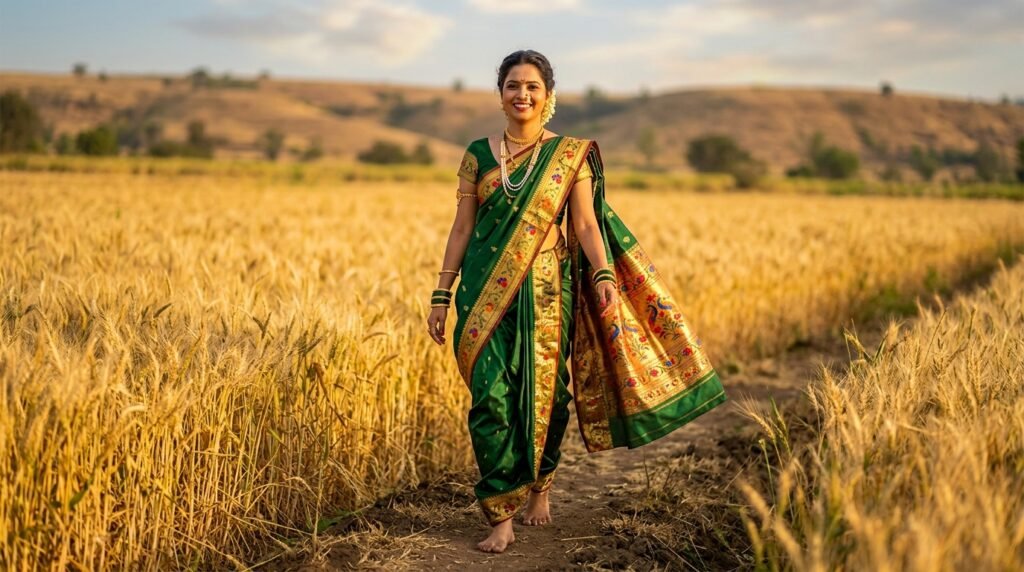
The Paithani silk sarees of Maharashtra — woven with peacock and flower motifs in brilliant greens, purples, and golds — are the traditional fabric for the Nauvari. Seeing a Nauvari drape in a full Paithani silk is a visual experience of the highest order. This style has also been enthusiastically adopted by fashion designers who see its modern pant-like silhouette as entirely contemporary.
Styling tip: The Nauvari is a high-movement drape — it was designed for women who needed full freedom of motion. Embrace that and wear it with confidence.
16. Kasavu Kerala Saree Drape
The Kerala Kasavu saree is instantly identifiable — cream white handwoven cotton or silk with a golden zari border, draped in the traditional Kerala style with the pallu left to fall naturally at the front rather than pinned at the shoulder. It is one of the most restrained and quietly beautiful saree styles in existence.
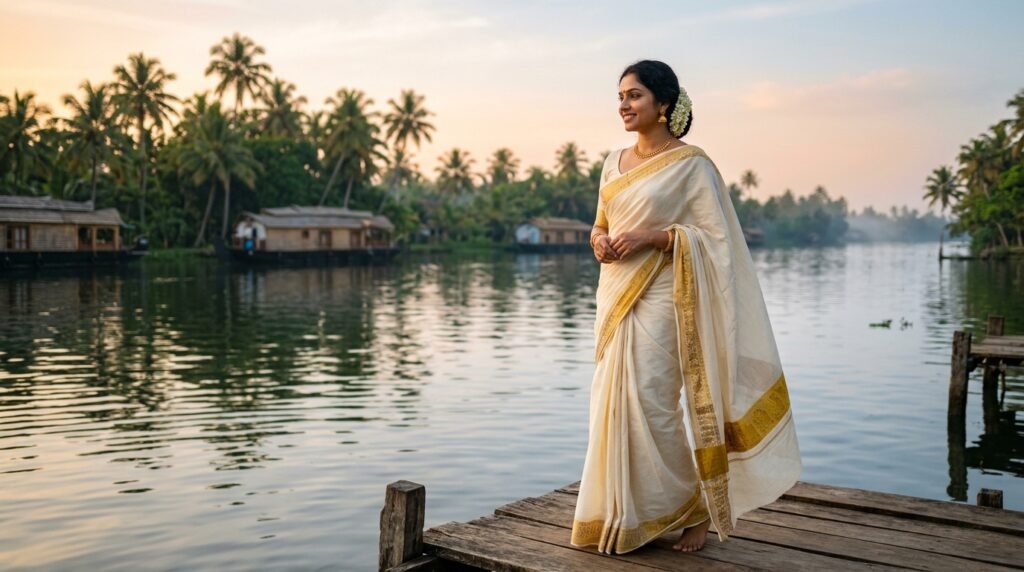
The Kasavu derives all its beauty from the quality of the weave and the relationship between the white fabric and the gold border. No embellishment, no busy pattern — just extraordinary craftsmanship. Worn during Onam and other Kerala festivals, the Kasavu saree is the definition of understated elegance.
Styling tip: Let the fabric speak. Pair with simple gold jewellery — small studs, a thin gold chain — and let the weave be the statement.
17. Rajasthani Drape With Odhni
Rajasthani saree draping style is distinguished by its vibrant colour palette and the addition of the odhni — a printed or embroidered head covering that is draped over the head and one shoulder as part of the complete look. Bandhani (tie-dye) sarees in reds, pinks, and yellows are the traditional choice, creating a look of joyful, unapologetic colour.
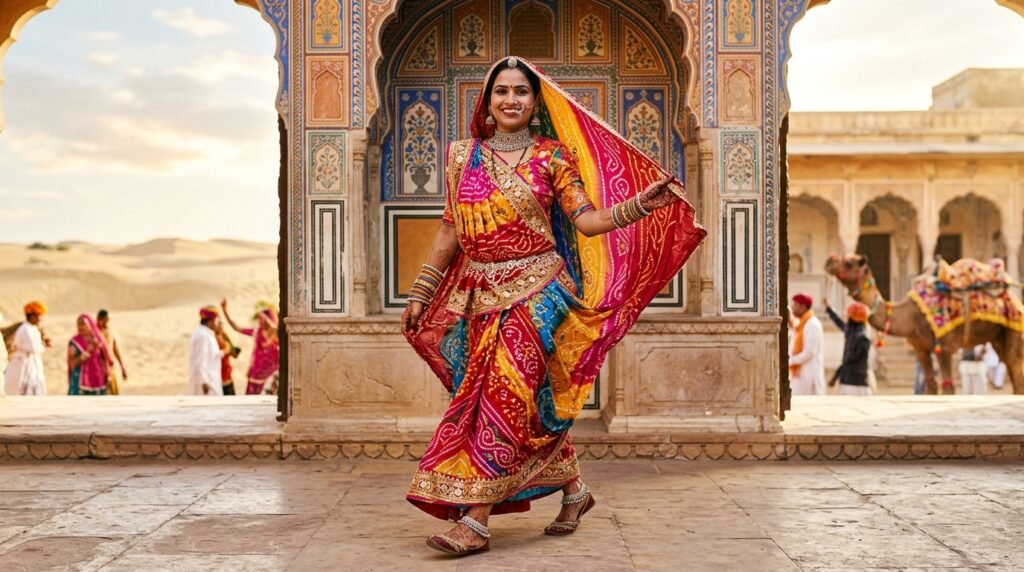
The Rajasthani drape is less formalised than some regional styles — there is more variation and personalisation within the tradition — but the presence of the odhni and the commitment to brilliant colour are the consistent signatures. In the context of a desert landscape or a painted haveli, this look is breathtaking.
Styling tip: Bandhani fabric is lightweight and drapes beautifully. The dots created by the tie-dye process catch the light and create movement even when you’re standing still.
Fabric-Specific Styles
18. Sheer Organza Saree Drape
Organza has transformed the saree landscape over the last decade. Its sheer, structured quality is unlike any other saree fabric — it holds shape where chiffon would collapse, but remains translucent where silk would be opaque. The result is a fabric that creates architectural drapery while still feeling light and ethereal.
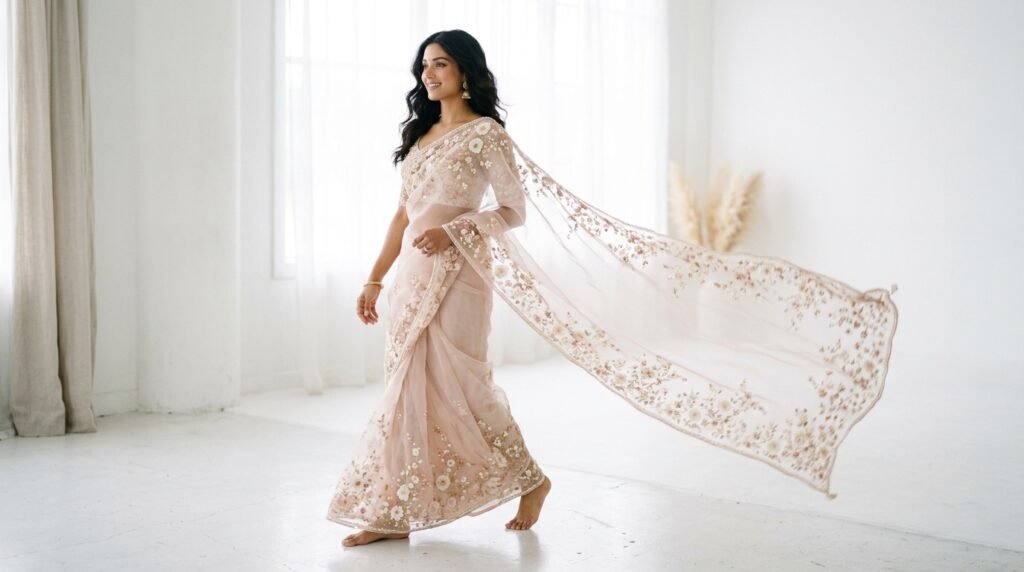
Pale blush, ivory, powder blue, and mint green are the colours that make the most of organza’s transparency — you see layers of fabric creating depth and shadow that is endlessly photogenic. Pair with delicate floral embroidery and a floor-length pallu for a look that is genuinely bridal in its beauty.
Styling tip: Organza wrinkles easily. Store carefully and steam — not iron — before wearing.
19. Heavy Banarasi Silk Drape
There are sarees, and then there is Banarasi silk. The handwoven brocades of Varanasi, with their intricate gold and silver zari work depicting floral and Mughal motifs, represent some of the highest achievements of Indian textile craft. A full Banarasi silk saree in deep red, navy, or forest green is an experience — the weight of the fabric, the shimmer of the gold, the feeling of wearing something made by skilled hands over days or weeks.
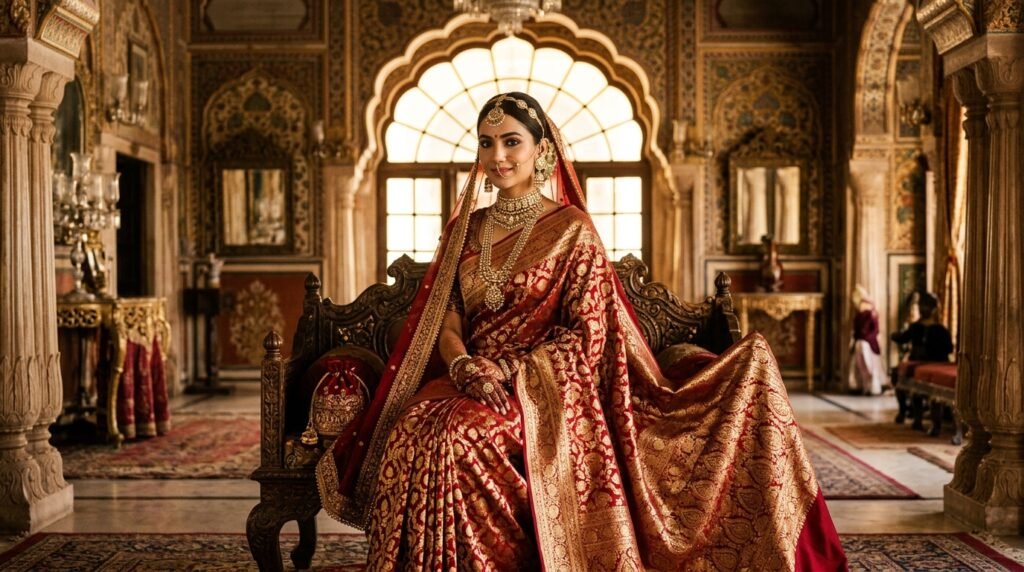
The Banarasi is primarily a bridal and festive saree — the weight of the fabric makes it impractical for everyday wear but absolutely perfect for occasions that deserve ceremony. When you wear a Banarasi, you are wearing history.
Styling tip: Banarasi silk is heavy — you will feel it on your shoulder. Practice wearing it at home before a long event so you’re comfortable adjusting the pallu.
20. Linen Saree Casual Drape
Linen sarees are the slow fashion movement’s answer to the question of what sustainable Indian fashion looks like. Handwoven linen in earthy terracotta, natural indigo, ochre yellow, and warm grey has a texture and character that machine-made fabrics simply cannot replicate. The natural slubs in the weave catch the light, and the fabric gets more beautiful with every wash.
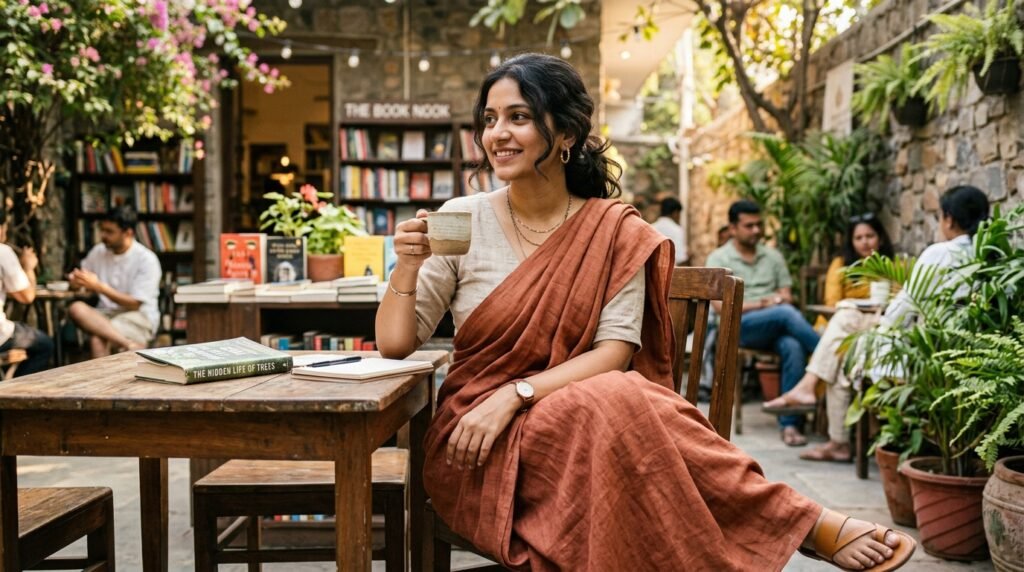
This is a saree for everyday life. Pair it with a simple cotton blouse, minimal jewellery, and comfortable footwear and it’s genuinely one of the most elegant things you can wear to a casual lunch, a cultural event, or a day of errands in a beautiful city.
Styling tip: Linen needs starch to drape well. Lightly starch both the saree and the pleats before wearing and the drape will hold beautifully all day.
21. Chiffon Saree Flowing Drape
Chiffon is the fabric of movement. Its lightness means it responds to every shift of the body and every breath of wind — creating a constantly changing, living drape that photographs like nothing else. Ocean blue, dusty rose, champagne gold, and deep wine are the colours that look most beautiful in chiffon because the fabric’s transparency adds softness and depth to any colour.
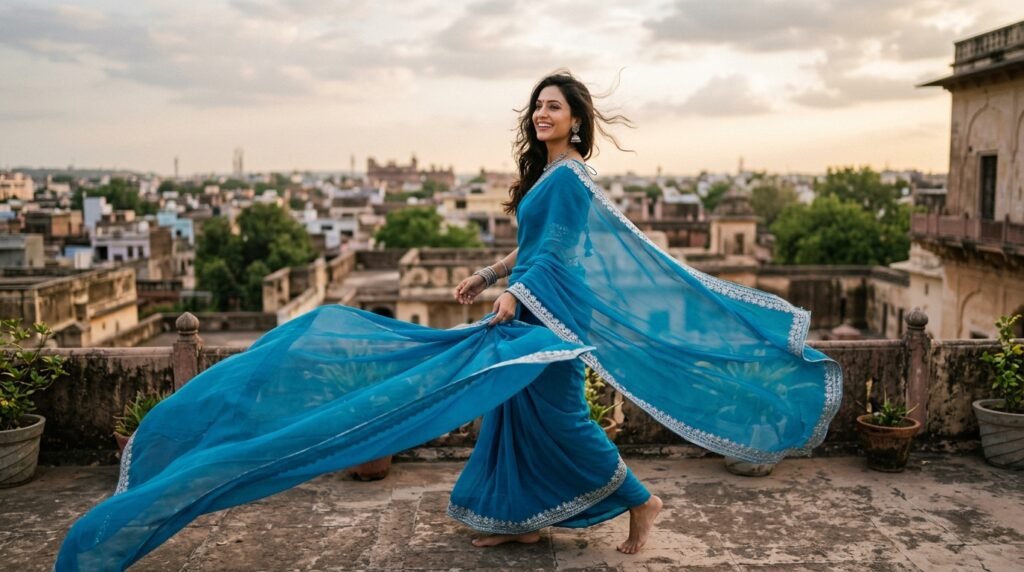
The flowing chiffon drape is the style for events where you’ll be photographed — the fabric in motion creates images that are genuinely cinematic. Keep the pleats slightly looser than you would with a heavier fabric, and let the pallu flow freely rather than pinning it.
Styling tip: Chiffon can be slippery. Use saree pins at key points — waist and shoulder — and consider a small amount of double-sided tape at the pleats for security.
22. Handloom Cotton Saree Drape
India’s handloom weaving tradition is one of the great cultural treasures of the world — and wearing handloom cotton sarees is one of the most direct ways to connect with and support that tradition. Indigo block-print cotton from Rajasthan, ikat cotton from Andhra Pradesh, Jamdani cotton from Bengal — each represents a distinct regional tradition of extraordinary skill.
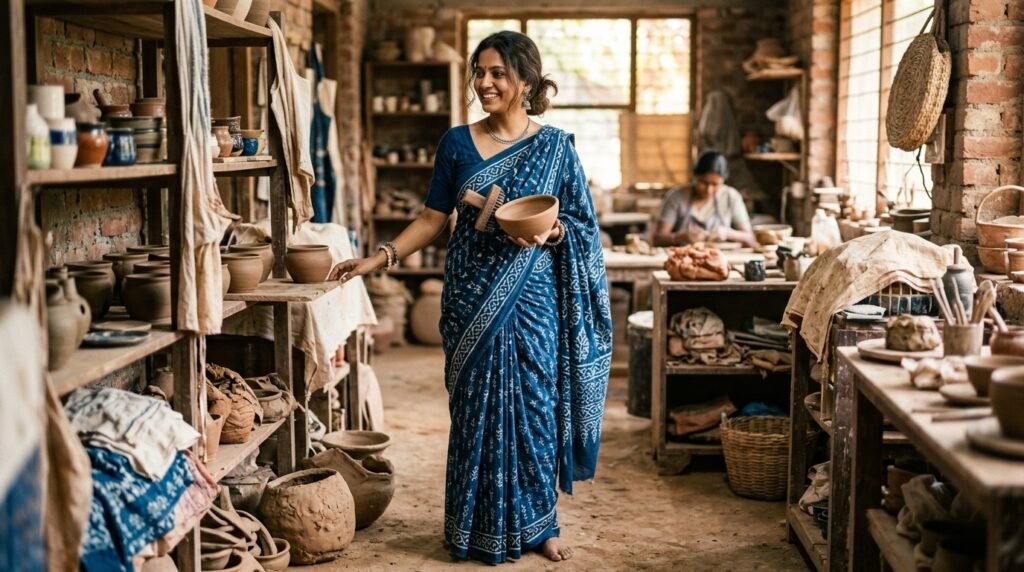
The natural texture of handloom cotton gives it a character that sets it apart from anything machine-made. The slight irregularities in the weave are not flaws — they are the fingerprints of the weaver. This is sustainable fashion with deep cultural roots, and it looks beautiful.
Styling tip: Support genuine handloom by purchasing from certified weavers or cooperatives. The difference between machine-made imitations and hand-woven originals is immediately apparent in the fabric’s texture and drape.
23. Velvet Saree Modern Drape
Velvet sarees occupy a unique space in Indian fashion — they are glamorous, rich, and completely distinctive. The way velvet catches and absorbs light creates a depth of colour that no other fabric achieves. Deep teal, midnight black, forest green, and ruby red are the velvet colours that look most extraordinary under evening lighting.
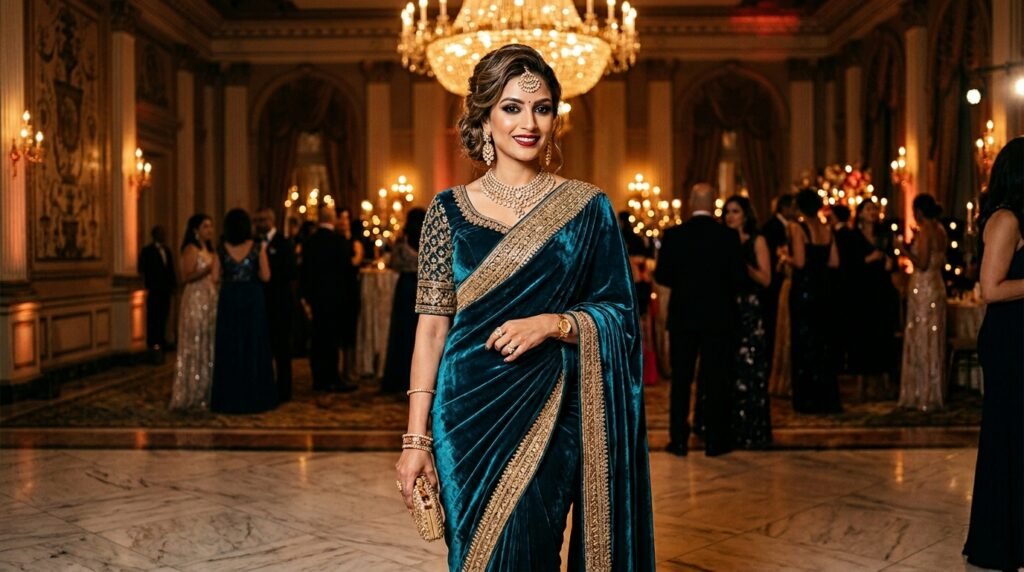
The weight and structure of velvet makes it easier to drape than many lighter fabrics — the pleats hold naturally without starch or pins. Pair with a heavily embellished or structured blouse and statement jewellery for a look that is unambiguously glamorous. This is a party saree in the very best sense.
Styling tip: Velvet marks easily and is difficult to clean. Be careful sitting on rough surfaces, and store with the pile facing inward.
Occasion-Specific Drapes
24. Bridal Saree Drape
The bridal saree is not simply a saree — it is the most significant garment most Indian women will ever wear, carrying the weight of family tradition, cultural identity, and personal meaning. The classic bridal saree is a heavy Kanjivaram or Banarasi silk in deep red or bridal pink with intricate zari weaving, worn with the full suite of traditional bridal jewellery.
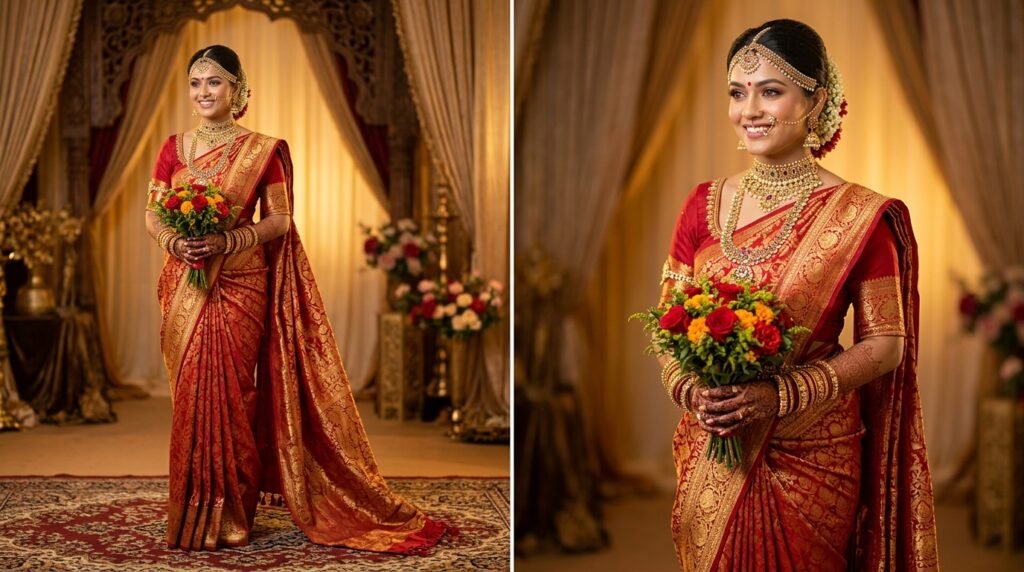
What makes bridal saree draping distinctive is the attention to every detail. The pleats are pressed and equal. The pallu falls in a specific way dictated by regional tradition. The length is managed precisely so the saree pools slightly at the feet for maximum photographic beauty. A good bridal saree dresser is worth their weight in gold — the difference between a professionally draped bridal saree and a self-draped one is immediately visible in photographs.
Styling tip: Have a trial draping session before your wedding day — ideally with all your jewellery and footwear. This is not the time to discover that something doesn’t work.
25. Office-Wear Saree Drape
The office saree has undergone a complete transformation. Where it once meant a heavy silk and full jewellery — overdressed by any professional standard — today’s office saree is sleek, precise, and quietly powerful. Structured linen-blend or cotton sarees in slate grey, navy, olive, and camel with minimal borders read as sophisticated professional wear without any cultural compromise.
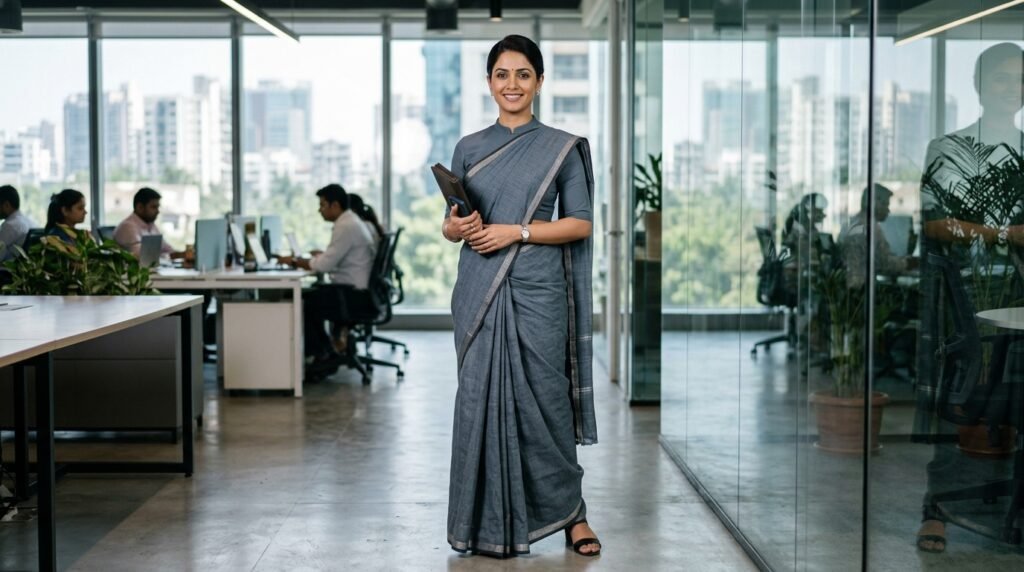
The key is the draping style: tight, disciplined pleating, a securely pinned pallu that won’t shift during a full day of meetings, and a blouse that is styled and fitted rather than decorative. Add a structured bag, low heels, and a neat hairstyle and this is a look that commands respect in any professional environment.
Styling tip: Use a safety pin at every pleat and at the shoulder to ensure nothing shifts during a long workday. Comfort and security of draping matters as much as aesthetics for office wear.
26. Cocktail Party Saree Drape
The cocktail saree is where Indian fashion meets international party dressing — and the results are spectacular. Sequined, embellished, and heavily embroidered sarees in dramatic colours — midnight black with silver, deep navy with gold, forest green with copper — draped with a strapless structured blouse or a deeply backless choli, are among the most glamorous outfits it is possible to wear.
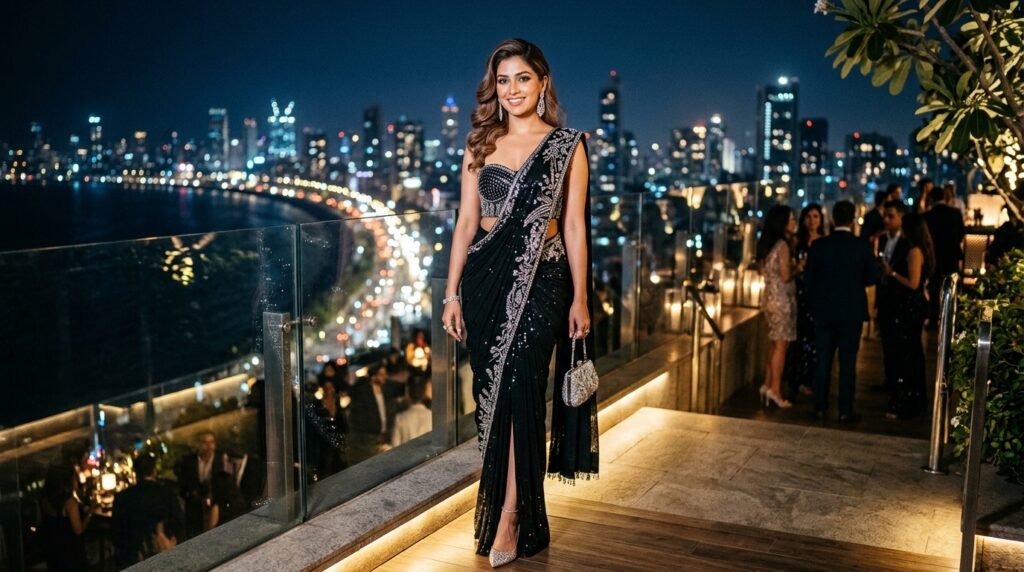
The party draping style tends to be shorter in length (allowing footwear to be fully visible), with the pallu pinned or styled rather than left to trail. This is a look that says you understand fashion, you know your body, and you can work a room. Photograph it from above for the best Pinterest results.
Styling tip: A fully embellished saree needs minimal jewellery. Let the fabric do the work — a simple ear cuff or a thin bracelet is all you need.
27. Festive Diwali Saree Look
Diwali demands colour, warmth, and a kind of joyful generosity in dressing. Golden yellow with deep orange, bright coral with fuchsia, rich saffron with emerald — these are Diwali colour combinations that celebrate the festival of lights in the most direct way possible. The saree for Diwali should glow.
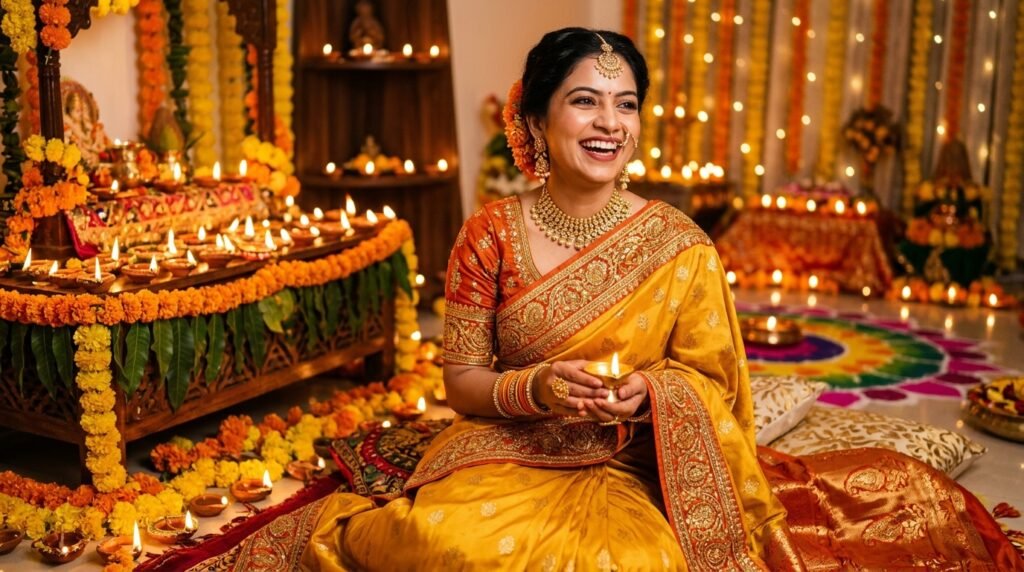
Heavily embroidered silks, Banarasi brocades, and tissue silks that catch the candlelight all work beautifully for Diwali. Pair with traditional jewellery — a necklace with some weight to it, bangles, statement earrings — and style in soft curls or a traditional braid with jasmine flowers. This is a look that honours the occasion.
Styling tip: Photograph your Diwali saree in the glow of diya lights rather than overhead lighting — the warm flickering light does extraordinary things to silk and gold embroidery.
28. Beach or Resort Saree Drape
The resort saree is a relatively new concept but it has taken off brilliantly. A lightweight printed saree in sheer chiffon or fine cotton georgette draped loosely over swimwear — or styled with a simple camisole blouse — creates a look that is unmistakably Indian and completely at home on a beach, poolside, or at a sunset cocktail party in a tropical location.
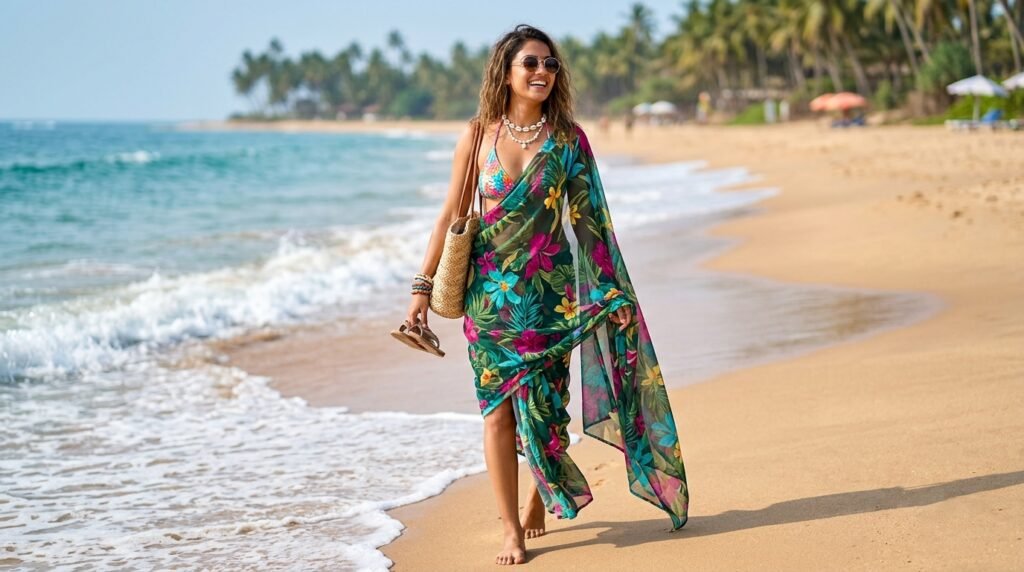
The key to the resort saree is keeping everything light and loose. This is not the moment for heavy silk or precise pleating — let the fabric drape casually, let the pallu blow in the sea breeze, keep the colours vibrant and the accessories minimal. This look photographs beautifully against water and sky.
Styling tip: Choose fabrics that can be hand-washed and that dry quickly. Resort dressing requires practicality — you want to actually wear the saree, not worry about it.
29. Wedding Guest Saree Drape
Being a wedding guest in India is its own art form, and the saree is often the garment of choice. The wedding guest saree navigates a careful balance — beautiful and celebratory enough to honour the occasion, restrained enough not to compete with the bride. Pastel tissue silks, soft organzas, and lightweight Chanderi sarees in peach, lilac, powder blue, and mint are the classic wedding guest palette.
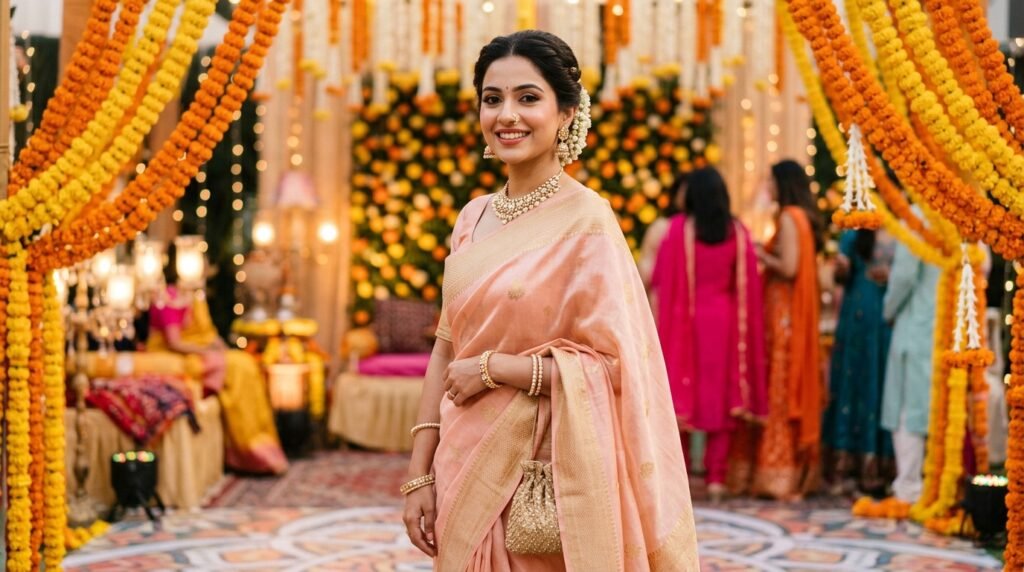
Keep the draping clean and precise, the jewellery elegant but not overwhelming, and the overall look polished. A wedding is also one of the best photographic opportunities you’ll have — dress for the images as well as the event.
Styling tip: Check with the bride or family about colour restrictions before choosing your saree. Many brides prefer that guests avoid red or similar colours to their bridal outfit.
Trendy and Experimental Drapes
30. Cape-Style Pallu Drape
The cape pallu is one of the most dramatic developments in contemporary saree fashion. Instead of the pallu falling over one shoulder, it is drawn across both shoulders and arranged to flow behind the wearer like a full floor-length cape. The visual impact of this drape is extraordinary — it creates a silhouette that is regal, powerful, and unmistakably high fashion.
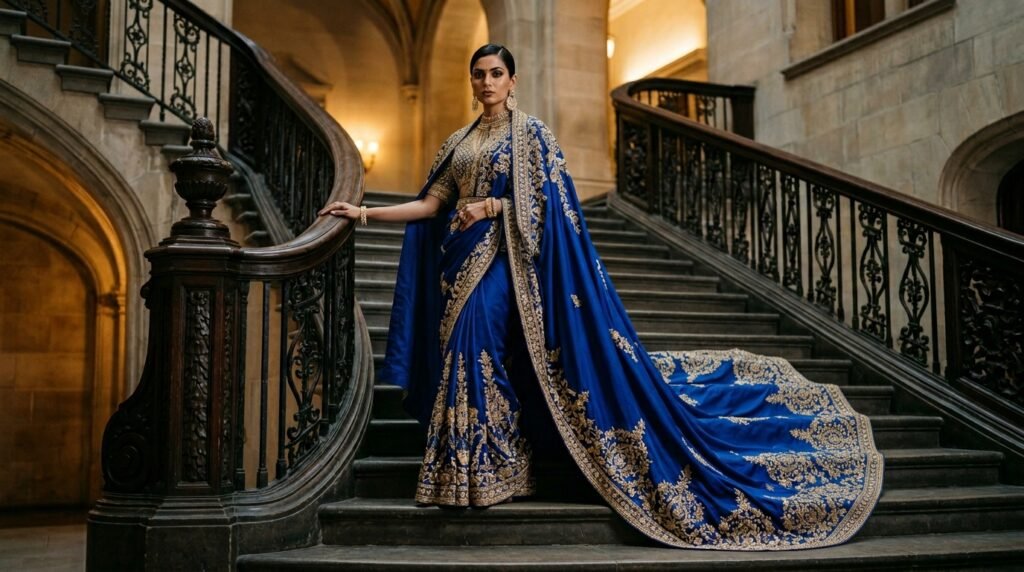
Royal blue, deep purple, and black silks with heavy embroidery or embellishment are the fabrics that make the most impact in this style. The cape requires a heavier fabric to hold its sweep — chiffon will collapse, but a good silk or tissue will flow magnificently. This is a red carpet drape.
Styling tip: The cape pallu works best on a taller frame or with heels. The length of the cape needs floor clearance to read as intentional rather than tangled.
31. Mermaid-Tail Drape
The mermaid saree drape is conceptual fashion at its most dramatic — the fabric is wrapped tightly around the hips and thighs, then allowed to flare into a wide dramatic train at the hem, creating the unmistakable silhouette of a mermaid’s tail. This is not a practical drape. It is a photographic drape, a fashion show drape, a statement about what a saree can be when you push its limits.
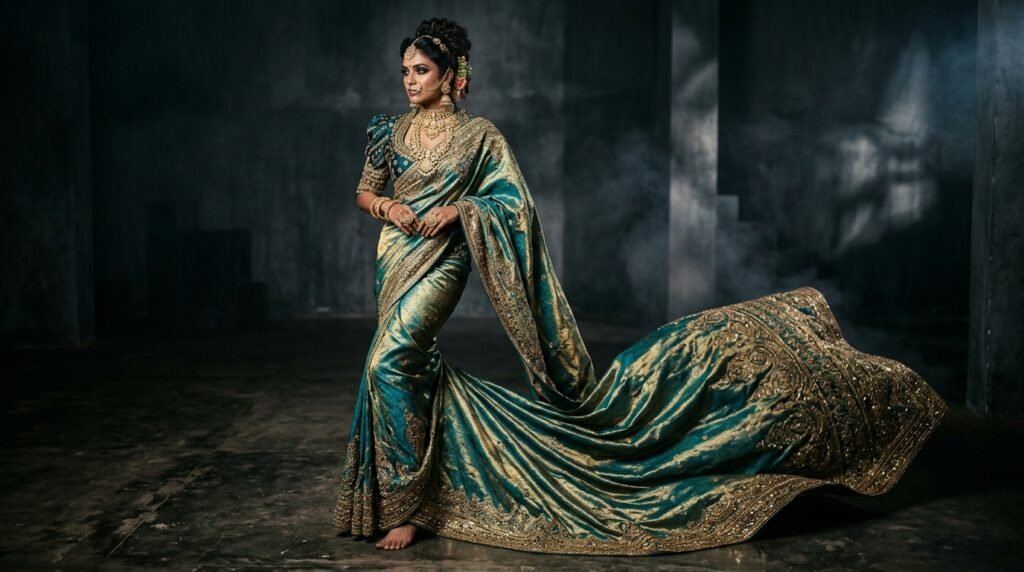
Iridescent fabrics — those with a slight shimmer that shifts between colours in different lights — are particularly powerful in this style. The tight wrap also means you need to be comfortable with limited mobility, which makes this a seated dinner or photoshoot look rather than a dancing and moving look.
Styling tip: Have an assistant help you drape the mermaid style. The tight wrapping at the thighs requires precise tension that is difficult to achieve alone.
32. Lehenga-Style Saree Drape
The lehenga-saree hybrid occupies a fascinating middle ground between two of the most beloved garments in Indian fashion. The saree’s pleats are fanned out wide and full — mimicking the circular flare of a lehenga skirt — while the pallu is styled like a dupatta draped over the shoulder. The blouse is a full choli, completing the lehenga illusion.
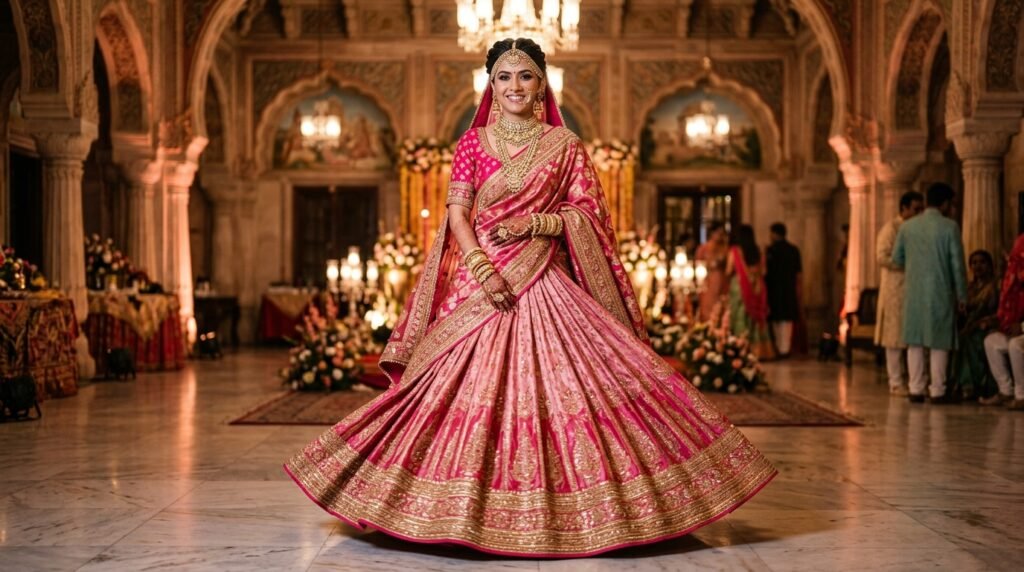
The result is a garment that has the cultural resonance of a saree and the youthful, festive energy of a lehenga. Heavily embroidered fabrics in bridal pinks and golds look spectacular in this style. It is particularly popular with younger women who love the saree but find the lehenga’s footwork freedom appealing.
Styling tip: A full lehenga-style fan requires extra length at the front pleats. Choose a saree with at least 5.5 metres in the body to ensure enough fabric for a full skirt effect.
33. Ruched Front Pleats Drape
The ruched drape is where saree styling meets haute couture. Instead of the traditional flat, even pleats, the fabric is gathered into ruched, sculptural folds at the front — creating a textured, three-dimensional effect that photographs like something from a fashion week runway. This style emerged from the experimental work of Indian fashion designers pushing the boundaries of what a saree can look like.
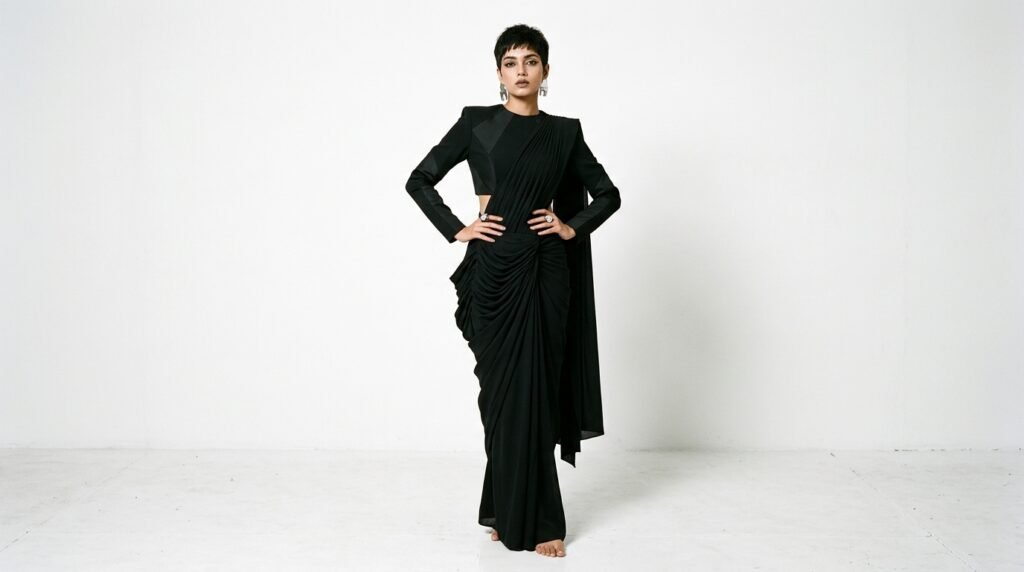
Crepe, structured georgette, and matte silk fabrics work best for ruching because they hold the gathered shape without springing back flat. Monochrome colours — especially black, ivory, and deep olive — make the sculptural quality of the ruching most visible.
Styling tip: The ruched drape requires fabric-safe pins to hold the gathers in place. Experiment at home with the final drape before wearing it to an event.
34. One-Shoulder Goddess Drape
Inspired by Grecian and classical drapery, the one-shoulder saree style leaves one shoulder and arm entirely bare while the fabric sweeps dramatically from the opposite shoulder in long, elegant lines. The result is a silhouette that feels simultaneously ancient and completely contemporary — a saree that speaks the visual language of both Indian tradition and global high fashion.
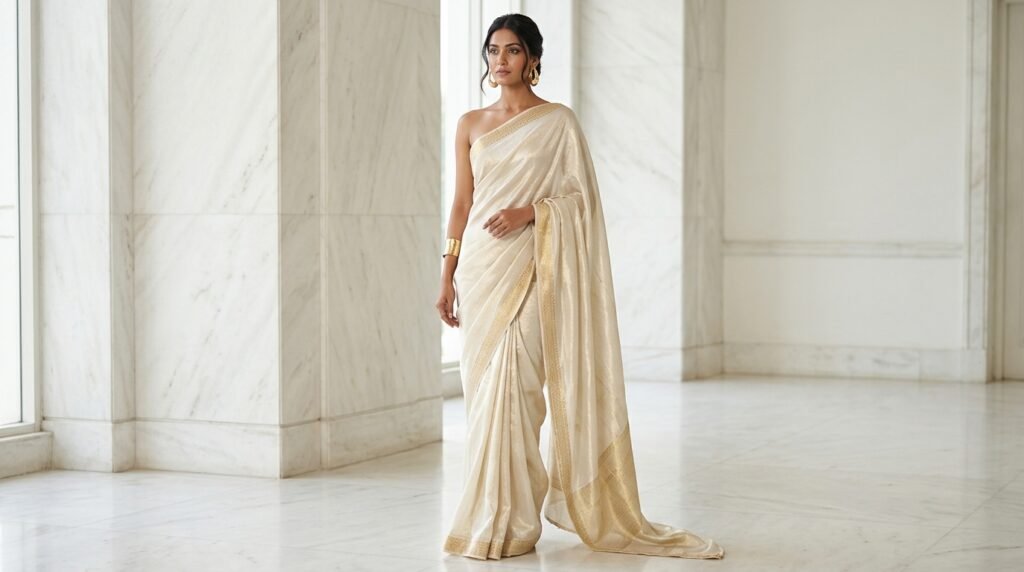
Shimmering ivory, champagne gold, and pale silver fabrics make the most of this style because they reference the marble sculptures and classical imagery that inspire the drape’s aesthetic. Pair with architectural jewellery — a cuff, a geometric earring — rather than traditional Indian pieces, and the look is genuinely stunning.
Styling tip: The one-shoulder drape can shift if not properly secured. Use a strong pin at the shoulder and double-sided fashion tape along the neckline for confidence throughout the day or evening.
35. Color-Block Saree Drape
The colour-block saree is a modern Indian fashion designer’s experiment made wearable — two or more panels of contrasting colour joined at the border, creating a graphic, bold visual statement that reads more like contemporary art than traditional textile. Cobalt blue and bright coral. Emerald green and sunshine yellow. Deep purple and warm orange. The contrast is the point.
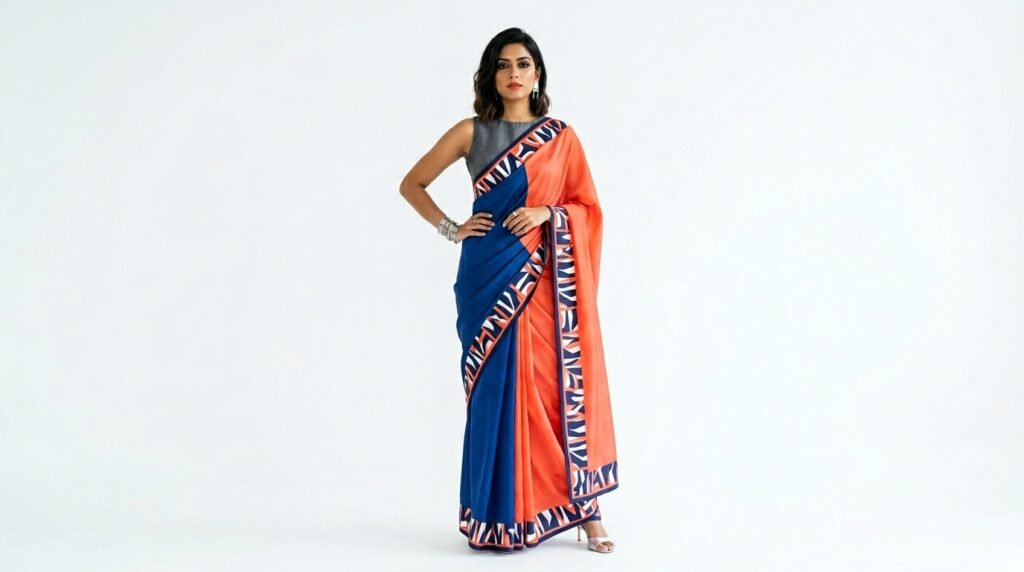
This is a saree for people who want to make a statement, who love fashion as a visual language, and who see the saree not just as a cultural garment but as a design object. Pair with a minimal blouse in one of the saree’s colours and let the bold graphic quality of the fabric be the entire outfit.
Styling tip: Colour-block sarees are statement enough on their own. Resist the temptation to add busy jewellery or a patterned blouse — the contrast of the two colours is the complete look.
How to Choose Your Draping Style
With 35 styles to choose from, where do you start? Here are three simple questions to guide you:
The first is occasion. A Madisar or Nauvari for a cultural ceremony, a cocktail drape for an evening event, a linen casual drape for a weekend afternoon — let the event guide the formality of the style.
The second is fabric. The draping style and the fabric need to work together. Heavy silk wants a classic structured drape. Sheer organza wants something architectural. Light chiffon wants movement and flow. Buy your fabric first, then choose your drape.
The third is your comfort level. The most beautiful saree drape is one you wear with confidence. Start with the styles you find achievable, master them, and then experiment with the more complex or dramatic options once you have the basics in your hands.
The saree rewards practice and patience. Every woman who wears one beautifully has draped hundreds of them — the ease you see in someone who wears a saree well is the result of years of wearing, adjusting, and learning. Start now. The six yards are waiting.
You might also love
35 Modern Saree Draping Styles
That Look Chic and Fashion-Forward
Explore every draping style — from classic reinventions to bold experimental looks